A sweet bun so good it inspired a national holiday

 Alamy
AlamyEach summer, Poland awaits bilberry season in order to eat jagodianzki, traditional berry-filled buns. But this humble comfort food has had a glow up, and is more desired than ever.
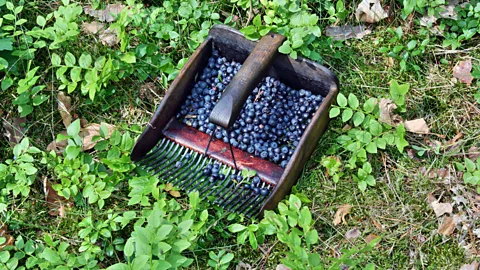
As the days grow warmer in Poland, our forests teem with beautiful fruits like strawberries and plums, which we will eagerly fold into light, delicious summer dishes. By far, the most anticipated seasonal crop is the bilberry, the blueberry's smaller and tarter European cousin.
So essential is this little summertime staple that we call it jagoda, which simply means berry. "Bilberries hold a sentimental value for us," says Basia Starecka, a food journalist and former editor-in-chief of the Polish food magazine Kukbuk. "[They] appear right after the school year is over and symbolise the start of the summer holidays."
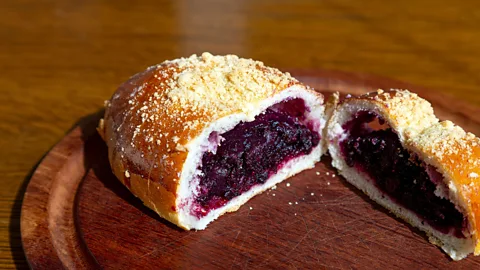
We eat them fresh off the bush with sugar and sour cream, in sweet pierogi or in a fruit sauce for various kinds of dumplings. But our most beloved bilberry treat is the jagodzianka (pronounced ya-go-jan-ka), a bilberry-filled yeasted sweet bun.
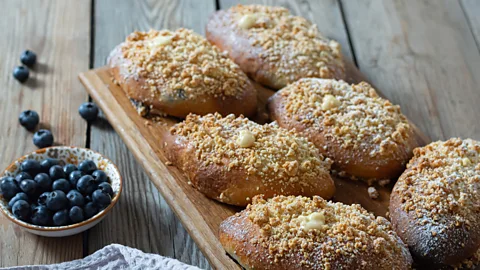
They have been a summer-time bakery staple for decades, dusted with sugar, covered in icing or crumble. "There is no person in Poland who hasn't eaten a jagodzianka," Starecka says.
But in the years since the Covid-19 pandemic, the humble jagodzianka has been given a modern makeover, in turn becoming something of a social media star. Influencers now post content of the fruit-filled buns they've either made or bought, and offer bakery recommendations. The classic move: tearing a jagodzianka in half to show off the filling.
But can perfection be improved upon? Thousands of Polish people are clamouring to find out.
 Alamy
AlamyA star is reborn
During the lockdowns and uncertainty of the early 2020s, Starecka says that Polish people naturally turned to familiar comfort foods. At the same time, an artisanal baking revolution was brewing.
"It all started with a new generation of bakers who wanted to make bread that required long fermentation times, which is much healthier for us," says Starecka. When they succeeded with basic breads, they began reinterpreting and redefining the whole spectrum of sweet, yeasted pastries. This naturally included the jagodzianka.
Monika Walecka, owner of the award-winning Warsaw bakery Cała w Mące and a pioneer of Polish artisanal breadmaking, adds: "We started looking at seasonal Polish pastries and making them in true artisanal style. With a lot of fruit, with good quality dough, with good-quality streusel. Made the same day, without rushing the process."
While some bakers preferred to keep things traditional, other creators experimented with the dough, fillings and toppings to get the consistency and flavour they wanted. The results were untraditional, but eye-catching and palate pleasing.
For example, contemporary baker Agata Stankiewicz, known online as SugarLady, uses the Japanese bread-making technique of tangzhong to make the dough softer, while Walecka relies on long fermentation times. Walecka also brushes her freshly baked jagodzianki with brown butter flavoured with tonka beans. Other bakeries, like Warsaw-based Bread Morning, pride themselves on using the same amount of berries as dough, resulting in an especially richly filled pastry. Urszi Cakes in Warsaw tops off the finished bun with fresh bilberries rather than the more traditional crumble or frosting, while the Warsaw-based Blacha adds so much crumble to their yeasted buns that people can ask for a bag of crumble to take with them.
The responses to the pastry's renaissance have been mixed. "It’s a good thing because the jagodzianki are made from Polish bilberries and you have to promote what’s good and Polish," says jagodzianki aficionado Kamil Augustyn. Maks Krajewski has a different perspective: "They used to be more seasonal, available for a short time, but supermarkets have begun selling them year-round, filled with jam or American blueberries. But they’re best during bilberry season."
 Getty Images
The new wave of artisanal jagodzianki are considered superior to the supermarket version, and the high quality has a price. The cost of jagodzianki keeps increasing with every year, which turned the yeasted bun into something of a status symbol. Many bakeries now have lines forming in the early hours, before they even open, and jagodzianki disappear quickly.
"We had a situation where a gentleman bought the last jagodzianka. And he was feeling so sorry for the other people in line that he paid for everything ordered by the woman behind him," remembers Anna Frelak, owner of the Warsaw bakery Ciastko z Dziurką. She adds that such situations are a common occurence.
"I compare them to a Birkin bag; the emotions you get from scoring such an expensive jagodzianka are similar, you boast about it, you post photos of it like a fashion trophy," Starecka says. "I think it underlines our status, it means I can afford a jagodzianka for almost 40PLN (£8) and I'm in on the trend. I'm in the know about what's happening."
Poised to go global
But despite becoming a status symbol in Poland, the jagodzianka has also become a community experience. This is one of the reasons why Starecka started Jagodzianka Day in 2022, an homage not only to the pastry itself but to the many people who are involved in its creation, from the foragers looking for bilberries in the woods to the bakers experimenting with new ingredients and techniques to the people enjoying them every summer. The unofficial holiday's website lists rankings of the best buns as well as recipes so people can try their own hand at making the sweet.
Starecka chose 2 July because it's right in the middle of jagoda season, believing a summer food-related holiday would provide a great counterpart to Fat Thursday (Pączki Day), which is usually celebrated in winter.
"You can eat a jagodzianka by yourself, but in that large, richly filled version, it's a dessert for more people and there is a happy atmosphere of celebration," says Starecka of the holiday’s community aspect. "People get together, they go to a bakery, they stand in line, they bring different kinds of jagodzianki as gifts – with cream, with farmer's cheese or with tonka beans, they organise jagodzianki tastings."
More like this:
But Starecka's main reason for creating Jagodzianka Day was her desire to improve the image of Polish food worldwide. While Polish cuisine is changing, old stereotypes still remain. And even if tourists have heard of pierogi or pączki, jagodzianki remain largely unknown outside Poland.
"Cinnamon rolls are great and croissants are great, but jagodzianki are a typical Polish thing. No one else knows them. Nowhere else is the bilberry so popular," says Frelak - also noting that she has seen an increased number of tourists from all over the world coming to her bakery accompanied by their Polish friends, asking for this summery treat. Mouthwatering videos and images of crumbly jagodzianki bursting with bilberries continue to proliferate on social media, and Polish bakers keep stretching the limits of the traditional recipe, even using freeze-dried bilberries in the dough to give it a vibrant purple hue or creating a Georgian-influenced khachapuri version. Perhaps most tellingly, English language jagodzianka content is creeping into the algorithm. Is it just a matter of time?
Though the jagodzianka wave shows no signs of slowing down, for Starecka, a lot of work still remains to be done.
"I started this holiday because I wanted people around the world to know about our jagodzianka," she says. "It is definitely worth the journey from the most faraway parts of the world."
--
If you liked this story, sign up for The Essential List newsletter – a handpicked selection of features, videos and can't-miss news, delivered to your inbox twice a week.