Is World Cup ranch craze real or hype?

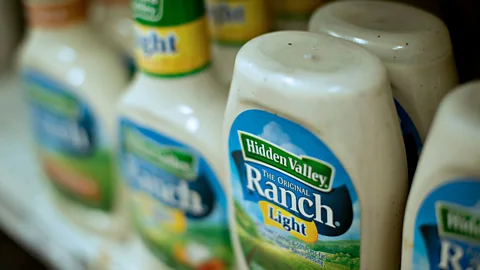 Getty Images
This creamy, herby salad cream has existed overseas for decades and visitors to the US are now allegedly shipping cartons of it home. But is there any truth to the reports?
Kev Footitt of Gainsborough, England, was in Dallas, Texas for the World Cup, when his server suggested he dip his chicken strips into ranch dressing. "I gave it a bash, and it was to die for," he said. Footitt later purchased a carry-on bag, which he loaded with 20 bottles, paying nearly $300 (£227) to ship it home. "I'll be having it on my roast dinners and fish and chips for the next two months."
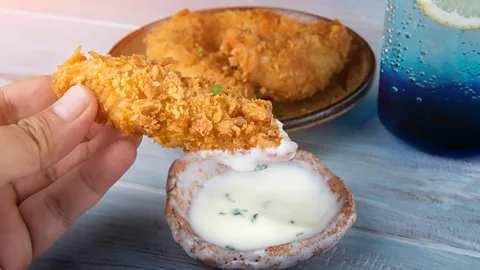
For the past few weeks, ecstatic World Cup visitors like Footitt have chronicled their appreciation for all-American foods like tater tots, Texas brisket, buffalo wings and free drink refills. But it's ranch dressing that has dominated World Cup tourism discourse. Visitors have become so enamored with the creamy, herbaceous condiment that they're not just lugging it home, they're discussing, photographing it and arguing about it on social media.
But is the World Cup ranch fandom real or an online-only sensation?
The ranch-sanity
Ranch's World Cup break-through moment likely occurred 8 June when Swede Elsa Thora posted on X, "Why did no one tell me ranch sauce is like crack? EUROPE WE NEED RANCH ASAP". The tweet soon received thousands of likes and reposts and later that day, the US's Transportation Security Administration (TSA) issued a playful advisory to visitors that they couldn't actually smuggle four bottles of ranch home in their luggage.
For more than a week afterwards, ranch ruled the TSA's social media accounts. Along with imploring travellers to pack it in their checked luggage (and refrain from chugging it outside security lines) the agency shared pictures of bottles abandoned at checkpoints.
Americans, both confused and bemused, shared recipes with ranch-obsessed World Cup fans. More earnest social media users suggested visitors buy packets of powdered ranch and just add liquid at home.
Meanwhile, brands dived into great ranch exchange. Applebee's posted a video of a driver dipping a chicken wing into a ranch-filled car console. Kraft announced plans to release TSA-compliant ranch packets. Heinz even launched a ranch giveaway for fans returning to the UK.
Why the decidedly commonplace ranch? Why now? After all, the dressing has been sold abroad for decades.
 Alamy
AlamyThe American difference
There's nothing inherently American about ranch dressing's ingredients, said KC Hysmith, a food historian based in North Carolina. Mayonnaise, buttermilk, sour cream, lemon, dill, parsley and garlic all originated in the Old World. Heinz Salad Cream (ranch's English cousin), developed in 1914, predates the US condiment by more than three decades. "Ranch comes from a long line of salad dressings," said Hysmith. "It was just branded in a very American way."
In the early 1950s, while working as a plumber in Alaska, Steve Henson put ranch's familiar ingredients together for the first time. Later, he and his wife purchased property in the Santa Barbara mountains, which they transformed into a combination dude ranch, steakhouse and country club named Hidden Valley Ranch. Visitors were so smitten with Henson's dressing that the couple sold it to-go and eventually started shipping dried packets of it across the country.
This was the height of the Spaghetti Western era, the Marlboro Man and cowboy-themed packaged goods, so the name added cachet, said Hysmith. "[The dressing] grew popular because it had this association with dudes, cowboys and ranches."
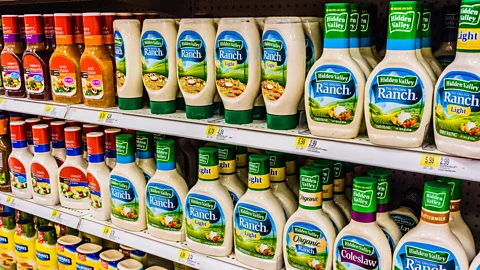
Clorox bought the Hidden Valley brand in 1972 and started bottling the dressing 11 years later. Ranch is now ubiquitous in America – the stuff of fast-food joints, diners and even pedigreed restaurants. It tops iceberg salads and serves as a zesty sauce for chips, chicken wings and crudités. Home cooks pour it into casseroles and pasta salads.
Ranch's true talent is making foods more palatable. The crust of a mediocre pizza is transformed by the bright and creamy condiment. Parents use it to convince children to eat vegetables.
There are ranch dill pickles and dill pickle ranch. In US supermarket aisles you'll find ranch-dusted tortilla chips, popcorn, crackers, potato chips, pretzels and rice cakes. It's that versatility that gives the dressing its essential American-ness.
 Alamy
Alamy"If there was an alien who dropped out of the sky, landed here and said, 'Tell me about your people', I would give them a bowl of ranch," said Ham El-Wally, chef of New York City's Strange Delight seafood restaurant. "This is everything you need to know about us as a society."
So yes, the dressing may have lived on Tesco shelves for years, but American restaurants are presenting overseas travellers with ranch in its full and creamy context.
"Visitors are experiencing ranch the way Americans actually consume it, and that makes a difference," said Suzy Badaracco, owner of Culinary Tides, Inc, a food trends think tank. "It also travels well as an idea. You can buy a bottle, take it home, show friends or recreate the experience after the trip."
But is the hype real?
However, an informal survey I conducted of England fans in New York City's Times Square casts doubt. Phil Nichols said that though his wife and daughter asked him to bring home a bottle, he did not plan on hauling any ranch back to Northamptonshire.
Had a group of four friends I spoke to eaten ranch dressing? No.
One Englishman I met said he'd tried ranch, but wasn't falling for social media hype. "I'm not some kind of moron."
On 26 June, Londoner Dave Chambers slathered his first-ever taste of ranch onto a slice of pizza. His verdict: "It was like a confused mayonnaise and mustard with a bit of cheese in it that was a bit sour." Would he bring any bottles home? "No." Would he eat it again in America? "No."
 Alamy
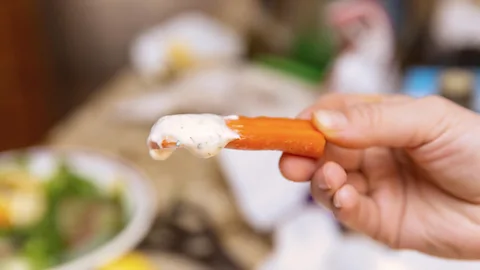
AlamyEven online, ranch's virality isn't straightforward. Seizing on the trend, content creators are harvesting and reposting ranch videos recorded years ago. A popular clip of a woman chugging ranch was first posted in 2020, as was this video of a red-headed Brit sampling the dressing.
There was also a fair amount of branded ranch chatter in the months leading up to the games. In May, Hidden Valley announced a "Ranchbassador" programme that would pay American ranch fans to promote the condiment abroad. Heinz launched a UK ranch dressing in April 2026; it has since reminded England football fans that there's no need to buy it overseas. "It's already home," the brand posted on Instagram. Hellman's, fresh from a 2025 UK release of Creamy Ranch and Spicy Ranch, introduced Blue Cheese Ranch and Buffalo Ranch this March.
Whether it's coincidence or savvy marketing, there are conspiracy theories on Reddit, pointing to a global ranch psyop. Would it be the most American play of all for a federal agency to funnel customers into the hands of Big Ranch?
More like this:
Badaracco, however, insists that the World Cup ranch enthusiasm is real. "The viral videos aren't creating interest in ranch so much as amplifying an experience that people are already eager to have," she said. "Mega-events like the World Cup expose millions of people to foods they might never have tried otherwise. While most visitors won't become daily ranch consumers, some will develop a genuine preference for it and look for it when they return home. That's how international food adoption often begins – not through advertising, but through memorable experiences."
Ranch sales in the UK are indeed climbing. Hellman's is projected to break ranch sales records in June, telling the BBC they've seen a 5% uplift in sales since the start of the tournament.
Aditi Hilgers, director of taste elevation at Kraft Heinz, also notes demand from retail shelves to pubs, where ranch is becoming this summer's staple. "We're actually ramping up production to keep pace with demand, which is a good sign of where things are heading."
Whether or not ranch is maintains its saucy stardom, for many World Cup fans it will forever remain the quintessential taste of the United States.
--
If you liked this story, sign up for The Essential List newsletter – a handpicked selection of features, videos and can't-miss news, delivered to your inbox twice a week.