Surprise discovery a 'rallying call' for church

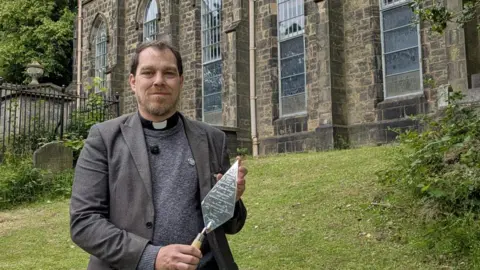 Rev Richard Hackett
The surprise discovery of a ceremonial trowel has given a boost to a church restoration project.
St Andrew's Church in Netherton is due to celebrate the 200th anniversary of the laying of its foundation stone next year, but is in need of £1.7m of repairs and is on Historic England's Heritage at Risk Register.
Rev Richard Hackett said the silver trowel was the one used to lay the stone and he saw it as inspiration to tell the story of the church and the people it serves.
"We're taking this as a rallying call to step forward," he said.
Hackett said the scale of the work they needed to carry out was daunting, so the discovery of the trowel had been "perfect timing".
"We were a little bit disorientated if I'm honest, then suddenly this phone call comes in and this man says I've found something that belongs to you," he said.
The call had come from a descendant of the original vicar, living in Pershore, who had found the trowel in his stepmother's cupboard.
"It's the craziest thing," Hackett said, "It's always the last place you look."
The trowel has important symbolism, he believes, because it was used by those who created the church and "it carries these stories of all these people with it".
Netherton is listed as one of the most deprived areas of the country and he said the question the church had to ask now was: "How does this church lay the foundation stones again for the people of Netherton right now?"
Next year, to mark the anniversary of the stone being laid, Hackett said he hoped the trowel would inspire more stories of the crafts and trades associated with Netherton.
He said he wanted to tell stories and "show what this church has meant to people over the years".
The church has been applying for grants to pay for the repair work.
Ultimately, he said the aim was to be off the Heritage at Risk register by 2030, which will be the 200th anniversary of the church opening.
Follow BBC Wolverhampton & Black Country on BBC Sounds, Facebook, X and Instagram.