1,000-year-old Viking cross returns after restoration

 BBC
BBCA 1,000-year-old Manx cross described as one of the island's most significant medieval monuments has been restored and returned to public view after years of conservation work.
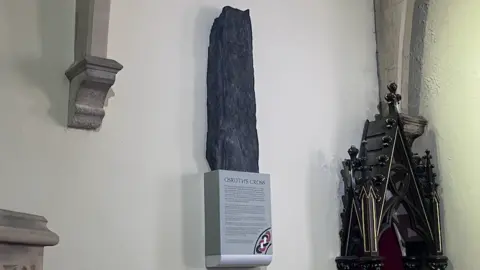
Osruth's Cross, a 10th-century monument with Viking-era carvings and a surviving runic inscription, has been reinstalled inside the Royal Chapel of St John.
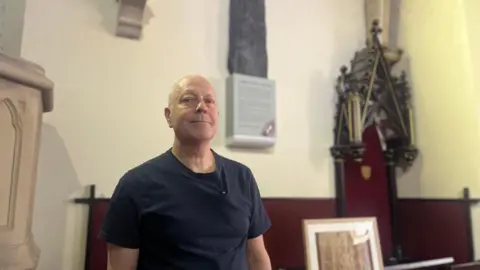
For Manx National Heritage's collections care and conservation manager Christopher Weeks, the project has been about protecting one of the Isle of Man's most important pieces of history.
"This is one of the most significant of the 200 or so Manx crosses that we have," he said.
"The subsequent years have been taken up with all kinds of things, like pandemics and various other things, and actually arranging the conservation and re-installation of this cross has been quite complicated."
The cross had stood in the porch of St John's Chapel near Tynwald Hill, but over time its footing became unstable, leaving the fragile stone at risk.
Mr Weeks said removing the cross gave conservators the opportunity to carefully examine and stabilise it.
"It had a concrete boot on when it came away from the porch, so I was able to remove that and remove lots of horrible fillings and things like that that had been put on it through the course of the 20th century," he said.
The work revealed more of the runic inscription on the stone and helped improve its condition for the future.
The 115kg (18st) cross is now secured inside the chapel on a specially designed bracket, where it is protected from the elements and more visible to visitors.
'Vital heritage'
The cross dates from the height of Viking influence on the Isle of Man.
The surviving section is the shaft of what was once a larger pillar cross, decorated with intricate interlace patterns.
A runic inscription on the stone names the person who carved it: Osruth, or 'Asroor.'
"We don't actually know who it was made for, but it's very likely that it was a memorial of some kind, possibly marking an important individual from the Viking period," Mr Weeks said.
The Isle of Man is home to more than 200 medieval crosses.
"The great majority of them are from the ninth and tenth centuries. This is the peak of the Viking occupation of the Isle of Man," he said.
"It was a very important centre of the Viking kingdom of Man and the Isles, which was the last part of the Viking kingdom to fall."
The designs found on Manx crosses combine influences from across northern Europe, making them a unique record of the Island's past.
"They are a vital and important part of our heritage on the Isle of Man," Mr Weeks said.
Osruth's Cross is now back on display at the Royal Chapel of St John, where visitors can see the monument nearly a millennium after it was first carved.
Read more stories from the Isle of Man on the BBC, watch BBC North West Tonight on BBC iPlayer and follow BBC Isle of Man on Facebook and X.