Mum grieving over son backs social media ban

 Kelsie Scully Photography
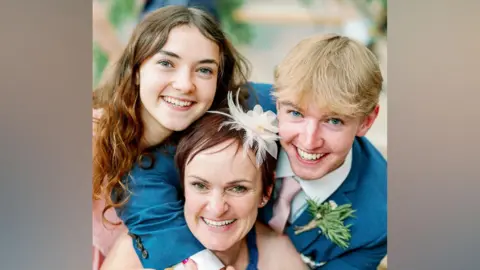
A mother whose teenage son took his own life and who claims his use of social media affected his mental health before his death, said she supported plans to ban under-16s from using social media.
Changes announced by the government on Monday will stop them from using social media sites, including Snapchat, TikTok, Instagram, Facebook and X, from early 2027.
Jane Johnson, from Stourbridge, said the changes were needed after the death of her son Leo in 2023 as she believed his use of social media played a part in his declining mental health.
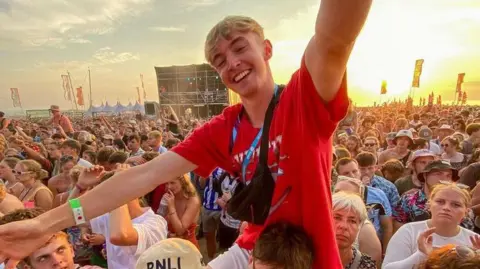
"Leo was bright, funny, really popular and outgoing, so the depression came a little bit out of the blue for us," she admitted.
"I think he was quite a responsible user of social media, but as time went on he started comparing his life with what he was seeing online and it really led him down a path where his life just didn't feel good enough."
Leo was 19 when he died and was diagnosed with depression three months earlier while studying at the University of Plymouth.
"I think for a lot of people around him who knew him, when he took his own life we had no idea how badly he was struggling because he hid it behind a very outgoing personality," Johnson added.
"His doctor described him as anhedonic, which actually means unable to feel pleasure in everyday life."
Earlier this month, the World Happiness Report, published by the Wellbeing Research Centre at the University of Oxford, found that excessive use of social media negatively impacts our wellbeing.
 Jane Johnson
Johnson claimed many young people were struggling with what experts described as "digital anhedonia", a reduced ability to enjoy everyday activities and experiences away from screens.
"People put their best parts of life on social media," she said.
"From our point of view, the bits that Leo put on seemed like he was living his best life at university.
"The online world brings a much bigger dopamine hit to anything they experience in the real world, so the real world starts to feel really flat."
The news of the ban has prompted mixed reactions, with many teachers and parents welcoming the move, while some young people argue social media remains an important way to stay connected with friends.
Johnson said any restrictions on social media use would need to be accompanied by support for young people as they adjusted to spending more time offline.
"I think the ban is a positive thing but I also think the next question needs to be, how do we then support teens and their families to help them come off the online world and help them find genuine pleasure in the real world," she added.
If you've been affected by the issues in this story, help and support is available via BBC Action Line.
Follow BBC Birmingham on BBC Sounds, Facebook, X and Instagram.