The train ride to Dublin's surprising coastline

 Getty Images
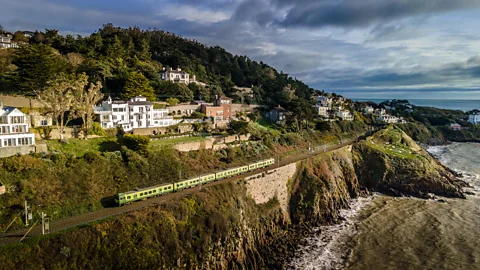
Most visitors don't realise Dublin has a coastline. Now, a newly expanded rail trail makes it easy to explore the world's only capital city within a Unesco Biosphere Reserve.
I'm heading away from Dublin city centre, watching high rises, graffitied overpasses and traffic queues give way to pasturelands and swathes of red valerian swaying against the rails. Meadows of wild carrot and hawkbit break into wide expanses of boat-flecked open sea. It’s a Monday morning in June and I have the northbound Irish Rail almost entirely to myself.
When most visitors think of Dublin, they picture Temple Bar's pubs, Georgian streets and literary legends. Yet Ireland's capital also sits on Dublin Bay, the world's only capital-city Unesco Biosphere Reserve, recognised for the way its wildlife and human inhabitants coexist in a working urban landscape.
"Most people don't even know there is a coast," says Helen Cole of Fáilte Ireland, the country's national tourism development authority. "They weren't even aware that Dublin City, our capital city, is sitting on this amazing bay."
That is why the Dublin Coastal Trail was created: to encourage travellers to venture beyond the city centre and explore more than 65km (40 miles) of Ireland's east coast. Launched in 2022 and expanded this year, the self-guided route links 16 seaside communities by rail. And while you could ride the entire route in about 90 minutes, the real reward lies in hopping off to explore fishing villages, medieval castles, dramatic cliff walks, wildlife-rich beaches and some of Ireland's finest seafood.
Beyond Temple Bar
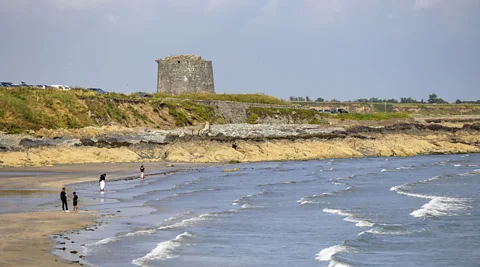
It takes 45 minutes to reach the trail's northernmost point at seaside Balbriggan. As we glide into the station, I spot a pale beach with a lighthouse-tipped breakwater stretching into the sea. Within moments, I'm on the sand amid lulling waves. Around me seniors in swimming caps wade into the water while schoolchildren roll up their trousers to hop among scavenging ravens and gulls.
Plan your trip:
The Dublin Coastal Trail runs through 16 coastal communities, from Balbriggan in the north to Killiney in the south. Balbriggan, Skerries, Donabate and Malahide are served by Irish Rail; at Malahide, transfer to the Dart for the remaining stops towards Killiney. Check timetables before travelling, particularly at weekends, and bring waterproof clothing and sturdy shoes: coastal weather can change quickly.
Despite being less than an hour from Dublin, it feels like another world entirely, and despite having visited the city many times, I've never ventured this far. Before setting off, I'd asked a few city-based friends if they'd ever explored the coast themselves. They looked at me as though I'd suggested another galaxy.
"A lot of Dubliners live in these villages," says Cole, who was born and raised in the area. "It's an all-round liveable coast [with] plenty to see and do for a visitor… They all have their own kind of vibe and there are very distinctive experiences you can have from one to the next."
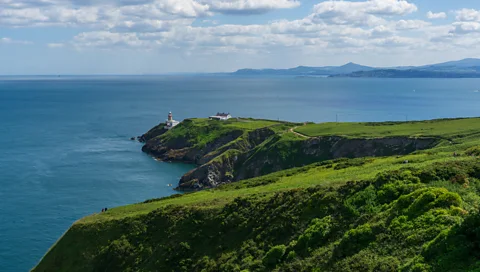
It's possible to visit every stop in one day, but I've decided to focus on a handful that capture the trail's diversity. Back on the train, I head south to Malahide, switch to the Dart and continue to Howth, the peninsula at the northern edge of the biosphere. Here, four circular walks fan out from the station and I follow one along dramatic cliffs, scanning for harbour porpoises in the water and endangered plants like betony and green-winged orchid among the headlands.
 David O'Regan
It feels more like Ireland's rugged west coast than a suburb of Dublin, despite being less than half an hour from Temple Bar. Huffs of mist and brine gust inward with gulls and guillemots, and the weather shifts quickly to overcast and rain, reminding me that this was once a harrowing place for seafarers.
Five stops worth exploring
Balbriggan: Tour 18th-Century Ardgillan Castle and its walled gardens
North Bull Island: Explore the ecological heart of the biosphere, with dunes, salt marshes, wading birds and a long sandy beach.
Blackrock: Pair the coastal walking trail with weekend browsing at Blackrock Market, home to more than 30 stalls and two-Michelin-star restaurant Liath.
Dún Laoghaire: Walk the harbour piers, try paddleboarding or a boat tour, then be sure to stop at family-owned Teddy's Ice Cream.
Sandycove: A favourite spot for wild swimming at the Forty Foot. James Joyce fans must visit Martello Tower that features in the opening scene of Ulysses, now home to the James Joyce Tower and Museum.
Before the North Bull Wall was built in 1820, ships and sailors perished here regularly. When it was erected, in addition to safer passage, one surprising result was a buildup of sand I can just make out across the bay: a wedge-shaped spit called Bull Island whose dunes and salt marshes helped earn Dublin its Unesco Biosphere designation.
I head down to the historic village of Howth, where ruins of a 15th-Century abbey towers over rows of brick and pastel houses, its ancient gravestones swathed in stands of orange poppies. These streets border Ireland's busiest fishing port and I stop at Kish Fish for fresh oysters and prawns, watching grey seals surface between the boats.
A city in balance with nature
One of the trail's newest stops, Blackrock, shows me how quickly the city gives way to nature. From its historic Dart station, a protected building from 1834, I follow part of the Blackrock Walking Trail towards Booterstown Marsh Nature Reserve, a bird sanctuary less than five miles from the city centre. Curlews and Brent geese, snipes and greenshanks feed in the wetlands, while across the bay, Howth's cliffs appear surprisingly close. I'm told that on weekends, Blackrock Market, Ireland’s oldest, opens on the seafront here, in a historic mid-18th Century building where local artisans sell handmade goods, along with antiques, food and coffee.
 Getty Images
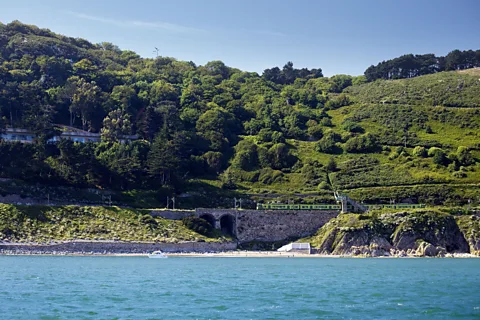
The trail's last stop is Killiney station, which opens onto a shore of wave-worn pebbles. Mixed shades of blue-grey, violet, pale pink and bone sandstone and shale stretch for miles along the steely Irish Sea. Killiney is known for being an affluent Dublin suburb, home to gated mansions and listed Georgian and Victorian buildings, but its namesake beach is for everyone.
More like this:
Solitary wanderers weave along the tide gazing out toward the liminal: Dalkey Island and Bray Head in the distance, the Wicklow Mountains flickering like apparitions out of salty, inland-billowing mist. At 18:00, families are spreading blankets across the stones, lining up picnics while children rush towards sweeping surf.
It's a reminder that this is a liveable, working coast that Dubliners make the most of – and one visitors should too.
--
If you liked this story, sign up for The Essential List newsletter – a handpicked selection of features, videos and can't-miss news, delivered to your inbox twice a week.