The habits that help children to eat more vegetables over their lifetime

 Getty Images
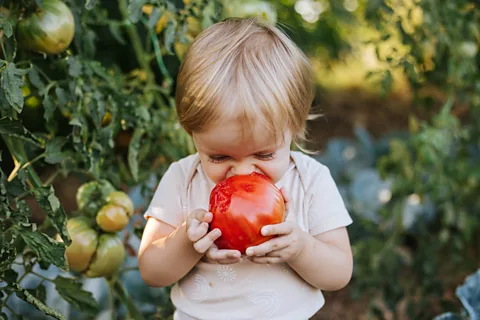
Small changes in how children experience food every day can have a lasting impact on what they eat.
Getting children to eat enough vegetables can be a struggle. Parenting forums and chat groups are full of questions like: "Is it normal that my child only eats beige foods?"
One reason for this is that their preference for sweet foods starts early. Even breast milk contains natural sugars that can make it taste quite sweet. Once they start eating solids, getting them to eat a stick of broccoli or spoonful of spinach can be hard going.
But children need a varied diet that includes plenty of fruits and vegetables. A poor diet affects cognition, concentration, behaviour and even academic performance. Obesity among children is increasing, which is linked to long-term health concerns, as well as worse educational outcomes.
Fortunately for parents, researchers have looking for new ways to improve childhood eating habits and have found some innovative solutions. These are six simple things that the science says you can try at home:
1. Frequent exposure
Feeding little ones as many different types of vegetables as possible in early childhood – and doing it often – can make a difference, says Marion Hetherington, professor of biopsychology at the University of Leeds in the UK. The most successful time to improve your child's liking of vegetables is in the preschool years.
"If you don't start to increase children's vegetable exposure by five years of age, it's [almost] too late," says Hetherington. "That's a really a hard message, but the fact is if they've missed out on all of that exposure, it's not impossible, but it's hard work." Studies have found that children tend to require several repeat exposures before a child will accept a food.
The evidence is mixed, however, when it comes to exactly how many times you might need to give them a food for them to accept it, ranging from five to 15. (This probably reflects the fact that all children are different.)
But those under the age of one may need fewer exposures than preschool children (three to four years old), who typically show higher levels of food neophobia, an aversion to trying new food.
And this process can start even before your child is born. There's evidence that what a mother eats is passed onto the foetus through amniotic fluid and can shape an infant's food preferences.
2. Offer vegetables first
Simply telling children a food is good for them can backfire, as children are more likely to choose foods that are described as "tasty" versus "healthy". Instead think about when in a meal you offer them vegetables.
Serving vegetables at the start of a meal when children are at their hungriest increases the likelihood of consumption. "Kids will often eat the thing they like the most," says Hetherington. "And then by the time they reach their peas, they don't want them anymore." So it can help to remove that competition with other higher calorie foods.
Encouraging vegetables first also helps children not to overeat, says Barbara Rolls, a professor of nutritional sciences at Pennsylvania State University in the US.
And while vegetables are not typically part of breakfast in Western diets there's no reason why they can't be eaten first thing in the morning too. You could try adding mushrooms and spinach in an omelette or courgettes in breakfast muffins. In one 2023 trial in eight UK child-care centres, researchers found that children would eat vegetables for breakfast over 60% of the time they were offered.
3. Increase the portion sizes of healthier foods
If introducing vegetables at breakfast or before a meal feels unrealistic, another approach might be to simply adjust the ratios of what is being served – reduce the amount of high calorie ingredients in favour of vegetables.
You can do this by simply increasing vegetables as a side dish or by grating vegetables such as carrots and courgettes into sauces.
This can be effective as studies have shown people tend to eat a similar volume of food and increased amounts of vegetables when portion ratios of meat to vegetables are altered. Increasing the amount of fruit and vegetables by 50% on a child's plate has been found to increase how much of these they eat.
 Getty Images
Other research has found that preschoolers eat more vegetables and less unhealthy food when they are given a choice of different types of vegetables at meal times.
4. Change how the vegetables look
Changing how a child perceives the food they are eating is also beneficial. Consider that much of what we want to eat starts with our eyes. When faced with multiple options, children will gravitate toward the food that looks the most familiar and appealing. (Read more about how we trick ourselves to eat better).
This means changing how food is presented could help children to eat more vegetables.
A team found that children were more likely to eat new foods when they presented it artistically on a plate. Other research has shown that children eat more fruits and vegetables if they are cut into interesting shapes, such as a butterfly, flower or teddy bear, showing that making healthy foods look fun increases their appeal.
Making healthy food more visible and easy to access as a snack also encourages consumption, research has shown. Children aged 10-13 were found to eat and choose more vegetables when presented with several in a single container with pre-portioned servings, rather than on several different plates. Preschoolers have also been found to eat 36% more vegetables when food was divided up into portions on a plate with different sections.
5. Eat together
What parents eat plays a huge role in normalising what children expect to eat. If parents eat unhealthy snacks their children are more likely to do so. Parents who eat fast food or skip breakfast are also more likely to have children who do the same.
A study of school children in New Zealand found the children of parents with healthier diets ate fewer cakes, chocolates and other savoury snack food. Similarly, children whose parents regularly modelled healthy eating have been shown to enjoy more fruits and vegetables.
 Getty Images
Eating together at least three times per week has been linked to healthier body weight, better eating patterns and an increased likelihood to eat healthier if parents are also doing so. One longitudinal study also found that those who took part in regular family mealtimes had higher fitness levels and drank fewer soft drinks.
6. Make food fun
So much of what we eat comes from our relationship with food.
Researchers also warn that pressuring children to eat certain foods can lead to lower enjoyment of food and a less healthy diet. Similarly, rewarding children with a high-fat or high-sugar treat can increase preferences for those foods.
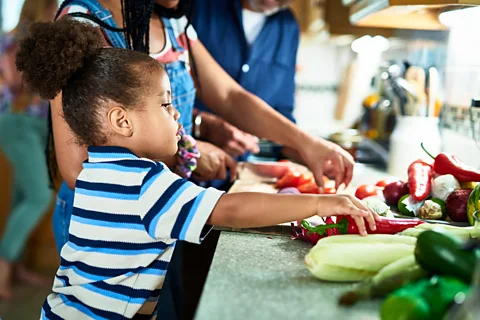
But simply letting children play with food can help reduce food neophobia, or a fear of anything new, according to one study. Researchers encouraged children to touch, smell and look closely at ingredients including beetroot, chickpeas and pak choi, but with no expectation that they taste them. The children became more open to unfamiliar ingredients and were more willing to try them later on.
More like this:
Encouraging the children to cook also helped increase their desire to eat unfamiliar foods.
Experimental chef Jozef Youssef, who collaborated on the study, says the key is reframing how children experience food. "There's something about gamifying and engaging in sensory play that works with children," he says. "When in a very relaxed and laid-back, unpressured environment, children are very willing to have a bit of a play with food and taste and try and experiment with different things."
With any luck, all this might just help to get your child to eat something that isn't just beige.
* Melissa Hogenboom is a senior health correspondent at the BBC and author of Breadwinners and The Motherhood Complex. She is melissa_hogenboom on Instagram.
--
For trusted insights on health and wellbeing, sign up to the Health Fix newsletter by senior health correspondent Melissa Hogenboom who also writes the Live Well For Longer and Six Steps to Calm courses.