States approves £16.5m to remove contaminated soil

 BBC
BBCDeputies have agreed to spend up to £16.5m to remove, export and treat soil outside Guernsey Airport that is contaminated with Perfluorooctane sulfonate, also known as PFOS.
PFOS is part of a group known as "forever chemicals" because they breakdown very slowly and have been linked to serious health conditions and environmental risks.
States Trading Supervisory Board President Mark Helyar told the States that "doing nothing is not an option".
Deputy Neil Inder said a "gun had been put to the head" of deputies in having to agree to the move.
"Deputy Helyar says 'you have to vote for this because its going to run out of licence and you've hit a wall'," he said.
"I think this goes to the core of actually how you as elected members are managed by your civil servants.
"This is often a dirty trick by civil servants to put you in a position where you've got no choice at all and this is where you are again."
"The waste management licence is being extended only in six-month increments, underscoring the urgency," he said.
Helyar said the soil would be taken to the UK.
"The process is straightforward in concept, excavate the estimated 8,500 cubic metres of soil, transport it by road to St Peter Port Harbour, ship it to a UK facility, wash it to remove the PFOS and treat the residual material appropriately," he said.
"The sand and gravel will be cleaned and reused and the States' liability will end permanently."
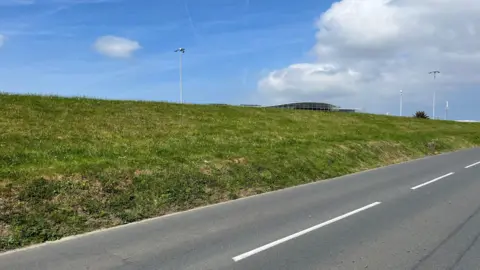
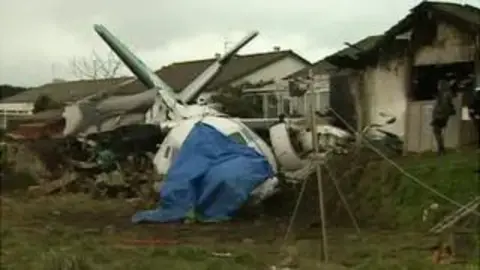
The bund was created in 2012 after soil contaminated by firefighting foam was removed from around the airport and the site of a fatal plane crash on nearby Forest Road.
Deputy Sasha Kazantseva-Miller said putting the decision off had been costly.
"If we don't deal with the capital expenditure projects at the time when they are required and needed, the cost that we are facing down the line just escalates exponentially to a point where we just cannot afford to make those choices."
Former doctor Deputy George Oswald highlighted his concern about the public health impact if the soil was not removed.
"When I first saw this proposition and the large amounts of money concerned I did have my worries about whether this as an appropriate use of public funds," he said.
"I took some considerable time to look at the literature, consult with my colleague in public health Dr Nicola Brink and look at the reports from Jersey.
"I came to the conclusion despite the large sum required to get rid of this stuff, this is a necessary proposal."
Follow BBC Guernsey on X and Facebook and Instagram. Send your story ideas to channel.islands@bbc.co.uk.