Research helping farmers grow food in saltier soil

 Stephen Granville/Getty Images
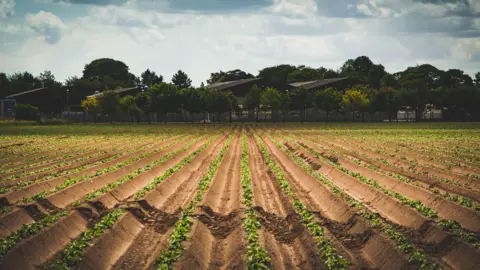
Scientists researching how to protect crops from increasing soil salinity have said their latest findings will support future food security.
The study, by the University of Lincoln, is looking at how farmers can continue to grow food in soil that is saltier due to climate change.
Prof Matthew Goddard, who is leading the study, said research has shown that naturally occurring soil microbes can be "trained" to better tolerate saltier conditions.
He said experiments using small amounts of seawater had shown farmers could "engineer natural agricultural microbiomes to support food production under climate change".
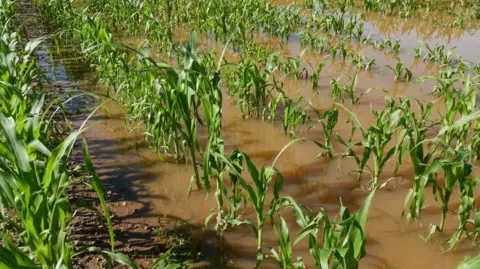
The researchers said saline levels in soils were increasing due to rising sea levels, changing rainfall patterns and increasing temperatures.
Goddard said that in Lincolnshire in particular, farmers are facing a "double whammy" of sea surges on their land and more seawater in their irrigation channels.
 Getty Images
Describing this study, Goddard said they have "emulated the east of England 20 years from now" using existing rainfall patterns.
He said the experiment set out of find out whether they could "teach soils and prepare soils to be ready for one particular aspect of climate change, which is sea level rises".
According to the scientist, the study showed that by exposing soils to low levels of saline irrigation, it encouraged "naturally occurring microbial communities" within the soil to adapt over time.
He said these adapted communities were better able to function under increased salinisation, helping established crops continue to grow and maintain yields, where higher salinity would normally have a damaging effect.
Goddard added: "This approach could be integrated with other methods into a holistic management approach that could help secure food systems for future climate change conditions in a sustainable way."
The scientists will now look at how salinity reacts with fertilisers, and how it reacts with crop pathogens, with early research suggesting increased salinity could help reduce potentials blights.
Listen to highlights from Lincolnshire on BBC Sounds, watch the latest episode of Look North.
Download the BBC News app from the App Store for iPhone and iPad or Google Play for Android devices