'Reversing a cycle of decline': What does the future hold for Glasgow's buses?

 Getty Images
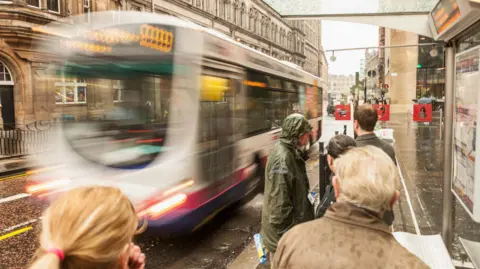
At a bus shelter on Glasgow's Hope Street, a crowd is slowly gathering on a rainy Tuesday morning while waiting for the 7 or 7A service to turn up.
Among them is Robert Hird, with both a bag of shopping at his feet and a piece of wisdom about the city's most commonly used mode of public transport.
"People will always moan about the buses," he says.
However "massive change" could be on the way, with an action plan published last year by Strathclyde Partnership for Transport (SPT) favouring returning services to public ownership.
The plan aims to tackle issues like congestion and affordability, reversing a decline in passenger numbers.
Juggling different complaints and observations from the public, pressure groups and bus operators is not an easy task, though.
"The picture we are seeing is network decline, and it has been that way for a number of years, for various reasons," says Gordon Dickson, SPT's head of bus reform.
"It's a big concern – journey times and speeds are not where we want it to be, and we have a very fragmented network of buses in Scotland. There is a lack of coordination there, and affordability continues to be a challenge."
This is a viewpoint echoed by passengers who spoke to BBC Scotland News.
"The whole infrastructure is not great – you end up paying a lot for a service that is really erratic," says Michelle, from Bishopbriggs.
"My mum lives in the Southside and she's forced to get taxis for hospital appointments because it can be one bus an hour that takes an hour and 20 minutes for a trip that's 20 minutes by car."
 Stella Rooney
Other bus users agreed, saying city centre services are often congested - a situation escalated earlier this year when the fire on Union Street forced extra diversions.
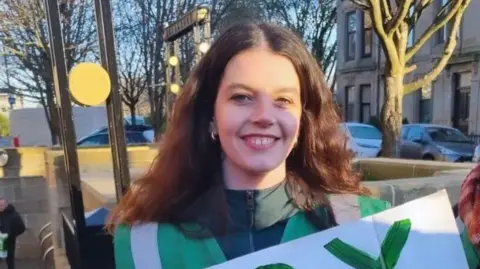
"We have a city centre where there is only a number of streets buses can go down and you'll be quicker walking sometimes because a bus just gets jammed in traffic," says Stella Rooney, of the Living Rent Glasgow group.
"You add in something like the Union Street fire and it really affects services."
About 75% of public transport journeys across Scotland come via bus.
Rooney speaks of a need to have "joined-up thinking" with public services, citing frustration with the cost of jumping between trains, buses and Glasgow's subway.
It's a point raised by Michelle too, who uses both a train and a bus to get to her work.
"You go somewhere in Europe and it just feels so much easier getting around," she says.
 PA Media
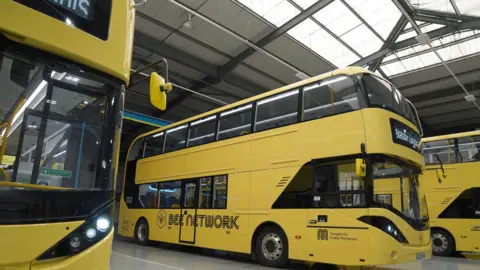
Rooney is an advocate of the biggest talking point from SPT's plan - that buses come back into public ownership for the first time since a fleet of orange vehicles rolled across the city's roads in the 1980s.
"At the moment in Glasgow we are not getting a bus service we can have a democratic say in – we saw that when night buses were reduced a few years ago, which has really affected the whole night-time economy."
But moves to ape somewhere like Manchester - where private bus firms essentially operate on set routes - are some way away.
The Transport Scotland Act 2019 granted local authorities powers to run their own bus services.
SPT is currently going through the process of securing external support and testing franchising against other options, but that will last until 2028.
"We know there is frustration that it seems to be taking ages, but the 2019 powers only really came into existence last year," says Dickson.
"We received guidance from Transport Scotland on how to use them last September.
"There is no lack of willingness from SPT to advance this as quickly as possible, but there is a very set process to follow - you can't just flick a switch."
 Getty Images
For some campaigners the most damning argument in favour of change is the decline in numbers.
In 2007/08, nearly half of adults (48%) in the SPT area used a local bus at least once inside a month - by 2023 this had fallen to 39%.
"It's a result of companies cutting routes, cutting service levels, less people being able to rely on buses and companies putting prices up," says Ellie Harrison, of the Get Glasgow Moving group.
She believes public ownership would reduce traffic being concentrated in certain areas, and ensure all parts of Glasgow are catered for.
"Right now you have private operators all wanting to get into the city centre, and that creates congestion, just clogging up city streets."
She is extremely frustrated at the prospect of an overhaul being several years away.
"We have had a lot of wins behind the scenes, but nothing visible on the streets yet. We want parliament to speed up this process as it is incredibly complicated at the moment.
"People are sick of waiting, and in another five years services will get more expensive."
There are also those not keen on a radical overhaul to begin with.
Greenock company McGill's are the largest independent bus operator in Scotland.
A spokesperson for the firm called SPT's proposals "staggeringly expensive and ideologically driven", pointing to cost overruns in Manchester as one concern.
They added: "McGill's is a private business which was built at shareholders' expense. What SPT are in the process of doing is confiscating the right of that business to trade and putting the business up for auction to the lowest bidder."
The company also said a government survey showed users in Strathclyde recorded the highest passenger satisfaction in Scotland.
First Bus said a "strong and clear strategy" was needed to tackle issues like congestion, but passenger satisfaction remained high.
Passengers themselves have mixed views.
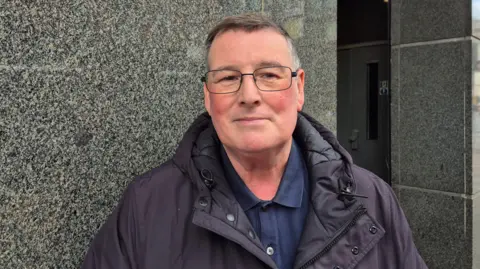
Robert Hird told BBC Scotland he feels there has been improvement in recent years.
"Usually about 90% of the time they arrive on time, and it's a more reliable service than it used to be."
Standing at one of Hope Street's many other bus stops waiting for the 61 bus, Rose Carson is in agreement.
"It's a really good service for me, there's one about every 10 minutes and it's usually on time.
"I suppose it depends what time you go on them, but mid-morning it's fine. I don't know if the city council being more involved in things would be good."
Several people mentioned concerns connected to the council's controversial Avenues project, which has seen parts of the city centre dug up and resurfaced.
"The Avenues project is something we support, as it is trying to get people to switch to more sustainable transport," says Harrison.
"But you are having road reduction measures before public transport measures are in place. We have gone about it in the wrong order."
The local authority said the work will result in bus times being cut, due to new bus lanes being created.
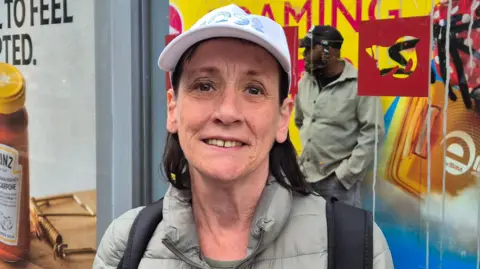
The one thing all parties agree on though, is the importance of the bus network to Glasgow itself.
Rose told BBC Scotland that she is a cancer survivor, and has been using the service much more while off work as she recovers.
"I'm at home a lot at the moment, so I've been using the buses to get out the house a bit.
"With my bus pass I can just get out and about easily – they've been a wee saviour."