Could this 'tram-like' bus be part of Aberdeen's transport future?

 BBC
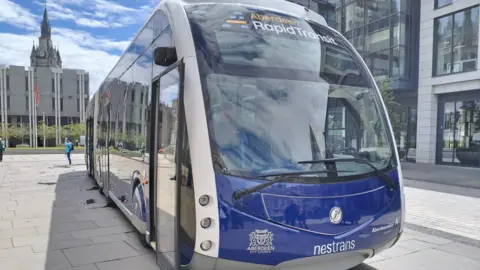
BBCPeople in Aberdeen are being given a glimpse into the city's future transport possibilities - a bus that looks and feels more like a tram.
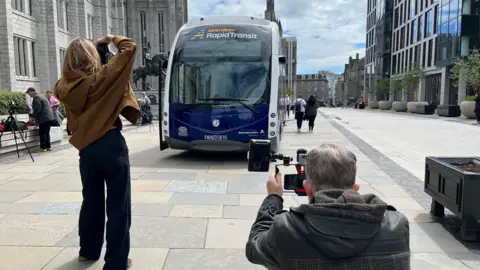
Transport partnership Nestrans have put one such vehicle on show in the city centre to give people a chance to inspect it.
It is part of the Aberdeen Rapid Transit scheme, which - if it goes ahead - would create dedicated lanes to take the buses on two routes linking the city centre to key sites including the airport, infirmary and university.
The plan could cost hundreds of millions of pounds, but Nestrans insists the vehicles are easier to board than a typical bus and will cut journey times by making tickets available to purchase in advance.
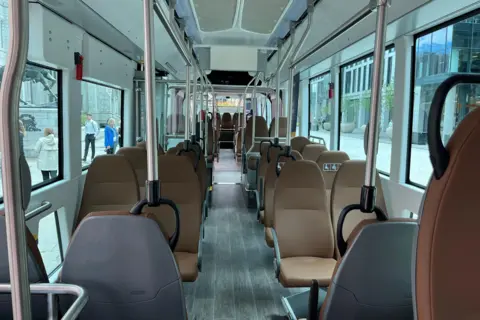
But how, exactly, does it differ from a bus?
The vehicles feature level boarding, multiple wide doors and room for up to 150 passengers.
Paul Finch from Nestrans says they should deliver "greater capacity and better reliability than an ordinary bus system".
He also said it was about a "jigsaw" of parts - including the whole system which would be put in place - not just the vehicle itself.
He added: "It is part of having modern vehicles that are easy to get on and get off.
"It is about the ticketing strategy so you can be having your ticket before you board so you are not delayed by the interaction with the driver on and off.
"That helps the journey times."
A report last year suggested the project could cost at least £167m, up to £323m.
The lower cost option would require less new infrastructure, while the highest cost option would see the project in a fuller form including more construction and integrated cycling provision.
Finch said the cost would not be fully known until an outline business case was brought forward next year.
"There is a capital cost and that sits within a range," he told BBC Scotland News.
"We should not be shy of asking for what we actually need for the support going forward to deliver on our ambitions.
"The north east of Scotland is such an important part of the economic viability of Scotland, it contributes so much.
"We should be asking for this sort of amount of money, and we should be working at how we can find ways to deliver that."

The vehicle will also visit Westhill, Kingswells and Portlethen next week.
It was transported from Spain for the demonstration event.
Finch said the hope was the scheme could be operational within five to 10 years and that he was "confident" of that happening.