Serious failings found in new military crimes unit, leaked report finds

 Family photo
A leaked Ministry of Defence (MoD) report, obtained by the BBC, has highlighted serious failings in a new military command set up to investigate the most severe crimes, including rape and sexual assault.
The Defence Serious Crime Command (DSCC) was launched after the death of 19-year-old Gunner Jaysley Beck. An inquest found the Army's mishandling of sexual assault and harassment complaints made by Beck contributed to her taking her own life, and exposed "systemic failings".
However, an internal review highlighted ongoing concerns with the unit and warned the military still risks failing victims.
The MoD said the findings had been accepted and significant work has been undertaken since.
The DSCC was created in 2022 to investigate serious crimes independently, outside the military's chain of command.
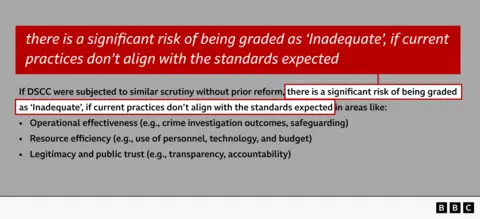
However, the BBC can reveal that an internal review, which was carried out between 21 August 2025 and 12 November 2025 and overseen by a former senior civilian police officer, concluded that if the DSCC was subjected to scrutiny similar to civilian police forces there would be "a significant risk of (it) being graded as inadequate".
In a statement, the MoD said the review was commissioned "to provide honest challenge, identify areas of improvement and to help ensure the highest standards for victims and witnesses".
It added that following the findings, the DSCC had carried out significant work "including further investment in victim and witness support, strengthening governance and safeguarding arrangements and accrediting investigators to nationally recognised policing standards".
The DSCC was committed to transparency, continuous improvement and ensuring victims receive the support and service they deserve, the statement continued.
The leaked review warned that the DSCC risked failing victims in a number of areas, including ineffective investigations with delays and inconsistencies, gaps in victim support and insufficient resources and workforce instability.
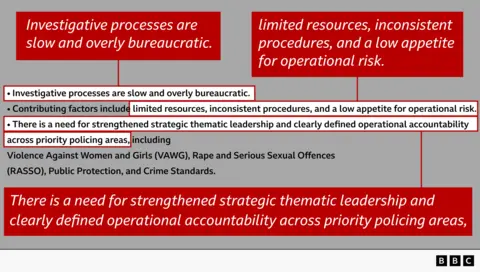
It added that current investigative processes were "hindered by excessive reporting requirements, unclear guidance and inconsistencies".
Without reform there would be an "erosion of trust" in the military justice system, it said.
Responding to the review, Jaysley Beck's mother Leighann McCready said people in the armed forces "deserve so much better".
"It's extremely disappointing to hear that military policing continues to be affected by such serious challenges," she told the BBC.
"Sadly Jaysley's case didn't even get sent to the police until after she died and the coroner made his critical findings. This report makes me fear for our young service women wanting to report today."
The review further said the DSCC needed to "strengthen leadership" in the way it handles cases of rape and serious sexual offences.
Despite the MoD's reforms, it said, there are continued barriers for victims reporting serious crime including "fear of not being believed, concerns about career impact, unclear reporting pathways and lack of trust in the chain of command and service policing".
In another case reported by the BBC earlier this year, 'Kate' expressed her unhappiness with the unit's handling of her rape allegation against a colleague in the Army which despite being supported by evidence of physical injuries, she said missed multiple lines of inquiry.
The BBC shared a copy of the leaked review with Emma Norton, founder of the Centre for Military Justice, who said it reflected the concerns of many of her clients.
She told the BBC that despite some recent improvements they continue to see "serious shortcomings in the arrangements for military police complaints, poor handling of allegations of coercive control and behaviour".
The report indicated there was still resistance to giving victims of serious crime the accountability and justice they deserved, she said.
In another case, Rosie, not her real name, was in a relationship with a member of the Army and said she was violently assaulted by him in September 2023.
She said she was dragged down stairs and violently pushed out into the street, suffering cuts, bruises and burns.
She said she reported the incident to the service police who then referred it to the DSCC.
The Service Prosecuting Authority advised there was a realistic prospect of conviction for battery if charges were made within a time limit of six months.
However, the unit did not refer the charges within the required time window.
The DSCC later stated the delay was due to a high caseload and issued an apology, accepting that "the level of service received in this incident was below the standard that would have been accepted".
While the review said the DSCC "had made significant strides in strengthening its operational capability", it also warned of low morale and "workforce instability".
With a 16% increase in serious crime investigations between 2023 and 2024, there were "persistent staffing gaps... limiting the (DSCC's) ability to respond effectively".
The leak of the review also comes after four women told the BBC they had been sexually assaulted and harassed at an Army training college for teenagers within the last five years.
The women had all attended the Army Foundation College (AFC) at Harrogate, North Yorkshire, and said the incidents happened when they were aged 17.
An Army spokesperson called the reports "extremely distressing and serious".
"Unacceptable and criminal behaviour has absolutely no place in our Armed Forces," the spokesperson added in a statement last week.
If you have been affected by any of the issues raised in this story, help and support is available on the BBC Action Line.