Sadness as airport shuts to make way for gigapark

 BBC
BBCWhen Take That flew into Coventry Airport last week, becoming the final commercial passengers to land on its runway, the pop supergroup brought down the curtain on nearly 90 years of history.
The airport will cease operations on Thursday, some 90 years after opening as Baginton Aerodrome in 1936.
They were not the only famous faces to have passed through the airport over the decades - Pope John Paul II landed there in 1982 during his six-day visit to the UK, the first by a reigning Pope.
During World War 2, it served as an RAF fighter station and twice became a terminus for holiday flights. In later years, it was primarily a base for private business jets, pilot training, and the Air Ambulance Service.
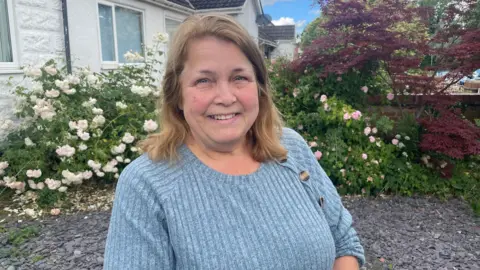
Alison Green was born next door to the airfield in Baginton and as a girl she would watch royalty fly in for events in the area.
The 65-year-old recalls Princess Anne touching down, with rock band Status Quo among those who also visited through the years. On other occasions, the Red Arrows and Concorde swept overhead during air shows.
"I think it's sad," she said of the airport's closure. "The end of an era."
 Glyn Matthews
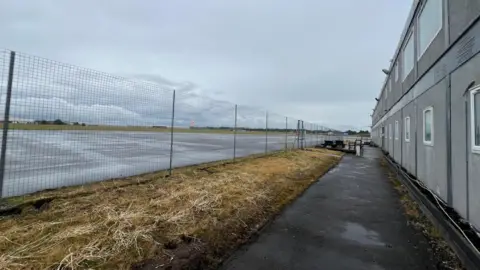
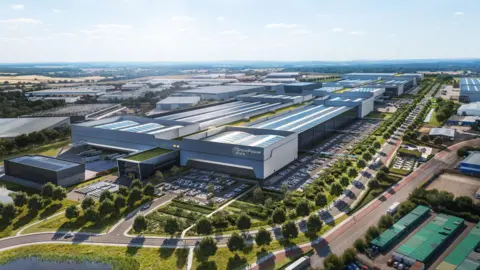
The airport is making way for the GreenPower Park, a £2.5bn battery and clean energy scheme set to create up to 6,000 jobs and hopefully put the city at the forefront of Britain's switch to green energy.
But there are mixed feelings among those who live and work nearby. Some fear losing a quiet way of life, in a village that has stayed peaceful despite sitting about three miles from Coventry city centre.
"Is it progress? I don't know," Green said. "[There's been] a demise of the village. We're getting more and more factories coming nearer and nearer."
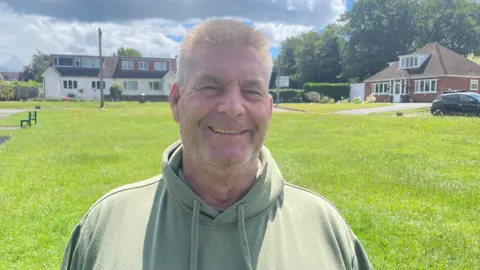
Paul Hutt agreed with his neighbour.
The 67-year-old has lived in the Baginton for 22 years and watched on as industrial units have spread around the area.
"I think most people's fears are that it won't be a village anymore [and] it'll just be part of a bigger area," he said.
"I'd like it to stay as it is."
 Glyn Matthews
But for some businesses, there was little to do but pack up and leave.
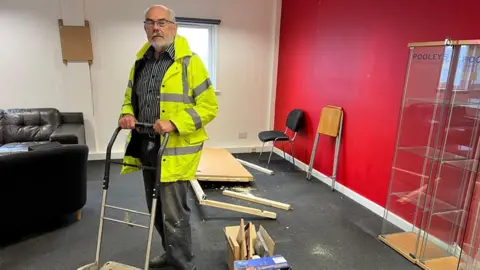
Glyn Matthews, who runs the Almat Flying Academy and has been at the site since 1968, spoke to BBC CWR as he cleared his office ahead of a relocation to Wolverhampton.
 GreenPower Park
"[It's] desolate, our building is empty," he said.
"I thought I'd see my time out here but no, powers that be have decided against that."
Matthews believes the site could still have had a future as an airport and said he was not confident the redevelopment would happen quickly.
But bosses insisted enabling works would start immediately, with infrastructure operations and environmental mitigation beginning on Friday.
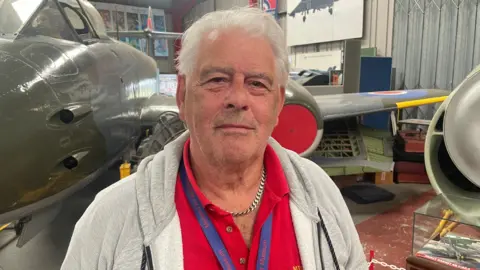
Barry James, chairman of the Midland Air Museum which neighbours the airport, told the BBC about the site's history, recalling how the Armstrong Whitworth company built Lancaster bombers there during the war, employing thousands.
The museum will stay open but he said he was disappointed by the airport's closure.
"I think it's a shame that a more open-minded view couldn't have been taken to finding a way the airport could have been developed for the success of the local area," he said.
"Once you lose an airfield that's it. There is no comeback."
GreenPower Park said the decommissioning of runway operations "paved the way" for seven manufacturing facilities that would see the area become a "centre of excellence".
As well as the enabling works, a statement said a new electrical substation was also being installed to provide a dedicated source of power from exclusively renewable resources.
Mike Murray, project director for GreenPower Park, said: "The closure of the airport is a major milestone as we transition the site to a major manufacturing hub, with the potential to generate around 6,000 jobs."
Follow BBC Coventry & Warwickshire on BBC Sounds, Facebook, X and Instagram.