Soaring temperatures ground birds of prey

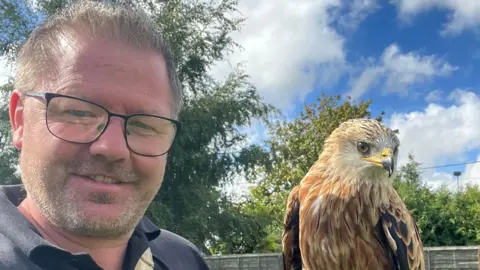 Mark Birdsall
A bird of prey centre has scrapped shows due to soaring temperatures.
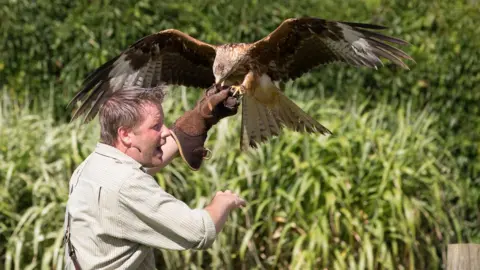
Baytree Owl and Raptor Centre, near Spalding, is one of the longest-running owl and bird of prey centres in Lincolnshire, and is home to more than 60 creatures.
Centre manager Mark Birdsall described the arena as a "heat trap" and said the mercury topped 35C on Tuesday.
Flying displays, experience days and school visits will be rescheduled, he said.
The third heatwave of the year has started across parts of the UK, with parts of Lincolnshire expected to reach 31C on Thursday.
While this heatwave is not likely to be as extreme as the one in late-June where temperatures peaked at 37.7C, current forecasts suggest a temperature exceeding 30C in the UK could last for up to 10 consecutive days.
In June, the centre - a registered conversation charity - had to cancel all displays and close for multiple days as their flying arena reached almost 40C.
"It was just too hot for man or beast to be out in the paddock," Birdsall said.
The heat has resulted in a 20% slump in visitor numbers, he said.
"This whole week really has been a bit of a write-off."
 Wild One Photography
The centre houses birds from cooler climates, including snowy owls, which have thick coats and find it hard to regulate their body temperatures.
"It has become very difficult to manage," Birdsall said. "We're spending our life with a hose pipe.
"Obviously days that they can't get out is quite frustrating for them - quite frustrating for us - and we have to try and entertain them in other ways."
Staff have made ice blocks, created more shade and moved the birds which usually sit out on the lawn in the sun.
Birdsall said he had looked for extra funding so he could "make up the shortfall" in takings and carry on caring for the birds.
He is hoping to adapt the outdoor flying arena to make it more shaded, as well as adjust their indoor flying area which is currently "like a greenhouse".
"The safety and welfare of the birds is obviously paramount," he said.
Citing climate change, Birdsall said it was likely his team would find itself in a similar position again.
He added: "It's something we're now going to have to look to try and adapt and evolve... so we can carry on flying the birds."
Listen to highlights from Lincolnshire on BBC Sounds, watch the latest episode of Look North.
Download the BBC News app from the App Store for iPhone and iPad or Google Play for Android devices