'I was labelled lazy at work but I was in sensory hell'

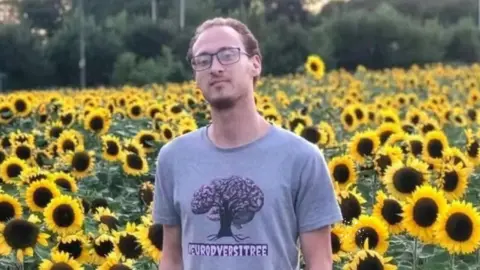 Stefano Giuseppe Brazzo
Callum Brazzo remembers being labelled as "lazy" when he started working in a food factory in his early 20s.
He says he was struggling with sensory overload.
"My internal world was anything but lazy", says Brazzo, who is autistic with obsessive-compulsive disorder (OCD) and Tourette syndrome.
"I was doing my absolute best to cope with the sensory hell that I was going through with food and the gloves popping and how it felt.
"All these things that no one could see. To then be called lazy really set me off."
Now 34 and living near Spalding in Lincolnshire, Brazzo believes his experience reflects a wider issue for neurodivergent people navigating the workplace.
Expectations, he says, are often shaped around a narrow idea of how people should think and behave, leaving little room for difference.
"It's always put on us as autistic or otherwise neurodivergent people to fit in," he says.
"If you measure up your own self-worth to standards of a very narrow-fitting society we are always going to fall short."
Improving understanding
The term neurodivergent is used to describe people whose brains process, learn or behave differently from what is considered typical. It can include conditions such as autism, ADHD, OCD, Tourette's, dyslexia and dyspraxia.
Estimates vary, but some organisations suggest around one in five people may be neurodivergent.
For Brazzo, one of the biggest barriers comes down to understanding, or a lack of it, particularly about communication.
"There's not the understanding on a broader level of communication being different for some people," he says.
He points to something as simple as the wording of job adverts.
Phrases such as "team player", he explains, can be interpreted very literally by some autistic people.
"If you write things a bit differently, that can change the game entirely," he adds.
Brazzo now runs a weekly peer support group called Autistic Led, where adults meet to read, play games and share advice.
It is a space designed with neurodivergent people in mind.
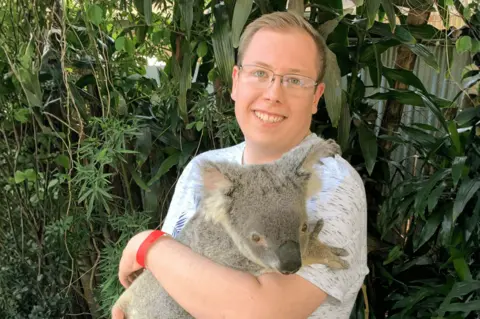 Handout
'Just listen'
A similar theme runs through the experiences of Ben Langsdale from Hedon in East Yorkshire.
He previously worked in finance but says he found the environment difficult to navigate.
Langsdale has been diagnosed with AuDHD, which means he is autistic and also has attention-deficit/hyperactivity disorder.
"My job was made harder because I couldn't perform to the best of my ability at that time because I didn't have those adaptations in place," he says.
He has since set up his own travel agency, Travel Without Limits, designed to make holidays more accessible.
While it caters for a wide range of customers, it includes specific adaptations for neurodivergent people.
This might mean breaking the process down into manageable steps, offering clear guides to each stage of a journey, or helping clients identify quieter travel times and destinations.
His approach is simple.
"Just listen," he says.
"Listen to what that individual has to say, what things they would find supportive."
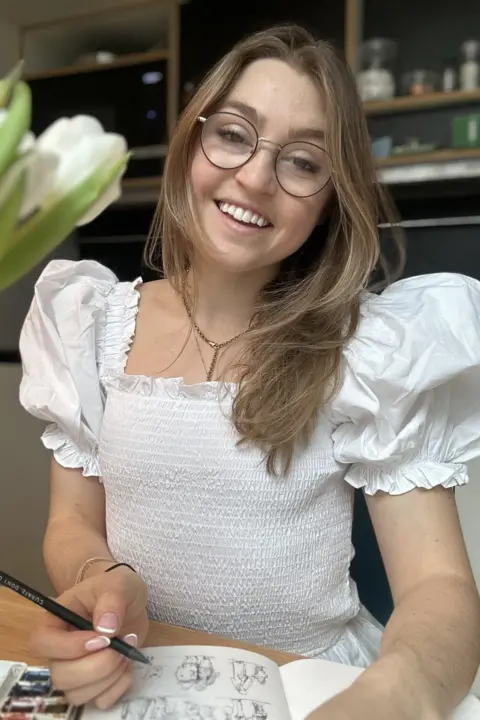 Lucy Dunbar
Working differently
For Lucy Dunbar, who lives in London, self-employment has also provided a way to shape work around her needs.
The 29-year-old illustrator has ADHD and says working in part-time jobs during university was largely positive.
She believes some aspects of her neurodivergence were helpful in those roles.
"I don't think it was detrimental to me in these situations.
"My empathetic side helped as I worked in a school helping people read their exam papers."
Despite this, she says she feels "very lucky" that she was able to start her own business to work around how her "brain is feeling".
She says if she had needed to work in a full-time role she would have been "so anxious".
She would have felt like she was "letting people down" if she struggled to get the work done on time.
With her own business, Dunbar is able to adapt her work to suit her own needs, such as starting work when she feels she is able to "lock in and turn drawings around extremely quickly".
She says: "I guess it's just understanding that people's brains work differently and maybe their organisation doesn't look the same as yours."
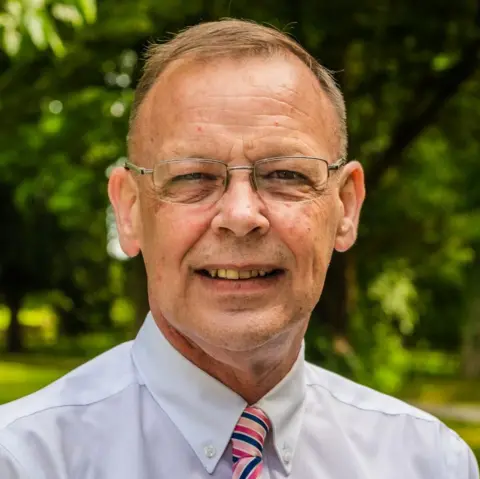 Anthony Lloyd
'Be the same'
Dr Tony Lloyd, is a psychotherapist who coaches neurodivergent people who work in creative industries. He believes that neurodiversity exists in every workplace, whether it is recognised or not.
The challenge for both workers and employers, he says, lies in long-standing cultural expectations.
"There is something in our society, our culture, that wants everybody to be the same," he says.
That pressure to conform can be damaging, he adds, particularly when difference is seen as a deficit rather than a strength.
"That's potentially quite harmful because who decides, which hierarchy decides, what is the right way, what is the right type of person?"
Lloyd also suggests that many people may go through life without ever being formally identified as neurodivergent.
"But we've got to understand that over 80% of people are never identified, never diagnosed."
Rather than focusing on limitations, he says employers should look at what individuals can offer.
"It's not about looking at them in terms of what can't you do? It's about what can you do?"
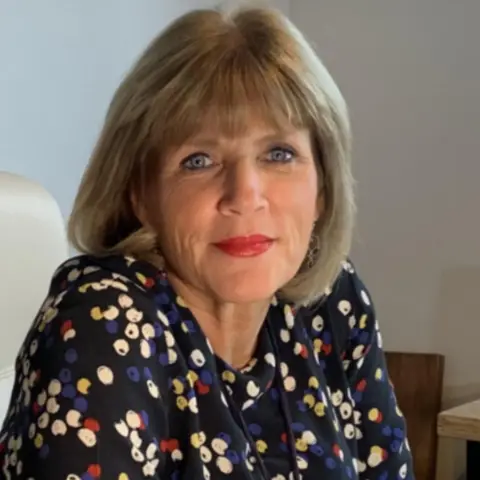 Dr Tricia Shaw
'More inclusive'
The idea that systems, rather than individuals, should adapt is echoed by Dr Tricia Shaw from the University of Hull.
She believes change should "start in schools" with reform of the curriculum alongside more creative ways of working.
She points to the government's pledge to spend billions on making mainstream schools in England more inclusive for pupils with special educational needs and disabilities (SEND).
"This is about us adapting, whether that's schools, whether it's society," says Shaw, who previously worked as a primary school teacher and special educational needs co-ordinator.
"It's not putting the onus on the person who is neurodivergent to adapt.
"For me that starts in schools and the way that we work with our children right from birth."
She asks: "Do we need a diagnosis, or do we need society and schools to become more inclusive from the first principle so that people don't feel that they have to be diagnosed and labelled and pigeonholed in such a way?"
Listen to highlights from Hull and East Yorkshire or Lincolnshire on BBC Sounds, watch the latest episode of Look North.
Download the BBC News app from the App Store for iPhone and iPad or Google Play for Android devices