Should Scotland's biggest city have an elected mayor?

 BBC
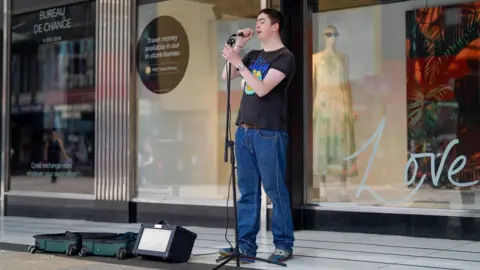
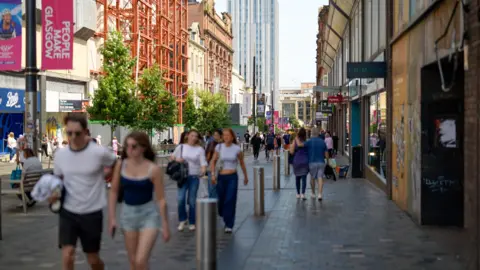
BBCIt's a sunny afternoon in Glasgow city centre and a busker is treating us to covers of songs by The Smiths and The Stone Roses.
Manchester's music scene – and some of Andy Burnham's favourite bands – have clearly broken through north of the border.
But one of his favourite policies - regional mayors - hasn't.
The question of whether or not Scottish cities should have mayors has become something of a live debate in recent weeks.
Burnham, a former mayor of Greater Manchester and now prime minister, makes no secret that he thinks this is an effective way to run local government.
But the power to introduce them in Scotland lies with ministers in Edinburgh not Westminster.
If Scotland was to get mayors, the obvious place to start would be Glasgow. Or to be more precise, the Glasgow City Region.
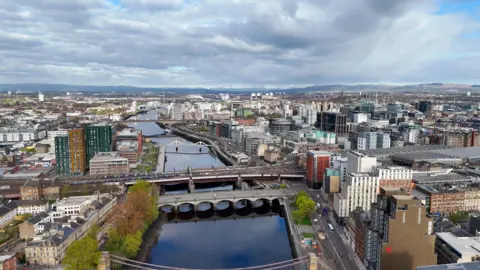
You'd be forgiven for not being familiar with this organisation.
It basically brings together Glasgow City Council and surrounding local authorities (eight in total) into one organisation.
This is an important region, estimated to represent a third of Scotland's economy.
What does the city region do? Not necessarily things you'd notice day-to-day.
It oversees investment zones and regional economic strategies, among other things.
But is this the foundation for something that could turbo-charge growth and investment in this region?
Some believe so. But they're adamant it needs a figurehead to drive it forward and take on accountability. It needs a mayor, they say.
Is that something that people in Glasgow want?
James Morgan, who has been running a shop in the city centre selling leather jackets for 50 years, says it's a difficult time to run a business in the city.
He says: "There's no real good distribution of wealth. There's no growth in the economy."
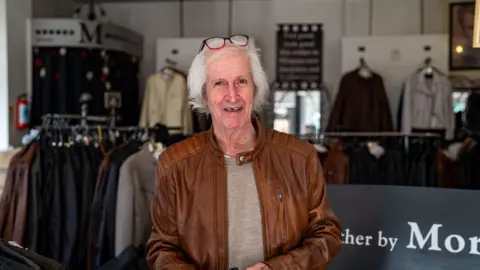
He seems quite a big fan of Burnham, and references the work he did to tackle homelessness in Manchester - and he likes the idea of power flowing away from Westminster.
But he's slightly ambivalent on what a mayor would mean for Glasgow, insisting it all really depends on who the person is.
"If the man at the top is right it spreads all the way down," he says.
"And if the man at the top is wrong that spreads all the way down."
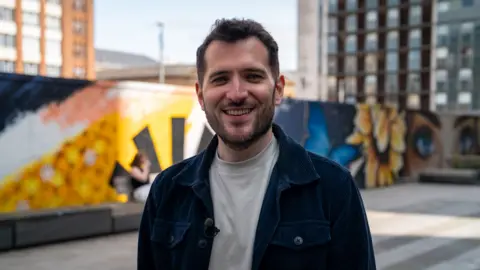
Labour MSP Paul Sweeney is a big advocate of the idea of Glasgow having a mayor.
If the city did have this role, it's probably a safe bet he'd be chucking his hat into the ring to try to take it on.
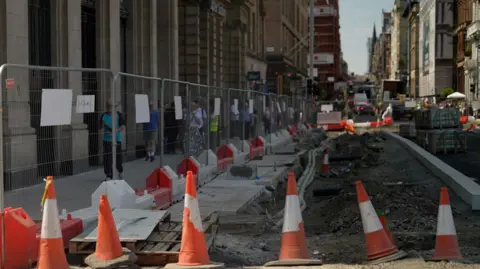
He believes a mayor is the person who could introduce an integrated transport system across Glasgow – potentially taking in buses, trains and the subway.
That's been an ambition for the city for some time, but it hasn't come to fruition.
And Sweeney insists a mayor could emulate work done in cities like Manchester and London to bring down fares.
He maintains this isn't about usurping existing councils, but rather giving them a "booster pack".
And he believes a mayor would help the city operate on the world stage, pointing out that other figureheads – such as Zohran Mandani in New York – can significantly raise the profile of their city.
The Glasgow MSP isn't alone in his assessment.
In a report last year, the Centre for Cities think tank advocated a devolved authority for the Glasgow City region which would "match policymaking and powers to the city-region's economy".
But they say this must be complimented by "stronger leadership, more robust accountability, and clearer democratic transparency".
They advocate the introduction of a mayor to oversee all of this.
But - sorry to break it to all these mayoral supporters - it's not going to happen in Scotland any time soon.
The prime minister can wax lyrical about this system all he likes, but devolution means he only oversees this area of policy in England.
And the Scottish government doesn't want to shake up councils north of the border.
This week Burnham announced plans to give English mayors a share of income tax revenue for the first time.
Responding to this move, the SNP MSP David Linden told BBC Scotland News that another level of elected politician in Scotland would not "be warmly received" by his constituents.
"We do believe in giving powers to local people, but I certainly remain to be convinced that giving someone a new chain of office and a new layer of elected politician is the way to do it," he said.
Speaking to people in Glasgow, some echoed Linden's views, insisting that more politicians were simply not the answer.
Others liked the idea of a more visible leader for the city who could be held to account for what went right or wrong.
 Getty Images
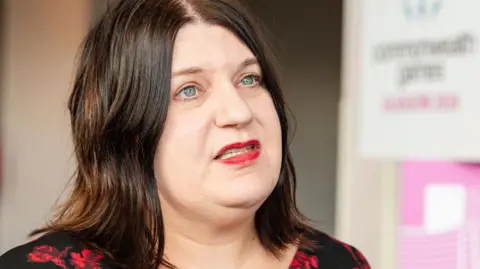
We asked everyone we spoke to if they knew who the leader of Glasgow City Council was. Only one person did.
So there's certainly a strong argument that a directly-elected mayor would be more visible, and therefore provide more accountability.
But it's also fair to be sceptical about the idea of a mayor solving issues that are far more complex and systemic than many suggest.
Does a new figurehead automatically deliver a better city region? Clearly it would have to be combined with more reform.
The prime minister is making no secret of his desire to push power to a more localised level in England.
This means the mayoral system is likely to become an even greater fixture of politics there in the coming years.
You can bet plenty in Scotland will be watching.
The success – or otherwise – of Burnham's devolution mission in England will probably determine whether calls for mayors in Scotland grow or fade away.