Village facing 'existential' threat from climate change

 Forest and Beach
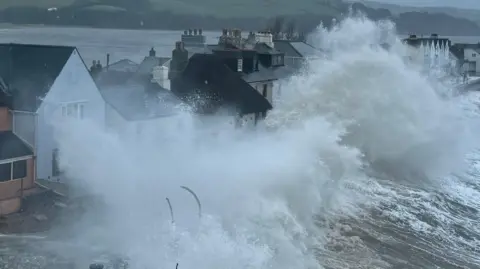
After a year of winter storms, heatwaves and record rainfall, communities are grappling with how to adapt to climate change. In Torcross, a £20m sea defence scheme is planned amid warnings the Devon village faces an "existential" threat from the sea.
Some people were "thinking about demolition and walking away" after violent winter storms battered their homes in the Devon village of Torcross earlier this year.
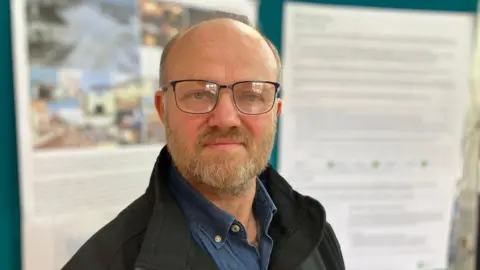
It was "a disaster that happened overnight," added George Arnison, the Environment Agency's coastal engineer for Devon, Cornwall and the Isles of Scilly.
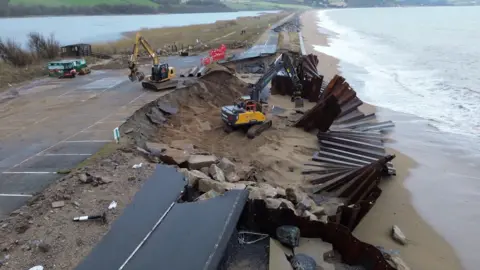
During January and February 2026 huge waves smashed into the sea defences which protected the coastal community around Start Bay, badly damaging seafront properties, washing away part of the main road and leaving the village facing what Arnison described as an "existential" threat.
Later this summer work will begin to position 55,000 tonnes of rock in front of the existing sea defences as part of a £19.8m improvement scheme that Arnison said would "buy the community some time".
But research by the University of Plymouth shows the level of the beach in Start Bay has dropped by around 2m (6.6ft) in places, making the old sea defences less effective.
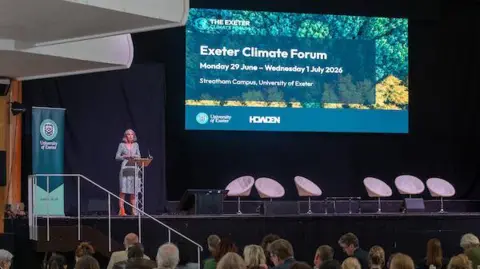
The latest on Torcross was unveiled this week just as scientists and experts were meeting for the Exeter Climate Forum, with some calling for more to be done to cut emissions and adapt to a warming world.
'Wake up call'
"Torcross was a real wake up call," Arnison said. "This is what climate change can look like.
"Torcross was very unlucky on this occasion, another day, another year, it would be somewhere else.
"But we've got to start having the conversations and work out what we do. Not just for places like Torcross but for other places around our coastline that are similarly at risk."
Arnison said the scheme was "value for money" but admitted it was not a permanent solution and there were "no easy answers".
"It will buy the community some time, buy the government some time, buy the Environment Agency some time, to think through what is the long term future here?"
Villagers are still coming to terms with the enormity of the damage.
"It was absolutely terrifying," said Gail Stubbs, owner of the family-run Start Bay Inn.
"We were waiting for buildings to collapse. The storms were relentless."
Sue Dod, lives in the nearby village of Stokenham.
"Torcross is very special, for it not to exist, I can't imagine," she said.
"Mainly for the people that live here for the terrifying experiences they had whilst those storms were coming in. This work has to happen."
 University of Exeter
As experts and leaders gathered for the Exeter Climate Forum, scientists renewed calls for faster action to tackle climate change and adapt to it.
"Climate change isn't a far away thing," said glaciologist and ice sheet modeller Helen Millman from the University of Exeter.
"We talk about the 'tragedy of the horizon', which means that politicians are always looking at what's happening now and climate change is always something that's on the horizon.
"But actually, it is happening now and it is affecting everybody," Millman added.
"And it's only going to keep getting worse until we get to Net Zero."
The Department for Energy Security & Net Zero said a target to reduce emissions by at least 81% by 2035 was already in place, with more than £100bn of private investment announced for clean energy in the UK.
 Dr Helen Millman
So, should the Environment Agency - and other authorities - be doing more to plan for situations like Torcross?
"It is our job but it's not just our job," Arnison said.
"In practice, adaptation means social change, moving houses, moving people, businesses, infrastructure, roads and that involves a whole host of organisations; local government, other agencies, national government.
"As a country we are only just beginning to grapple with this and come to terms with it. And it's not easy."
Heatwave ready?
Following the winter's storms, the UK and Europe have been dealing with record-breaking temperatures in June and forecasters predict we could be heading for another heatwave in July..
But experts say we are unprepared for extreme heat.
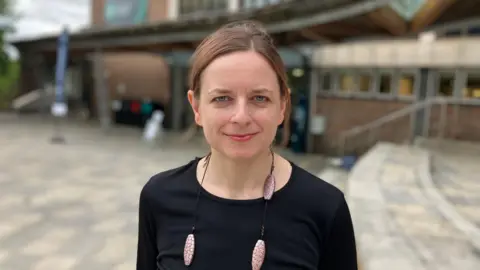
"Our built environment is generally designed to keep the heat in and not keep hot temperatures out," said Jennifer Lay from the University of Exeter who researches the impact of heatwaves and high temperatures on people.
"Air conditioning is very rare, particularly in homes. People may have fans but they may circulate hot air rather than bringing the cold air in."
"Building materials are not always conducive with hot temperatures, so people can be at risk, especially those with mobility constraints and those who are older," Lay added.
Climate vulnerable communities
Liberal Democrat MP for South Devon Caroline Voaden is calling for urgent action to save communities like Torcross and tackle the much wider impact.
"Start Bay isn't unique, around England's coastline many communities are facing a version of what's happening here," she said.
"Whether it's coastal erosion or extreme heat, our governments have been on the back foot for years and we've wasted so many opportunities to prepare for changing climate.
"There's no more time to waste - we have to find the political will and the money to support our climate vulnerable communities."
The Environment Agency project does not include the repair of the A379 coastal road - known as the Slapton Line - which was also partly washed away and has been closed since February.
A separate bid for government funding has been made to help cover the estimated £20m repair bill for the route.
Meanwhile Bude in Cornwall is part way through a £3m project to help coastal communities adapt to coastal erosion and climate change, as part of the Defra and EA backed Coastal Transition Accelerator Programme (CTAP) programme.
In June, the Climate Change Committee published its report into the progress being made on the UK Government's progress to date in reducing emissions, saying it was not moving fast enough to reduce greenhouse gas emissions and to protect households and businesses from volatile fossil fuel prices.
Environment Secretary Emma Reynolds said the government was taking action.
"We are acting to protect people and places from the impacts of climate change that are already being felt across the UK - from flooding to extreme heat and drought," she said.
"We have already invested a record £2.65bn to repair and build flood defences, protecting tens of thousands of homes and businesses, and have deployed the largest nature-friendly farming budget in history to support sustainable food production and security.
"Robust, independent science is essential and we will carefully consider the Climate Change Committee's latest recommendations to drive further action."
Follow BBC Devon on X, Facebook and Instagram. Send your story ideas to spotlight@bbc.co.uk.