Man who lost £80k gambling urges World Cup caution

 Supplied
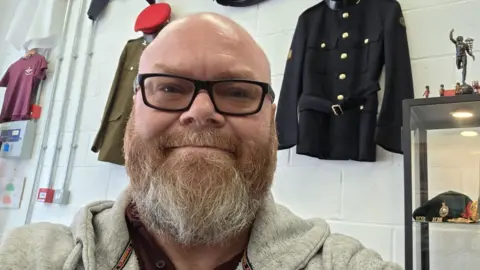
A man who ran up about £80,000 of gambling debt is calling for more to be done around gambling advertisements, amid coverage of the football World Cup.
Craig Clements said he began experiencing problems with gambling in his teenage years.
This led to a decades-long struggle for the 49-year-old, which saw him gamble every penny he earned. Clements, of Chesterfield, Derbyshire, turned to the NHS East Midlands Gambling Harms Clinic in 2024, and now uses poetry and music to aid his recovery.
The Betting and Gaming Council said advertising by licensed operators must comply with strict rules, and safer gambling messaging was regularly and prominently displayed.
Local public health experts estimate about 20,000 people in Derbyshire could benefit from targeted support for gambling addiction, and are in the process of developing a new tailored strategy to address the issue.
Roughly the same amount of children between the ages of 11 and 17 years are also thought to be at risk of problem gambling, according to the Young Person's Gambling Survey.
Clements said he would gamble on horses, football and roulette games in the bookies.
"I was getting credit cards and loans out, spending thousands and thousands of pounds," he said.
"I was just down in the gutters really. I was really low, I was spending all my money. Anytime I got any money in, it was gone, and I didn't want that any more."
In 2024, Clements completed a 12-week course, which involved a number of cognitive therapies.
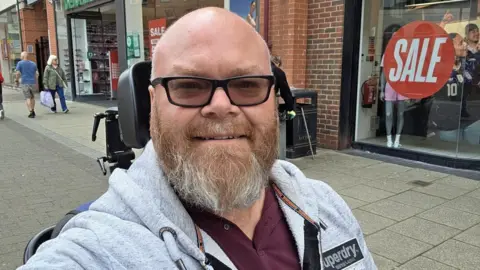
As well as using poetry and music to help his recovery, he is also writing a memoir.
 Supplied
But he is concerned about advertisements around the World Cup in particular, which is expected to be the biggest betting event in history.
"I think a lot more work needs to be done on the adverts for gambling, especially for people who suffer gambling addiction.
"I have actually stopped watching a lot of TV, I've stopped watching the news. I've done that specifically so I don't get drawn back into it," Clements said.
"I think gambling ads need to stop altogether. There also needs to be more regulations around gambling i.e a cap on spending."
While he intends to watch the England matches, Clements will be managing his access to advertisements with self-exclusion schemes, which restrict access to all online gambling companies licensed in the country.
In Derbyshire, about 40% of the population, or 340,000 adults, are thought to gamble in some form in a four-week period, according to the Gambling Commission. About 20,000 require targeted support.
The East Midlands Gambling Harms Clinic had 652 referrals between 2025 and 2026 from across the East Midlands.
Those from Derbyshire made up the biggest number of completed courses, at 117, followed by 86 from Nottinghamshire.
The clinic also said the number of self-referrals was rising, with a 64% increase in referrals between April and May this year.
Derbyshire had been allocated about £160,000 for the coming financial year to support the formulation of its new gambling strategy, which is expected to be published later this year.
'Betting minefield'
Dorian Carr, a senior cognitive and behavioural psychotherapist at the clinic, said he had particular concerns about the World Cup.
"Sheffield University did a study from the previous World Cup, and people are a third more likely to gamble when adverts are involved. So we know that carries more consequences for people in terms of their gambling habits," he said.
"It's a betting minefield... so intertwined [with football] and really difficult for anyone who's in recovery. Watching the sport they love, and then those adverts... can be a real problem."
He added: "We've got a lot of games that are probably going to take place at night time. And so for a lot of people they potentially may be sat on their own, they may be isolated, they've got their smartphone with them, there's the adverts, and that can actually increase impulsive bets, particularly if people are consuming alcohol."
A spokesperson for the Betting and Gaming Council said the industry had voluntarily introduced a whistle-to-whistle ban during live sport, which has reduced the number of TV betting adverts seen by children by 97% during that period.
"The government has previously stated that research did not establish a causal link between exposure to advertising and the development of problem gambling," the spokesperson added.
"What the evidence does show though is that illegal operators now account for almost half of all gambling advertising and are on course to overtake the regulated sector within two years. At the same time, black market betting is forecast to hit more than £33bn by 2028.
"The priority must be to keep customers in the regulated market."
Additional reporting by BBC Radio Derby's Becky Measures
- If you have been affected by any of the issues raised in this story, information and support can be found at the BBC's Action Line
Listen to BBC Radio Derby on Sounds and follow BBC Derby on Facebook, on X, or on Instagram. Send your story ideas to eastmidsnews@bbc.co.uk or via WhatsApp on 0808 100 2210.