The heatwave of 1976 - and how we have adapted since

 PA Media
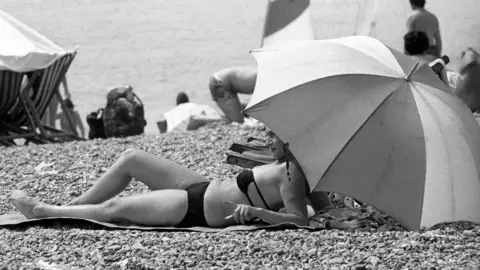
For those who were around in 1976, memories of that summer's heatwave have stuck.
Spells of hot weather, as seen in June, conjure up thoughts of 50 years ago – one of the driest and hottest summers on record, which caused concerns for many.
"The challenge pretty much for all livestock farmers countrywide was making enough food to feed their cattle in the summer and then sustain them over the following winter," Peter Appleton, who grew up on a farm in East Sussex, said.
With experts warning similar conditions will become part of normal life without cuts to emissions, has society in south-east England adapted?
The 1976 heatwave saw temperatures peak at 35.9C in Gloucestershire. A drought was declared and a minister appointed to deal with water problems.
About £500m of crops failed that summer and food prices rose.
It has proved even hotter 50 years later, with the year's highest temperature in the UK already surpassing 37C.
Appleton, who now runs the family dairy farm, said that 2026 had so far been "okay for rain" but that he was "seeing extreme heat events more often".
He told the BBC: "The farm now is way more resilient than it would have been in '76.
"We've adopted completely different cropping strategies and the way we manage our soils are far more focused towards water retention."
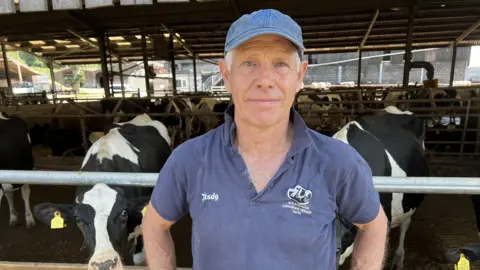
Other than areas that his father and grandfather were able to irrigate, most of the farm was "completely brown" in 1976, Appleton said.
The farmer added that his team now "don't plough if we can possibly help it" and were growing "drought resistant" maize crops for animal feed, which they were not doing 50 years ago.
Meanwhile, Guy Barter, chief horticulturalist at the Royal Horticultural Society (RHS), warned that photosynthesis did not work for plants as well as it should do when temperatures are above 30C.
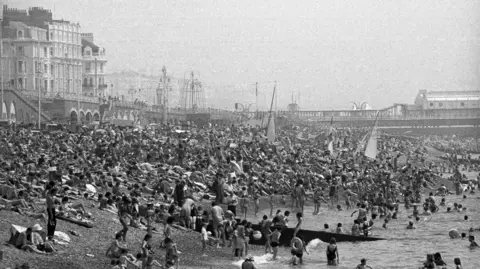
"In 1976, it was a once in a generation sort of thing," he said.
"There were similar heat waves in 1911 and 1921. I think we've still got the records from our weather station here, but 1976 was the bolt out of the blue."
 PA Media
Barter, based at RHS Garden Wisley in Surrey, said that following high temperatures in May and June, he did not want any more heatwaves.
"Plants are brilliantly adapted to put up with bad weather, but it does mean that things are not going to grow as well as we hoped," he told the BBC.
The horticulturalist said that lawns would suffer particularly and go brown during hot weather but that hedges would not grow as fast and need less clipping.
But desert plants such as tender geraniums were "absolutely designed for this sort of weather" and would leave gardeners "very happy this year", according to Barter.
He said that people would need to move towards no water in gardens to adapt, using plants resistant to drying out.
"We'll be looking at things like lavenders, phlomis and cistus in the Mediterranean, which are designed to swelter in the heat," he added.
The consensus among scientists is that human activities are causing climate change, posing serious threats to people and nature.
The UN's climate body – the Intergovernmental Panel on Climate Change (IPCC) – concluded in 2023 that "human activities, principally through emissions of greenhouse gases, have unequivocally caused global warming".
The Met Office has said it was plausible that temperatures in June 2056 could peak at 45C in England without further action on climate change.
Climate scientists have warned events like 1976 will become more common over the coming decades.
Between 2015 and 2024, the number of days exceeding 30C in the UK more than trebled compared with the 1961 to 1990 average, according to the Met Office.
While 1976 was once an example of a rare event, UK temperatures have passed 35C in six of the past 10 years. Provisional data shows that June was the warmest in England since records began.
Follow BBC Surrey on Facebook, on X, and on Instagram and listen to BBC Radio Surrey on Sounds. Send your story ideas to southeasttoday@bbc.co.uk or WhatsApp us on 08081 002250.