Hidden risks for swimmers at bridge-jumping spot

 BBC
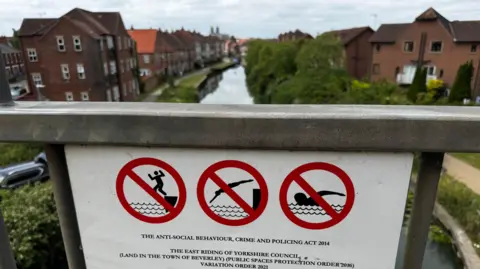
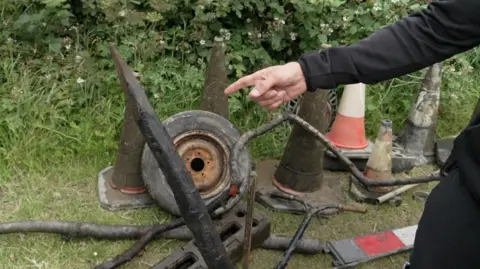
BBCSerious hidden risks, including a sharp stake, traffic cones and steel debris, have been recovered from water at a bridge-jumping hotspot.
Emergency services, including police divers, have been searching Beverley Beck in East Yorkshire, where young people are often seen swimming and jumping from a road bridge during warm weather.
It follows a spate of deaths nationally in open water during the May heatwave.
Sgt Paul Jackson, of the Humberside Police underwater search unit, said: "People think they're going into a swimming pool-like place and it's really not."
Divers retrieved the stake from under the bridge, just a few feet from the surface.
"Anybody jumping potentially could have hit that – it could have been quite disastrous," Jackson said.
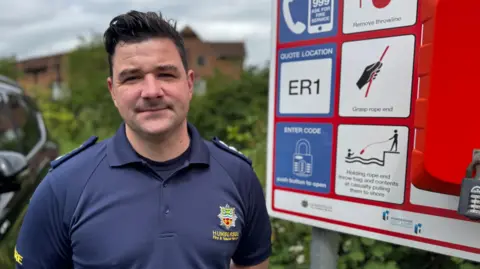
A specialist team of 10 divers work to educate people about the dangers of swimming in places such as the beck.
"We do try to speak to people at these locations and advise them of the dangers and other issues such as sewage," Jackson added.
Sam Horton, a station manager for Humberside Fire and Rescue Service, said crews responding to water incidents often faced intense pressure.
"They're very hectic. You're turning up to a very traumatic scene. There might be very distressed onlookers.
"Quite often these incidents are in remote areas, so time is of the essence.
"You're under immediate pressure to act and do everything you can."
Horton said locations such as the beck could appear especially attractive during warm weather.
"The big problem is you can't see what lies beneath," he added.
Maddigan Tempest-Fuller, who lives near the beck, said it was common to see people jumping from the bridge during warmer months, when the waterway was also busy with paddleboarders and kayakers.
"Usually in the summertime kids are jumping off the bridge and we've always been concerned."
"They do go quite deep and we've always been a bit like, is it safe enough?"
The fire service advises people who get into difficulty in the water to try to remain calm.
"One of our big messages is 'float to live'," Horton said.
"Tilt your head back, spread your arms and legs – that will help you float. Take a breath, then try to shout for help or make your way to safety."
He also urged people to tell others where they were going.
"Let someone know where you're going and when you're expecting to be home."
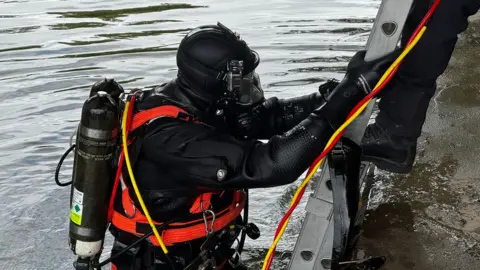
Emergency services are urging people to think carefully before entering open water.
Jackson added: "We always hope for a quiet summer. Unfortunately that's not always the case."
The RNLI and the RLSS offer advice on what to do if you find yourself struggling in water.
The RLSS says people who get into trouble or feel overwhelmed in the water should "float to live":
- Fight your instinct to thrash around.
- Turn on your back.
- Lean back.
- Get your breathing back under control.
- Now, think about getting out.
Listen to highlights from Hull and East Yorkshire on BBC Sounds, watch the latest episode of Look North.
Download the BBC News app from the App Store for iPhone and iPad or Google Play for Android devices