The youth clubs fighting to stay relevant in the social media age


 BBC
BBCIt's 17:00 on Thursday in Bradford and as I approach a three-storey former country pub, drill music booms from the basement.
The snappy, rhythmic beats are not what you expect inside this old, listed building.
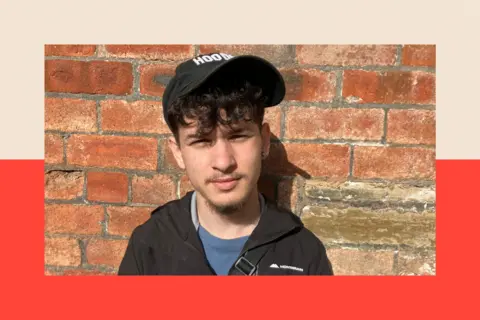
This is where teenagers from Gypsy, traveller and Roma communities get together every week. Older generations would call this a youth club but when I meet 16-year-old Sterling, he's quick to correct me: "Youth clubs are out of style."
As he fiddles with his cap, I suggest that this very building is in fact a re-branded model of a youth club.
"I mean, like, all right, it's similar, it has a resemblance to a youth club," he says. "But I view it more of a place to hang out, eat food and hustle."
Sterling has been coming here for two years. The club is called Romalandia and calls itself a "cultural centre" on its social media pages.
The basement music studio is by far the most popular space, where, as Sterling puts it, "if you're a young rapper you get yourself a free producer", as well as the chance to socialise and have fun.
But whether you call it a youth club or a cultural centre, places like this are becoming increasingly rare in England and Wales.
Youth clubs have been closing for years, while the number of youth workers has also fallen.
Spending on youth services by local authorities in England has slumped by 73% since 2010 according to the latest data from the Department for Culture, Media and Sport. In Wales, it's not as drastic, but has still fallen by 27% over the same period.
For many communities, that has meant losing youth clubs altogether. More than 1,000 council-run youth centres have shut in England alone since 2010 according to the same government data.
Many independent youth groups operate on tight budgets, relying heavily on volunteers and short-term grants. Without secure funding, some are forced to close after only a few months.
The YMCA charity, the oldest provider of youth services in England and Wales, says there's been a real-term cut of more than £1.2bn pounds between 2010 and 2024. This means there are now far fewer leisure, cultural and sports activities being run from youth centres.
Many youth centres like Romalandia don't get local authority funding or government support. It relies on private donations with some money coming from local businesses, charities and project-led community grants.
But now, in London, Mayor Sadiq Khan has allocated £50m of this year's budget for youth services across the capital. And across England, The Department for Culture, Media and Sport has also started opening hubs which it says will help teenagers with jobs, wellbeing and stop them falling into a life of crime.
But even if the money is there, how do youth clubs make themselves appeal to Gen Z? And if they can appeal, how do they need to be set up to really help the people who use them?
Sleepless nights
I've spoken to youth workers around the country who describe the pressure they face as budgets are squeezed.
Funding is a constant headache for Daniel Balaz, founder of Romalandia, who says the centre faces temporary closure if more funding cannot be found.
"Honestly, I don't sleep," he tells me. Daniel says he spends most of his time chasing and following up funding opportunities and this means dealing with lots of bureaucracy.
"We have to work through different departments, different services," he says. "We have to keep on our toes over how we're going to keep generating that income."
The number of full-time youth workers fell by 34% in 2023-24 compared with 2012-13 in England according to YMCA data. It was even more pronounced in Wales with a 46% drop over the same time period.
Even if they manage to get their hands on cash, some youth workers argue that they face an even bigger challenge: making their services relevant to today's teenagers.
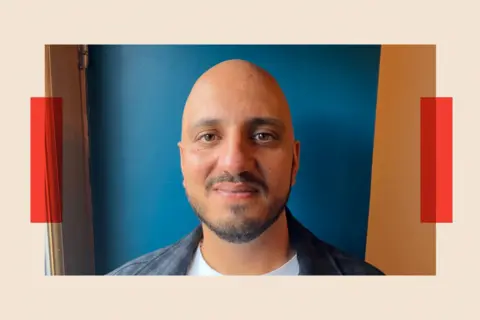
Nowadays, "nobody wants to go to a youth club", says veteran youth leader Paul McKenzie, who's worked in London and the south east of England for more than 30 years.
I meet Paul at a new venture he's co-founded in Essex called Youth Unity, which is partly funded by the Metropolitan Police.
In an era where young people have access to social media, the traditional concept of a youth club just doesn't work any more, he says. "Everything's changed. It's a 'space'."
Working for free to cut crime
So what can "spaces" like his do to stay relevant?
Paul is talking to me from a side street in Romford. You wouldn't know the hub was here because the outdoor space for basketball, chess and boxing is blocked off by high steel fencing.
Youth Unity also has an area indoors for podcasting, gaming and debating - things he says are all relevant in modern Britain.
Funding and having attractive facilities make a big difference, but Paul says he's only been able to keep going because he's prepared to do whatever it takes to keep it going.
"For me if they pull the funding on this, I'll still be here on a Friday. I'll bring a candle if the lights go out and I think that explains it all."
Staying open, in Paul's view, means making an unequivocal commitment especially in places where anti-social behaviour is rife: "The crime rate in this area is very high so if these doors close you may end up sitting in the park, then we have grooming or drugs."
And this link between crime and closures of youth clubs is plain to see, according to charities trying to prevent children from becoming involved in violence.
Caleb Jackson, head of change at the Youth Endowment Fund, says research shows youth clubs can reduce offending by 13%. He says they are often open during the hours when youth violence is most likely to happen, between 16:00 and 20:00.
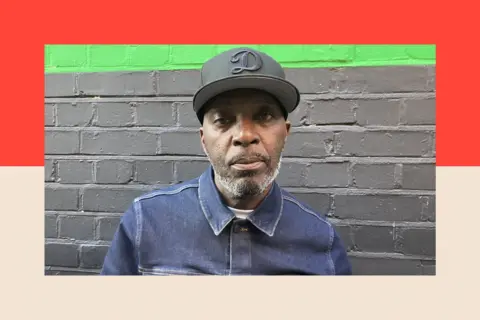
But he says simply opening more youth clubs is not enough.
"It's really important that those children connect with trusted adults," says Jackson.
A survey by the charity found 73% of youth workers said they informally mentor children at risk, while 65% said they de-escalate conflicts and 55% said they tackle dangerous misinformation.
Paul McKenzie says he is used to seeing disorder regularly and tells me about a recent situation where he helped save a boy's life after being stabbed.
"Three weeks ago we had up to 300 young people out there fighting, just where you came in today. Now for me if the lights go out here, if we can't secure funding, what do those young people do?
Paul says he will always find a way to stay open: "One thing we don't do is close the door to anybody so some weeks we might have to go without money, but it's super important not to close the door." But he understands why that's not possible everywhere.
And for charities, that raises a broader question. If youth services increasingly rely on staff going beyond what they are paid to do, is that model sustainable?
Keeping out of trouble
Even though the latest Home Office figures show knife crime has fallen by 8% in England and Wales, many people say they don't feel safe, especially those living in areas where violent crime is more visible.
The government says youth centres play an important role in tackling these problems.
Their purpose is to help young people feel safe - and some teenagers I spoke to say youth clubs have done this while keeping them out of trouble.
Seventeen-year-old Adam, who's on a traineeship programme with Youth Unity, says he's had to make some tough life choices.
"I was in a bad group of friends for about a year and it was one of the most important years of my life," he says.
"It just kind of ruined that time of my life. I started coming here and it made me want to give back to the young people that might be in my situation."
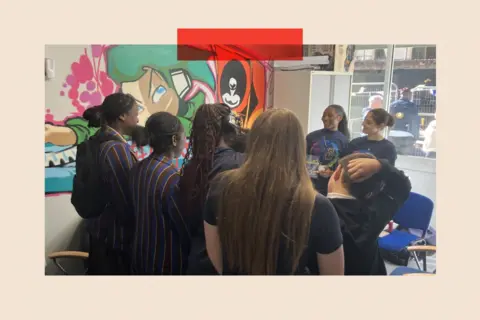
At Youth Unity, I also meet 15-year-old Zipporah, who is verbally sparring with other girls in this week's debating session about the benefits and pitfalls of social media.
Drifting away from the huddle, she says she feels safe coming here and wants to be a paramedic.
"Romford is a very active place. Quite a few fights have happened and in the time I've been coming here, there [have] been two major ones."
"You can see the way that the staff here work in that situation. They'll be the first ones out and looking around to see what's happening, who's hurt and how to help the people that are involved."
Stepping in early
Staff on the front line say a major factor in whether a youth centre succeeds or fails is how deeply embedded it is in the community.
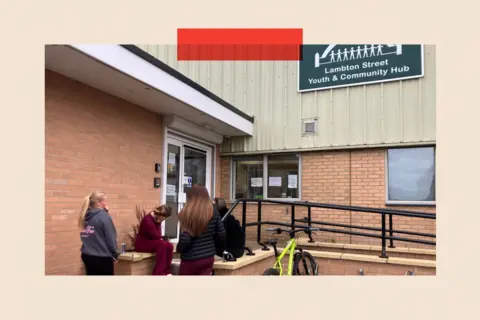
A good example of this is Lambton Street Youth and Community Hub (LSYCH) in Sunderland, one of the oldest youth centres in Europe, dating back to 1901.
"It's so established in Sunderland," says Marie Mould who has been managing LSYCH for two years and used the centre as a teenager. "It's ingrained in the community."
She adds: "You could walk around the streets and somebody you know will have either gone there, the parent went there, the grandad went there or the great-grandad went there."
And this is a major part of why the centre is flourishing, she believes. Thanks to the community goodwill it can draw upon, LSYCH has 44 volunteers, and without them "none of this will be happening right now".
One of those volunteers is Sophie, who is 20 and first started coming here when she was six. She says life at home was unsettled.
The support Sophie received from LSYCH has left an indelible mark and she's now doing a degree in youth work: "I want to be on the other side and be there for the next generation."
 LSYCH
LSYCHShe adds: "I don't think I'd be a youth worker if it wasn't for being here. I couldn't actually imagine what my life would have been like."
And early interventions like the ones LSYCH made in Sophie's life are crucial, experts say.
According to Kate Roberts Fox, Policy and Public Affairs Manager from The Children's Society, 82% of local authority youth funding is focused on so-called "late intervention services", for example, taking children into care or providing crisis support.
"Funding in local authorities has overwhelmingly concentrated on that late intervention."
But it's more effective to intervene at an earlier stage, says Roberts Fox - and youth centres allow services to do that. "You don't want young people to feel like they have to end up in that situation and have that high level of need in order to be able to get support," she says. "They should be able to access support from an early stage."
Staying afloat
Ultimately, many youth workers say, the benefit of youth clubs is that they are usually staffed by people with deep roots in their communities - in contrast to solutions imposed externally.
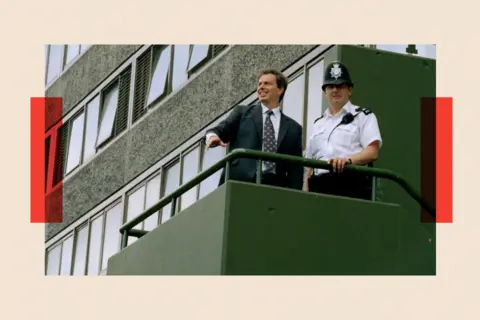
This is personal for Sayce Holmes-Lewis, CEO of the Mentivity House youth centre in Walworth, south London, which opened in 2024. He grew up locally on the Aylesbury estate, where Tony Blair famously made his first public appearance after becoming prime minister in 1997.
A year later, Blair referred to some estates as "sinking ships".
Sayce was struck by this depiction of his estate as "something that was sinking, that needed to be rescued. It was kind of that whole white saviour approach."
Mentivity is on the Aylesbury estate. "I still remember what it was like to grow up on the estate, the negativity and stereotypical views of growing up on a council state but I have nothing but positive things to talk about when it comes to the Aylesbury estate," says Sayce.
Sayce says it was important to give back to his community and was the sole reason for opening Mentivity in the first place. It's a brand new, shiny space with a podcast studio in one corner and gaming screens in the another. The hall bellows with young people. Here they are offered free meals, wellbeing days and in some cases support to help fast-track mental health assessments for conditions such as ADHD.
 Getty Images
"We're in the Faraday ward in Southwark which is the [borough's] most underserved ward," he says. "One in five young people have issues of mental health, there are high exclusion rates and nearly 3% of young people are not in education, employment, or training."
It took Sayce and his team eight years to open but the service is growing fast. With more than 200 teenagers on its books, it's available every weekday and will soon be welcoming people on weekends.
It has a mixed funding model from corporate entities to the Mayor of London's Violence Reduction Unit which secured money from the Home Office to help drive down crime.
Mentivity is in a healthy financial position compared with other youth groups but, it lost almost half a million pounds of funding last year due to what Sayce says is a growing anti-diversity and equality movement.
Sayce says he is determined to beat the drum for youth spaces: "We have to recreate the village, we have to recreate communities."
"When services are pulled back, there's a real distinct lack of trust for adults. They take that mistrust, that anger and that frustration back into society," he says.
"When you're feeling let down as a young person and you're heartbroken that now this youth club is not there, you're willing to go into other areas just to try and make up for that void."
Oh, and he's not bothered about the term "youth club".
He says: "They can call it what they want, but they are here."
"They are voting with their feet so we're not precious around what it's called, it's about how they feel when they're here."
Top image credit: Getty Images

BBC InDepth is the home on the website and app for the best analysis, with fresh perspectives that challenge assumptions and deep reporting on the biggest issues of the day. Emma Barnett and John Simpson bring their pick of the most thought-provoking deep reads and analysis, every Saturday. Sign up for the newsletter here