Hopes for future as A14 fly-tipped waste is cleared

 Kate Bradbrook/BBC
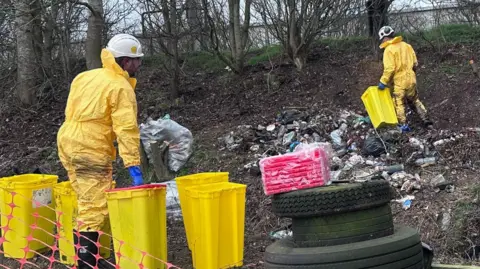
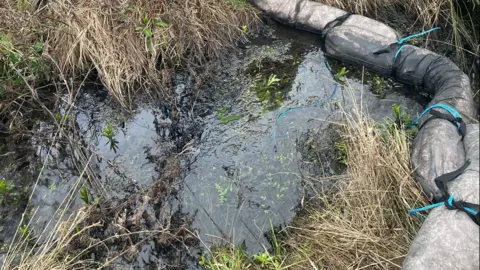
People affected by an area fly-tipped with oil and tyres have spoken of their relief after a six-month, £500,000 clean-up operation.
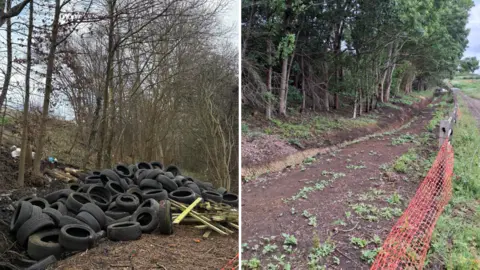
The potentially hazardous waste was dumped on the northbound section of the A14 by Woodford, Northamptonshire, at the end of 2025.
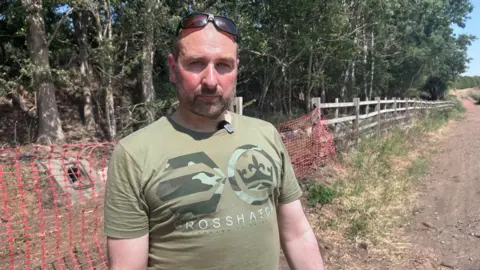
Nick Urquhart, an angler and volunteer litter-picker from Kettering, said authorities had "done a great job", while Richard Johnstone, who owns land next to the spill, said he hoped affected wildlife and trees could now recover.
As yet, no-one has been prosecuted in relation to the incident.
 National Highways
National Highways, which owns the land, said it had avoided "an environmental disaster", but the incident had cost it and the Environment Agency more than £500,000 to clear and it had been "an appalling waste of taxpayers' money and our time".
 Kate Bradbrook/BBC
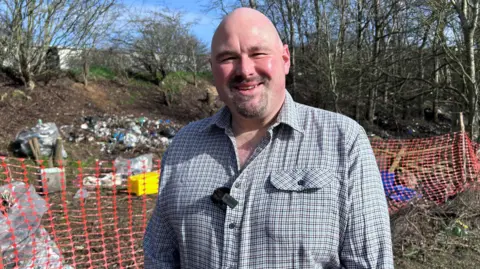
Nick Urquhart has always taken a keen interest in the health of the River Nene, and returning to the newly-cleaned site of the fly-tip, he said: "I was absolutely blown away, they've done a great job."
Contractors even cleared the area of litter, "which was a great surprise for me", said the keen litter-picker.
"They've hit the main objective which was to stop it getting into the river when it rained.
"If you go there now, it's such a great difference."
He said the area where the tipping took place had been a popular bridleway, used by walkers and cyclists, but it had not been in use for six months because of the risk of contaminating surrounding land.
 Kate Bradbrook/BBC
Richard Johnstone, who owns land next to the spill site, said the area looked "a lot cleaner" now, but there were also fewer trees and hedges, as some needed to be removed as part of the cleaning process.
"It was days and days of different companies coming and going and gallons of oily water's been pumped away," he said.
"I've been told they're going to try to spin the water and get the oil out of it and use it somehow."
'Trees can regrow'
Johnstone said given the number of contractors and the amount of equipment needed, the final £500,000 bill did not surprise him.
He said he had been to the site in the early days and he and a relative had managed to save some day-old ducklings that were swimming in the oil.
He said a local vet cleaned up the birds, "but no-one's paid them to do it".
The fly-tipping has meant his own plans for an off-road training site with wildflowers and new trees had to be put on hold as he had to stop using the land.
"The oil meant we couldn't access the land to prepare the track," he said.
"We couldn't go across the track where the oil was because we'd be contaminating more land."
He said this incident had cost him money as he had needed to rent other places to use for his current vehicle training business.
"It's also put us back, but more importantly it's cleaned up and trees can regrow - it's not the point - but it has been rectified."
Johnstone added: "It's all very well saying how much it's cost to clean up, but if we don't catch them [the fly-tippers] they'll keep going.
"[Fly-tipping] spoils it for all of us... but it's also the wildlife that lives there - it's their home."
 National Highways
Ian Doust, National Highways' head of network planning and development for the Midlands, previously said his organisation was working with "the relevant authorities to help ensure those responsible are held accountable for their actions".
Do you have a story suggestion for Northamptonshire? Contact us below.
Follow Northamptonshire news on BBC Sounds, Facebook, Instagram and X.