Woman found cancer after requesting mammogram at 79

 JAMIE NIBLOCK/BBC
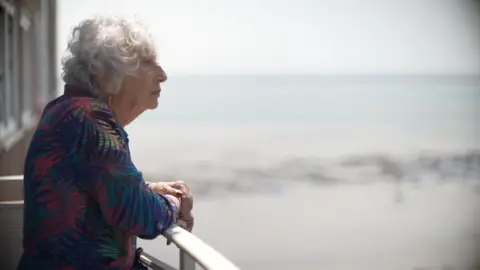
A 79-year-old woman who discovered she had cancer after requesting a scan from her local breast screening unit has urged others over 70 to self-refer for routine mammograms.
Carol Turansky, from Westcliff-on-Sea, Essex, said she had no symptoms of the condition before being diagnosed earlier this year.
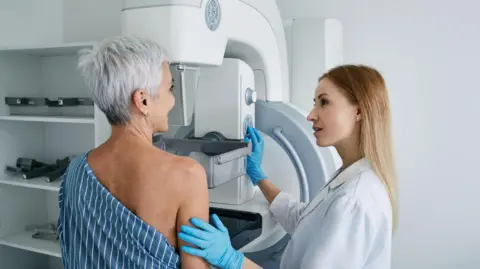
Women aged 50 to 70 are routinely invited for breast screenings, but Turansky wants the NHS to do more to make older women aware they can ask for a mammogram every three years.
A Department of Health and Social Care (DHSC) spokesperson said decisions regarding screening for breast cancer were made based on the best available evidence.
"Cancer doesn't stop when you're 70 - and neither should mammograms," said Turansky, who also experienced having breast canacer 23 years ago.
Her petition, which calls for an NHS campaign to educate older women on how they self-refer for a mammogram, has been signed by more than 70,000 people.
The NHS said the benefits of screening were balanced with the risks of different age groups.
 JAMIE NIBLOCK/BBC
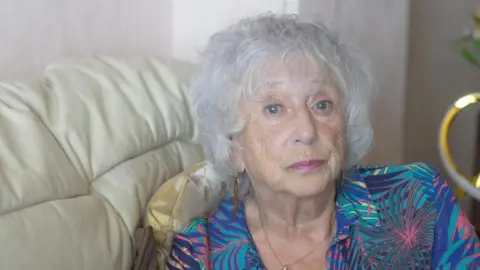
Turansky decided to arrange her own scan earlier this year, adding: "Without the mammogram, who knows? It would have grown and grown.
"I'm not asking the NHS necessarily to continue sending out invitations, I accept that. But at least let people have the option of self-referring.
"Not enough people are aware that they can."
She said her husband, Philip, was diagnosed with oesophageal cancer and died aged 78 in 2011.
 Getty Images
Turansky said she had "no lumps and no pain" to warn her that she had the condition and her cancer was only detected through screening.
She said she "pats herself on the head every day" for booking the appointment and "shudders to think" what would have happened if she had not.
Turansky said she was now due to undergo a mastectomy.
Research suggests one in three of all breast cancers occur in women aged 71 or over.
Turansky said many people responding to her petition had shared similar concerns at what she called "a critical gap in NHS services".
"There are people who have said that their mother died of cancer at 76, but if they'd had a mammogram, they might not have died because it had progressed so far.
"Tell your mother, your aunt, your neighbour - get a mammogram."
 NIKKI FOX/BBC
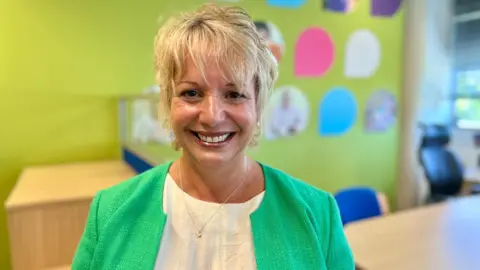
Sam Robinson, from the Norfolk-based cancer charity Big C, said there were several reasons why routine breast screening stops after 70.
"There could be other health problems that patients have," said Robinson, who previously worked as a breast cancer nurse.
"The treatments could be detrimental to their health… that is research-based, so that's the reason why it stops for over 70s."
NHS England said the risk of overdiagnosis increases with age, meaning some cancers detected may never cause harm.
"It's more likely that someone in their older years will die with breast cancer rather than from breast cancer," Robinson said.
However, she said screening remained important, particularly if women noticed changes or were otherwise concerned.
She explained that for routine mammograms every three years, those over 70 could contact their local breast screening unit direct, or their GP if they noticed changes.
"If people aren't going for screening, something could easily be missed."
A DHSC spokesperson said: "Decisions regarding screening for breast cancer are made based on the best available evidence, with the independent UK National Screening Committee keeping all programmes under careful review."
Cancer Research UK and AgeX are supporting a UK trial to examine the risks and benefits of extending screening to women aged between 47 to 49 and 71 to 73.
A report is expected to be published in 2027.
Do you have a story suggestion for Essex? Contact us below.
Follow Essex news on BBC Sounds, Facebook, Instagram and X.