Burial ground reconsecrated after remains reburied

 Amanda White/BBC
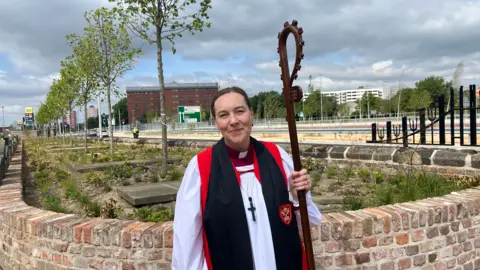
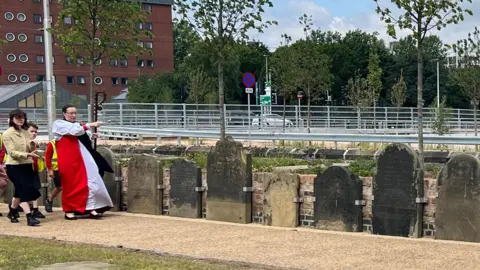
A burial ground in Hull has been reconsecrated following the removal and reburial of thousands of bodies to make way for the A63 Castle Street improvements.
The ceremony on Friday was led by the Bishop of Hull, the Right Reverend Dr Eleanor Sanderson.
It was a way of "honouring and giving dignity" to those who died, she said.
It marked the end of a decade‑long process to move, study and rebury the remains of more than 9,500 people.
 Amanda White/BBC
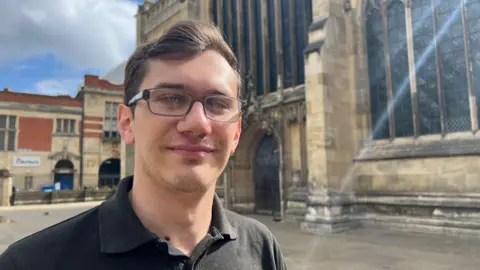
James Cameron, heritage manager at Hull Minster, said the dig, which featured in an episode of BBC Two's Digging for Britain, offered an insight into the lives of the people at the time.
"Life wasn't easy then – there were a lot of people who had difficult lives, buried with broken bones and people with amputated limbs," he said.
 Amanda White/BBC
In one instance, he said a man with an amputated leg was buried with the tourniquet still in place.
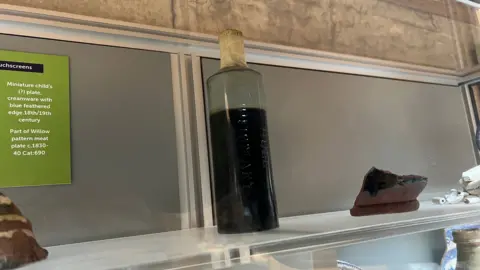
A woman was buried with a pot of urine between her legs.
"Apparently, this is an old folk tradition to ward off bad luck in the afterlife, Cameron said.
"It's still intact and on display in the minster – rather strangely, in our café."
 Amanda White/BBC
Dr Lauren McIntyre, project officer for Oxford Archaeology, said the dig was an opportunity to learn more about the general population of the time, as well as researching personal stories by matching historical records to names on headstones.
"Some of the stories were actually quite sad," she said.
"There were a lot of industrial accidents and high child mortality [rates]."
Work on the Castle Street project was completed in March.
Listen to highlights from Hull and East Yorkshire on BBC Sounds, and watch the latest episode of Look North.
Download the BBC News app from the App Store for iPhone and iPad or Google Play for Android devices