Water safety 'doesn't have to be expensive'

 BBC
BBCWater safety groups are reminding people how to stay safe in open water this summer.
The RNLI and Plymouth Sound National Marine Park want to make sure people going out around south-west England know how they can stay safe and do so without spending a fortune.
Emmie Seward-Adams, RNLI's water safety delivery manager, said two of the most important things were free - acclimatising when you enter the water, especially when there was big difference between air and water temperatures, and practising the float to live technique before you venture into the sea or rivers.
"Lie back, head tilted back, ears in the water, relax and try and control your breathing, we know of over 50 cases where that technique has saved a life", she said.
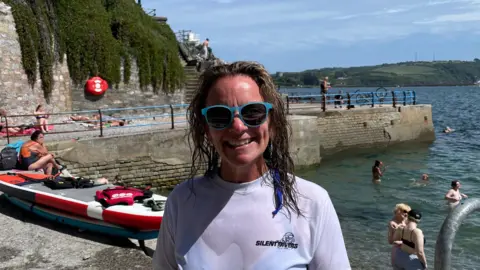
Seward-Adams emphasised the importance of having a way of calling for help if something does happen, "it doesn't have to be expensive, but it does have to be effective for the area that you are going to be in".
Tors Froud, from Plymouth Sound National Marine Park, said even something as simple as a whistle will do in an area that is surrounded by land or "you can get your phone and put it in a waterproof pouch, which are cheap and cheerful these days".
"A lot of 999 calls that come into the coastguard are done through people on the water carrying their mobile phones, it's a key, key thing", she added.
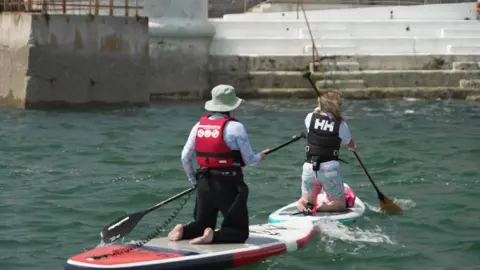
Froud highlighted the importance of wearing the right clothing and being prepared, wearing a buoyancy aid and "things like sunhats, wearing factor 50, sunglasses, having plenty of water".
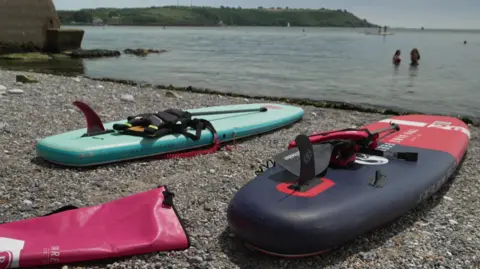
She also mentioned that lots of supermarkets now sell paddleboards but if you do buy one, then to have at least one lesson from a local instructor, to learn basic techniques and safety protocols like how to use leashes.
"You do not go out on a paddleboard without a quick release waist leash," said Froud, adding it means if you get washed off you are attached to a very stable platform but you can easily detangle yourself if necessary.
For sea swimming, she said: "There is one thing I would recommend above anything else, a tow float.
"You can buy them online, in any of the cheaper sports shops, it means that you are visible to other vessels and if you needed rescuing, and if you get tired or cramp, you can hold onto it, they are the best one piece of safety equipment to go swimming with."
Follow BBC Devon on X, Facebook and Instagram. Send your story ideas to spotlight@bbc.co.uk.