Concern over online peptides sale 'loophole'

 BBC
BBCA senior academic is calling on the government to tighten restrictions on the sale of peptides.
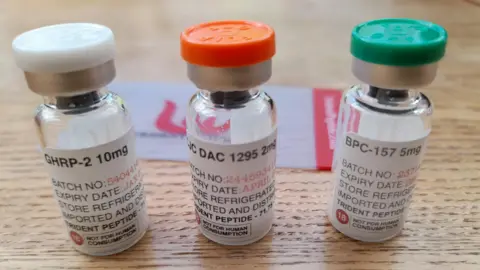
Some products which have not been approved for medical use can be purchased online under "research use only" disclaimers.
Dr Luke Turnock, a senior lecturer in criminology at the University of Lincoln who researches the trade and misuse of drugs, said this loophole was one of his main concerns.
The Medicines and Healthcare products Regulatory Agency (MHRA) said it determined whether a product was a medicine on a case-by-case basis.
What are peptides?
Peptides are short chains of amino acids, often described as small proteins, that are produced naturally by the body.
They act as chemical messengers, helping cells communicate and playing roles in processes including skin health, immune function and hormone regulation.
Peptides have been used in medicine for more than a century. Insulin, one of the first peptide hormones to be identified, is used to help people with Type 1 diabetes and some with Type 2 diabetes manage their blood sugar levels.
However, interest in peptides has expanded beyond medicine in recent years, particularly since GLP-1 weight-loss drugs became more widely used.
Alongside medically approved treatments, a growing number of unregulated peptides are being marketed online.
 Luke Turnock
Turnock, who has carried out a number of research projects into the use of drugs taken to enhance appearance and performance, said there had been an explosion of interest in peptides.
"They went from these fairly obscure compounds that bodybuilders and the occasional rugby player would be using in the early to mid 2010s and now influencers have started talking about them.
This obviously means there's a lot more people who are accessing them, and that means a lot more people potentially exposed to harms."
He said some medically approved peptides were being used but also compounds which had not undergone long-term human clinical studies.
"If they cause potential longer-term harms, increased risk of cancer, internal organ damage, you might use those drugs and not experience an acute side effect and not realise that actually longer-term prolonged use might be doing you a lot of harm."
'Tightening that loophole'
One of the his main concerns, Turnock said, was the availability of peptides online.
"They put 'research use only' or 'not for human consumption' on the packaging. And this seemingly evades some of the regulations that we have because you're not allowed to sell them as medicines, but if you state it's a research chemical, then the MHRA is going to have a much harder time bringing an enforcement action against you."
"Tightening that loophole around research use only compounds would be the first step."
The MHRA said many peptides were sold for use in recreational sport and in the absence of medicinal claims, would not be considered medicines.
"The MHRA determines whether a product is a medicine on a case-by-case basis. If a product is classified as a medicine and is not appropriately authorised, we take regulatory compliance action.
We disregard claims that products are for 'research purposes' if it is clear that such claims are being used as an attempt to avoid medicines regulations."
Listen to highlights from Lincolnshire on BBC Sounds, watch the latest episode of Look North.
Download the BBC News app from the App Store for iPhone and iPad or Google Play for Android devices