Summer heatwave of 1976 was 'like a war zone'

 BBC/David Allard
People who lived through the heatwave of 1976 have said memories of the flames, intense heat and fear remain as vivid today as they were 50 years ago.
Dorset and Hampshire residents, firefighters and police officers recalled fast-moving blazes that threatened a fuel depot, forced a hospital evacuation and left communities on edge.
The 1976 heatwave saw 15 consecutive days of temperatures exceeding 32C, and comparisons have been made between the UK's recent high temperatures and the heatwave 50 years ago.
Many said they could still remember sleepless nights, the smell of smoke and uncertainty over what might happen next.
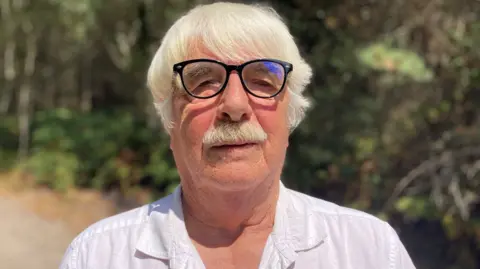
Former retained firefighter Mike Briggs said: "It was just like a war zone. It was so intense, you couldn't fight it."
 BBC/David Allard
At one point a fire approached St Leonards Hospital near Ringwood in Dorset.
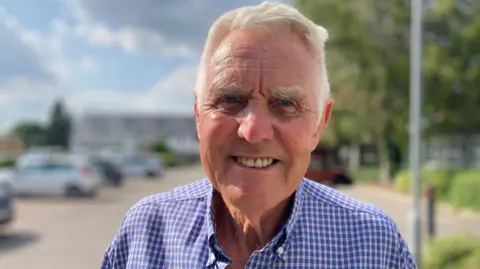
Former police officer Graham Walbrin said evacuating the hospital was an unprecedented step.
"It was totally unheard of, the fact you evacuate the hospital with elderly people and beds and everything else," he said.
"The trauma for the patients being turfed out of their beds and moved out in the middle of the road."
The scale of the danger became clear when flames approached West Moors and a major nearby fuel depot.
'Glad to leave'
Geoff, who was 11 at the time, said: "I remember the BBC national news, it was the headline article saying something like fire threatens NATO's largest petroleum dump in Europe.
"Suddenly everyone was like, whoa."
He recalled people being told to leave their homes as crews raced to protect the site.
Briggs said firefighters eventually had to force their way inside.
"We just got in there and it [the fire] was licking around the tanks with thousands of gallons of fuel," he said.
Another firefighter remembered fearing the consequences if the tanks had not been full and had vapour in them that could ignite.
"Thankfully, they were full," he said. "But I was glad to leave that site that day."
 BBC/David Allard
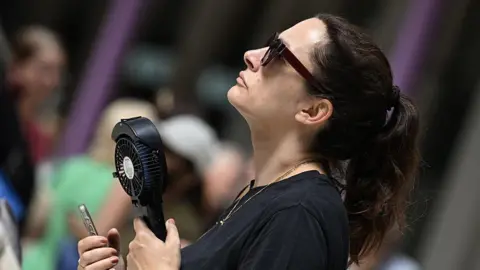
Within the past month wildfires have scorched southern England.
According to Reading University's Atmospheric Observatory, by mid-July, more days had reached at least 30C in the summer than in 1976, which was previously the benchmark for hot summers.
It said five of this year's 15 days were in the top 20 highest temperatures ever recorded at the university since it started collecting data in 1908.
Prof Andrew Charlton-Perez, from the university, said: "For half a century, 1976 was the benchmark every hot summer got measured against. Now 2026 has taken its place."
Half a century on, those who lived through the summer of 1976 said the memories had never really faded.
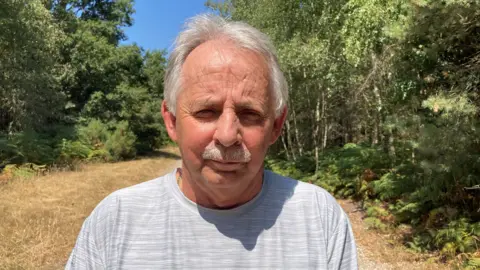
"It doesn't seem 50 years ago because you remember it quite vividly," said resident Ian Knight.
"It was a scary time for people that remember it back in '76.
"A lot of people were genuinely frightened, you know, to go to bed at night."
And Knight said the smell lingered long after the flames had been extinguished.
"We were told, keep your windows shut. The smell of the fire just lingered for weeks."
 Getty Images
Months of hot, dry weather helped create conditions for a series of major fires, stretching emergency services and threatening communities across Dorset and Hampshire.
Briggs recalled facing flames that were impossible to control.
"It was just a wall of flame," he said. "It was crowning in the tops of the trees."
As crews battled multiple blazes, local people were asked to help, and Knight said police approached him and his friends to assist firefighters.
"They said, 'Have you got any spare time?'" he recalled. "'The fire brigade are really stretched'."
The group were handed fire beaters and spent hours helping tackle small outbreaks.
The effects were felt by firefighters' families too.
Dawn, whose husband Dave was among those tackling the blazes, said: "All the bedding stank, everything.
"Although he showered, it still smelt. It was absolutely awful. It was just non-stop, every single day," she added.