'The education system has ignored our daughter'

 BBC
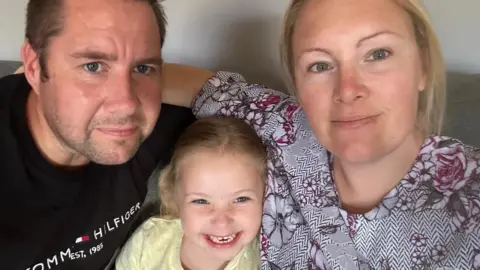
BBC"When Alana is struggling, the whole family is struggling," says Chantelle, who believes her daughter's struggles were missed because she appeared to cope in the classroom.
The five-year-old, who has been diagnosed with autism and is waiting for an assessment for ADHD, started mainstream school at Amherst in September but stopped attending a few months later after struggling with the sensory overload during the school day.
Chantelle said: "The school told us she appeared to be coping in the classroom and didn't believe she qualified for additional support, but we knew she was struggling with the noise and sensory overload as when she came home she would be really distressed."
Dave Stumpf, head of inclusion and education services, said schools were now "better than ever at identifying additional learning needs" and had introduced more specialist training alongside a three-year inclusion programme.
Chantelle and her family's experience comes as demand for Guernsey's Communication, Interaction and Autism Service (CIAS) bases has more than doubled since the Covid-19 pandemic.
The bases support students whose primary additional learning need (ALN) relates to communication and interaction, including autism and speech, language and communication needs.
The CIAS now supports more than 200 children, an increase of 90 children in the last five years.
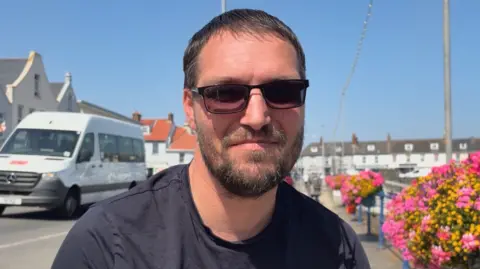
Jason Horsepool, who is autistic and has neurodivergent children, said he believed there was a "missing middle" in Guernsey's education system, where children did not require specialist cognitive support but still struggled to cope in a mainstream environment.
He has submitted a proposal to the Committee for Education, Sport and Culture calling for changes including teachers moving between classrooms instead of pupils, improvements to lighting and acoustics, and more staff training to better support neurodivergent children.
Horsepool said many neurodivergent students "fail navigating busy corridors and moving between classrooms, if we reduce those pressures it could help more children remain in school".
He said: "My children currently can't go to school, which has a huge impact on my wife, who takes a massive role in the children's schooling.
"If we implement this as a school backdrop, then maybe parents of these children can start living a normal life and go to work and contributing to the island."
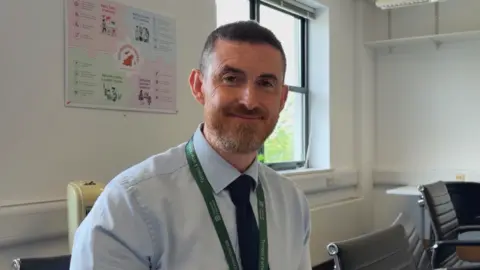
Stumpf said: "The current level of support is meeting the demand but additional resources and funding would allow more children to be helped as the demand continues to rise.
"Every child is different and that makes it a challenge.
"Staff are being trained to better recognise children whose needs are less obvious, including those who masked their difficulties in the classroom."
Stumpf said staff all shared the same goal of improving support for neurodivergent children and that the island was moving in the right direction, but recognised there was still more to do.
Follow BBC Guernsey on X and Facebook and Instagram. Send your story ideas to channel.islands@bbc.co.uk.