'I was not broken - I had undiagnosed ADHD'

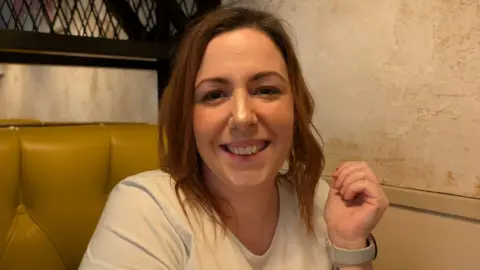 Nathalie Giaquinto
Women diagnosed with attention deficit hyperactivity disorder (ADHD) later in life say years of misdiagnosis have had lasting effects on their mental health and self‑esteem.
Peer support groups set up by women are growing across the UK as more adults seek answers about the condition.
"The majority of women with ADHD would have been diagnosed with other mental health disorders before discovering that ADHD better explains their symptoms," said Vicki George, a clinical nurse specialist.
The National Institute for Health and Care Excellence (NICE) said ADHD was "thought to be under-recognised" in women, who may be "more likely to receive an incorrect diagnosis of another mental health condition".
Why ADHD is often missed in women
ADHD (attention deficit hyperactivity disorder), which is thought to affect between 3 and 4% of adults in the UK, often involves symptoms such as being easily distracted, finding it hard to manage time and losing things often.
Experts said research and diagnostic criteria traditionally focused on behaviours more commonly seen in boys, meaning women's experiences often did not fit outdated stereotypes.
"On the surface, a lot of women will present themselves as having it all together... to avoid 'being found out' or exposing the chaos that exists in their lives," George said.
Becky Richens, an independent mental health nurse consultant from Swindon, Wiltshire, said many women spent "years" developing practical skills to support themselves.
"This might include relying on detailed planning systems, multiple reminders, extensive preparation, structured routines, or working longer hours to keep up with the demands of daily life," she said.
"From the outside, they may appear organised, capable, and successful, while privately finding everyday tasks far more effortful than others realise."
Depression and burnout
For many, years of misdiagnosis shaped how they saw themselves and delayed access to the right support.
Zaphira Cormack, 50, was diagnosed with ADHD later in life after experiencing challenges she "couldn't explain".
"Like many women with ADHD, I became very good at adapting, masking and pushing through difficulties," she said.
Cormack founded the ND Hub Gloucestershire, formerly ADHD Hub Gloucestershire, which offers peer support, community events and workshops for people of all ages.
"By the time [many women] are diagnosed, they may already be dealing with anxiety, depression, burnout, low self-esteem or the impact of years of self-blame," she said.
 Zaphira Cormack
For Nathalie Giaquinto, 39, from Bristol, recognition came only after years of confusion about her mental health.
"I was like: 'I think I'm going to go for a diagnosis; always being told I'm crazy, I'm mental, I'm not right, I'm different.'"
She said many women were initially given other diagnoses instead.
"Women often just get diagnosed with depression. Since I was 18, I've been on and off antidepressants," she added.
For her, the turning point was realising the root cause was different.
"I'm not depressed, I'm just going through burnout," she said. "I thought I was broken, but I was just undiagnosed."
 Nathalie Giaquinto
What is ADHD?
According to the NHS, ADHD is a complex neurodevelopmental disorder, which starts in childhood and often persists into adulthood.
It can involve signs of hyperactivity and impulsivity, such as restlessness, being very talkative and making impulsive decisions.
Experts have also warned it is recognised less in women than men as often symptoms were less visible and easier to mask, according to the NHS.
George added: "On the surface, a lot of women will present themselves as having it all together... to avoid 'being found out' or exposing the chaos that exists in their lives."
Coping mechanisms can include perfectionism, overworking and people-pleasing, but often lead to burnout.
 The ADHD Nurse
Campaigners said awareness alone was not enough, pointing to long NHS waiting lists and strict referral criteria.
"There are still many barriers to women accessing an assessment for ADHD, the biggest barrier being the waiting lists within the NHS," Cormack said.
She said the issue went beyond awareness and pointed to gaps in how ADHD had historically been understood.
"We need to stop asking why women were missed and start asking what systems failed to recognise them," she said.
She added that women who appeared to be coping - holding down jobs or doing well at school - may struggle to meet NHS thresholds for assessment.
"This is becoming more of an issue as NHS services have tightened criteria, only accepting referrals for those that are seen to present with significant impairments," Cormack added.
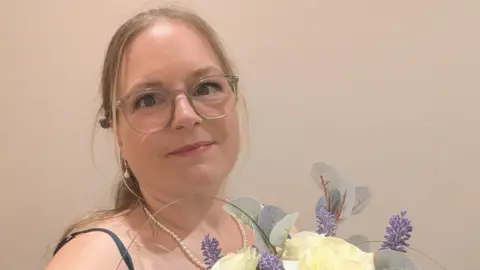 Ruth Hayman
'Struggling behind the scenes'
Ruth Hayman, 45, from Bath, said she went through years of struggling behind the scenes.
"I really struggled to start tasks, especially administrative activities, leading to high levels of anxiety and feelings of overwhelm," she said.
"I regularly experienced burnout with the ADHD, feeling completely exhausted and my nervous system going into a state of hyper-arousal and remaining in fight or flight."
A spokesperson from NICE said its guidance was clear that ADHD was thought to be under-recognised in girls and women, who may be less likely to be referred for assessment and more likely to receive an incorrect diagnosis of another mental health condition.
"We recommend that healthcare professionals are alert to this when they see patients, to ensure women are not missing out on the support they need," it added.
NHS England has been approached for comment.
Follow BBC Bristol on Facebook, X and Instagram. Send your story ideas to us on email or via WhatsApp on 0800 313 4630.