'My hoarding disorder led to homelessness'

 Restore/Leslie Midwinter
Leslie Midwinter is not the stereotypical image of an extreme hoarder.
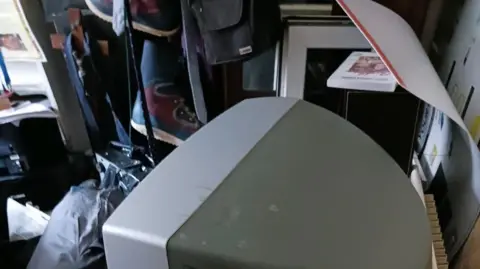
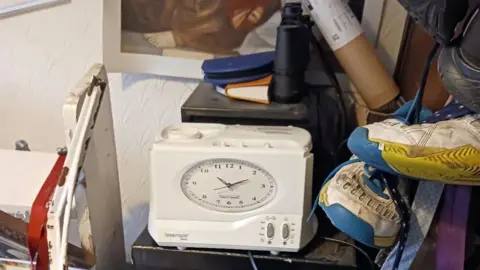
Much of what he collected, he said, had a use to him - books, records and electrical goods, rather than rubbish or piles of old magazines.
But his inability to get rid of things spiralled out of control, and ultimately left him homeless on Oxfordshire's streets.
Now, aged 70, he has been able to manage his hoarding disorder and maintain a healthier lifestyle, thanks to support from mental health charity Response.
Hoarding disorder was formally classified as a mental health condition by the World Health Organization in 2018. It is estimated that up to four million people in the UK live with it.
Midwinter's hoarding began following a period of unemployment after the death of his mother in 1991.
"I wasn't the sort of person hoarding bags of rubbish or rotten food or stacks of newspapers. It was all viable, useful commodities I'd collected," he said.
"But it got out of control. I was collecting things from skips and wheelie bins on a daily basis."
"When I was young I was poor and I couldn't afford expensive musical equipment. So when that kind of thing was being thrown away, I'd take advantage and get it - like I was making up for it," he said.
"I don't know if I'd say it made me happy exactly. Content, maybe - but not really happy. It kept me occupied, and in some way gave me a sense of achievement."
 Restore/Leslie Midwinter
Items eventually filled every room of his home, leading to problems with his housing.
"The condition of the accommodation was considered below the standard they'd accept," he said. "It was my property, I felt I could do what I wanted with it, but it was rented accommodation, and I'd breached my tenancy rules."
He spent an extended period homeless, moving between Botley and Oxford, and living outdoors. His situation made the front page of a local newspaper, which he believes prompted the council to get involved.
He was eventually referred to Response, which specialises in supporting people with hoarding disorder.
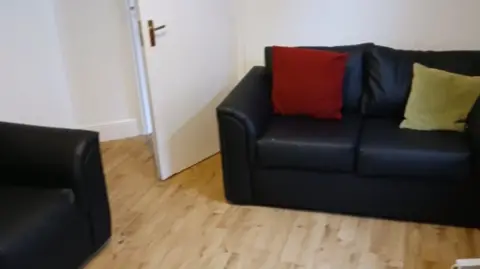
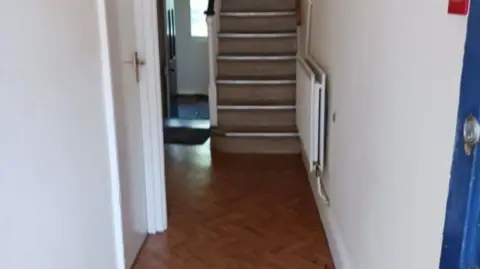
"They took major measures to help me. They removed a lot of things. All the furniture's gone, apart from a bed. I had bookcases for the books that were restricting access to the room, so those went too," he said.
 Restore/Leslie Midwinter
"It's about limiting the amount of things I'm collecting. I have to be logical about it now and ask myself, do I really need it? Things fall into two categories, in my opinion: things you want, and things you need."
Michael Amoabeng, a project worker at Response, has worked with Midwinter for more than 16 years.
"People with hoarding disorder don't see it as a real problem," he said. "I might have two radios and feel like keeping both, when really I could give one away - but they feel like they've lost something if they give up a possession.
"Even something like buying a phone - you take it out the packaging and you'll never use that packaging for anything again, but people will keep it anyway and not see anything wrong with adding it to their possessions."
Support takes a varied approach. The pair have weekly meetings to talk through Midwinter's possessions and the risks associated with hoarding, and set goals - such as removing duplicate items - which are assessed the following week.
Another organisation, Helping Hands Home Care, helps by cleaning Midwinter's property every fortnight, with additional clearing arranged when things get out of hand.
 Restore/Leslie Midwinter
Amoabeng said Midwinter has made significant progress.
"Initially he didn't understand much of it. But he's come to understand it can put his accommodation at risk, cause health problems, cause fires - so now he limits what he brings in, rather than bringing home huge amounts of things he doesn't need," he said.
"Progress is gradual and requires trust and consistency, but he engages well with support - and that's key to maintaining it."
For Midwinter, the condition is not something he expects to be completely free of, but something he has learned he cannot manage alone.
"It's impossible to do it on your own," he said. "Response has helped me understand why I hold onto items, and how to manage the anxiety I feel when I have to let things go.
"Letting go of things is still difficult for me, particularly when there's an emotional connection to them. But it got to a point where I needed support, and Response has helped me stay in my home and manage things better."
 Restore/Leslie Midwinter