Medieval comb goes back on display at historic abbey

 HES
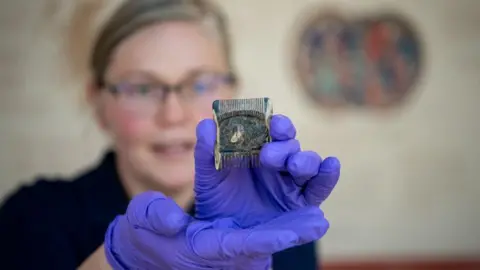
HESAn intricately-carved medieval comb that was first unearthed in the 1980s has returned to display at Jedburgh Abbey.
The artefact - thought to date from the late 11th or early 12th Century - was discovered by archaeologists at the site.
It has recently undergone conservation work and will return in a new display case and updated interpretation telling the story of the 1984 excavation that uncovered it.
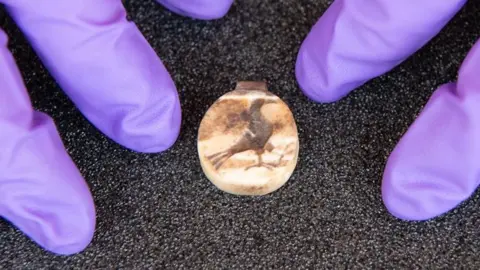
Also returning with the comb are an early walrus ivory seal pendant, a bone buckle, a whetstone, pottery lamp and storage jar.
 HES
HESThe items are part of the collections of National Museums Scotland (NMS), which undertook the conservation work.
They are on loan to Historic Environment Scotland (HES), which cares for Jedburgh Abbey on behalf of Scottish ministers.
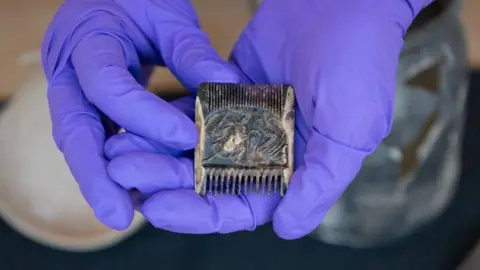
The Jedburgh Comb, as it has come to be known, was carved from walrus ivory and features intricately carved mythical scenes.
On one side a man, possibly Hercules, is shown holding a shield and sword and fighting a winged dragon.
 HES
HESThe other side of the comb features another fantastical creature, a griffin, which stands on top of a defeated animal.
The style of the decoration suggests the comb was probably made in England, France or the Low Countries.
Highly decorated ivory combs are known from across medieval Europe, and some were used by bishops as part of church rituals.
However, the decoration on the Jedburgh Comb suggests it was more likely to have been used by a lay person, to comb either their hair or a beard.
 HES
HESThe comb may have been buried in a purse or bag together with the seal pendant and fastened by the buckle.
Jill van Millingen, regional collections manager at HES, said the comb and other items from the 1984 excavation enriched understanding of medieval life at the abbey.
"It's vital that such important objects are cared for through conservation and improvements to the environment they are displayed in," she said.
"We are delighted that they can now return to display to be experienced as part of the story of Jedburgh Abbey for visitors and locals alike."
Dr Alice Blackwell, senior curator of medieval archaeology and history at NMS, said the objects provided a "rich and wonderful snapshot of life" at the abbey.
"They are nationally-significant items, and it is fantastic to see them return to display having had the care that is required to keep fragile treasures safe for future generations," she added.