Archaeologists' surprise at uncovering WW1 trenches

 Tony Fisher/BBC
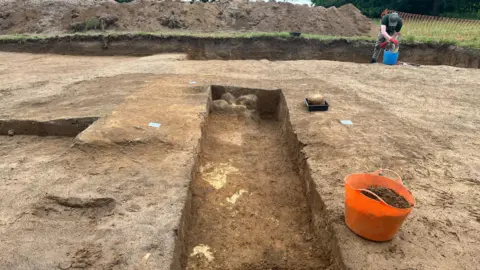
Archaeologists exploring the ruins of a royal castle said they were surprised to discover World War One trenches.
The 15th Century palace in Ampthill Great Park, Bedfordshire, was home to Henry VIII and his first wife, Catherine of Aragon.
Scans of the ground by the team at DigVentures close to the ruins appeared to show a structure which they believed would turn out to be Tudor stables or a banqueting hall.
Harriet Tatton, 35, who is part of the team, said the discovery of the trenches "was a complete surprise to us".
 Tony Fisher/BBC
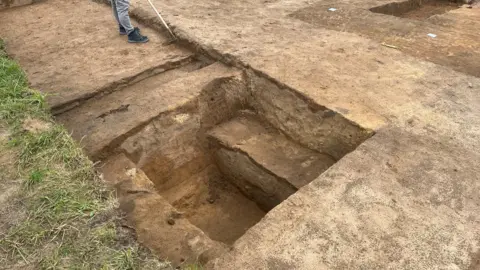
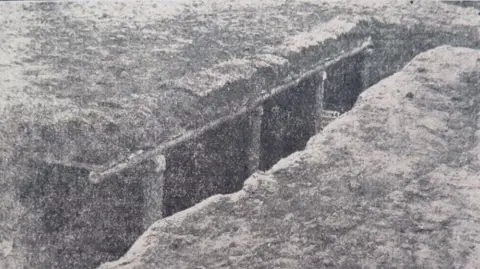
Another member of the team, Nat Jackson, who worked on the trench excavation, said they knew Ampthill Park had been used for World War One training.
"But to stumble across some training trenches is very exciting," he said.
"We were not expecting this at all, and it is not something I have dealt with before."
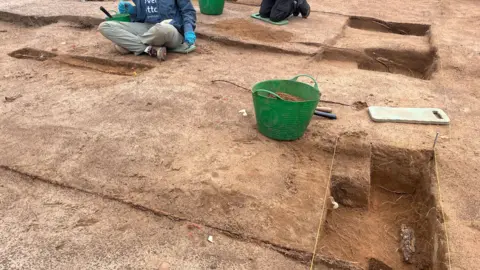
Tatton said that scans "can show you one thing, but you open it up, and it is something entirely different".
 The Bedfordshire Standard
Director of operations at DigVentures, Stephanie Duensing, 42, said they had collected rubble debris which had toppled down from the hill where the castle stood.
It was here that Catherine of Aragon was sent in 1533 during divorce proceedings with Henry VIII.
The buildings were falling into decay by 1555, and they had been completely demolished by 1649.
Duensing said discovering "ditches instead of buildings was a big surprise to us".
"I think because we have this wonderful World War One chapter, we are looking into, it has turned into a real soft spot for the local community.
"A lot of them are coming out and talking about their loved ones who may have been training here."
 Tony Fisher/BBC
Do you have a story suggestion for Beds, Herts or Bucks? Contact us below.
Follow Beds, Herts and Bucks news on BBC Sounds, Facebook, Instagram and X.