'AI couldn't fix a boat': The apprentices keeping a traditional craft afloat

 Martin Giles/BBC
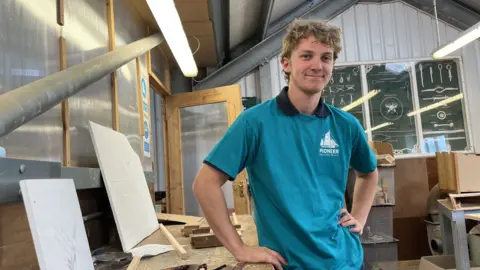
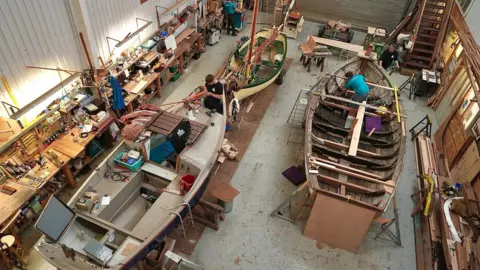
At a boatyard, a group of enthusiastic apprentices are hard at work, restoring two traditional vessels.
Aged between 16 and 31, they are learning skills at risk of being lost.
With boatbuilding recently included on a list of endangered crafts, could these young people help save it?
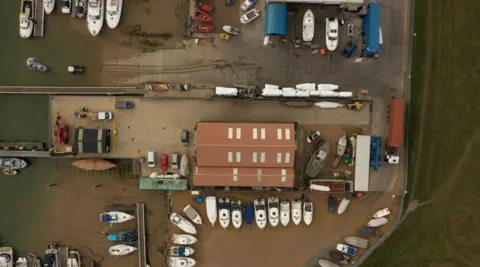
The Pioneer Sailing Trust, overlooking the River Colne in Brightlingsea, Essex, is the UK's only place offering apprenticeships in heritage boat restorations.
Its trainees are as passionate about saving the craft as they are about the National Lottery-funded projects they are undertaking.
They are working on Jinnie, a 1948 oyster skiff from Mersea Island that has seen better days, and Jassa, an estuarine survey boat, that surveyed the East Coast in the 1950s and was the smallest such vessel ever created at the time.
With the apprentices' help, it is hoped these two craft will soon be back on the water.
 Martin Giles/BBC
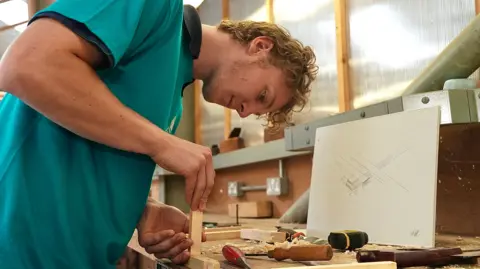
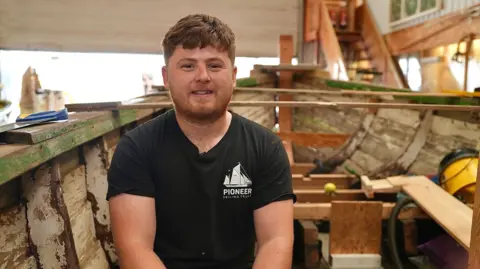
The apprentices include Phoenix, an enthusiastic 18-year-old who has a long commute.
"I live on the Isle of Wight, so it's quite a journey up here, but definitely worth it," he says.
"I think it's important that young people get into this sort of work. Having proper skills is good, especially with AI taking over things.
"I mean, AI couldn't fix a boat."
A recent review warned job opportunities for young people were shrinking, with one in six at risk of being out of work, education or training within five years.
 Martin Giles/BBC
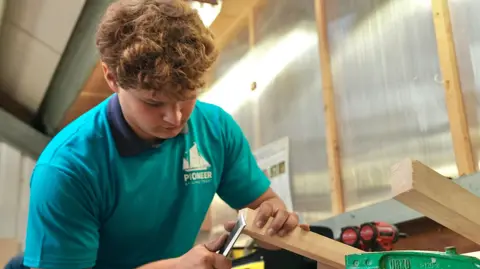
Lewis, the youngest of the apprentices, is just 16.
"This is what I've always wanted to do," he says.
"I live in Mayland, which neighbours the River Blackwater; all traditional boats, so woodwork is what I've always wanted to be doing.
"Universities or schools only give the theory side, whereas working, I get the realistic experience, the practical side of what actually happens."
"I didn't pass GCSE English, so I was quite lucky that I had the opportunity to still do this course. There are always second chances."
 Martin Giles/BBC
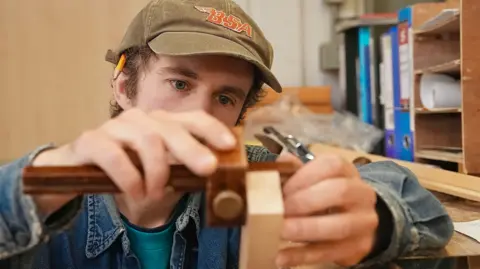
At 31, Hector Jones jokes that he's old enough to be Lewis's dad.
He completed a degree in English Literature but says he found it difficult to find a job in a related field.
So Hector, based in Norwich, decided on a career "gear change".
"I worked in a bookshop for a while, doing stuff related to my degree," he says.
"I decided, actually, I'd rather do something with my hands.
"The job market alone is hard, with companies not taking on new staff. [With} something like this, you're never going to be short of work and it's a good thing for a young person to do."
 Martin Giles/BBC
According to the Institute of Carpenters, there were 5,400 apprenticeship starters in 2021-22. By 2024-25, this had fallen by 26% to 4,000.
In response to these statistics, Hector says: "Something's going wrong, then.
"I don't know whether it's companies that can't afford apprentices [or that] young people aren't drawn to them because we've still got the education system that funnels people into knowledge skills.
"Places like this are working against that grain."
 Martin Giles/BBC
Noah Soames, 22, from Brightlingsea, trained as a plumber initially, but found self-employment hard and struggled to find regular work.
"If you're not willing to work for 'the man', and want to do your own thing, it's just impossible," he says.
"To avoid a future of a lot of unemployment in young people, a lot needs to be put into apprenticeship schemes, otherwise young people won't be doing anything.
"Without this apprenticeship, I'd still be in people's kitchens, knocking around taps."
 Martin Giles/BBC
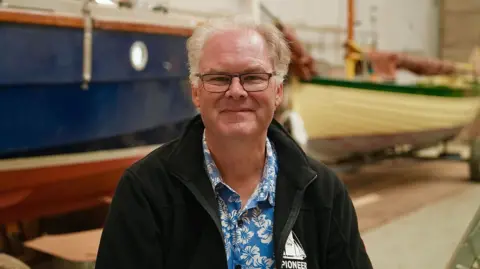
Simon Burwood, who recruits the apprentices, believes they are key to saving boatbuilding.
"We have to give people options," he says.
"University isn't the route for everybody, so hands-on practical skills for some people is exactly what they need."
He says the apprentices will all get that experience, working on Jinnie and Jassa, as well as learning life skills including communication, being on time in the morning and sharing lunch with each other.
 Martin Giles/BBC
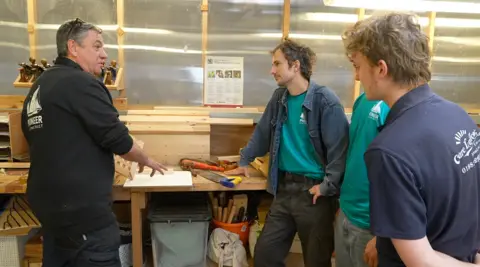
Boatbuilder Alan Fuller, 62, travels from Ipswich each day.
Having done his apprenticeship aged 16, he is now entering his 47th year in the trade.
"This job has given me so much," he says.
Now he is passing on his skills to the apprentices of today. "They are learning skills that will set them up for life."
 Ben Bradley
So what is being done to support apprenticeships?
A government spokesperson said: "More young people should have access to apprenticeships, which is why we are introducing the biggest reforms to the system in a decade as part of our £2.5bn youth employment package.
"We are offering a £2,000 incentive for small businesses taking on young apprentices, expanding foundation apprenticeships into hospitality and retail and launching a new AI apprenticeship to equip the next generation with the skills our economy needs."
But Daniel Carpenter, of charity Heritage Crafts, says more is needed.
"One-to-one transition from master to apprentice remains the best way to transmit these skills," he says.
"The government needs to be doing a lot more to fund apprenticeships better suited to the micro-businesses that make up the heritage crafts sector.
"Some people may think there's a reason that these skills are endangered; that there's no need for them in the modern world. But we don't always know how these skills might be useful in the future."
Do you have a story suggestion? Contact us below.
Follow East of England news on X, Instagram and Facebook: BBC Beds, Herts & Bucks, BBC Cambridgeshire, BBC Essex, BBC Norfolk, BBC Northamptonshire or BBC Suffolk.