'It's not enough to say alcohol is bad'

 BBC
BBCMore needs to be done to change drinking culture among young people in Guernsey, a youth service founder says.
A recent Freedom of Information request to health leaders highlighted the number of admissions to the Emergency Department for under-age alcohol and drug use, as well as self-harm, had increased since 2010.
Such admissions totalled 42 in 2010. In 2025, it was 81, and categorised under a coding of drugs, alcohol and self-harm. The Committee for Health and Social Care to said further statistical breakdowns were not available.
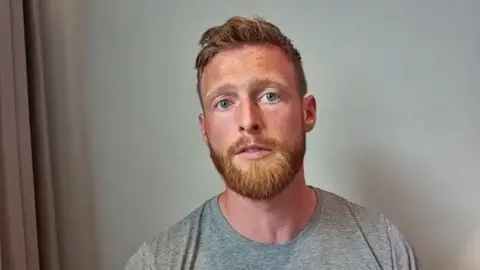
Liam Doherty, from the youth service Apollo, said: "We've got a long history of binge drinking, and we haven't educated young people in a sensible way out of it".
Doherty said he had also seen a rise in self-harm among young people, which was included in the groupings for the admissions data.
The BBC asked the Committee for Health and Social Care (HSC) to supply the number of under-18s being treated in the Emergency Department linked to the effects of either alcohol or drugs.
The response included alcohol-related attendance or under-18 alcohol/drugs/self-harm, split by gender and year of admission.
In 2022, the total number of admissions hit a 15-year peak of 108.
The data also showed that, while the number of annual admissions fell to 81 in 2025, there had still been a proportional increase over the last 15 years.
Doherty said it would be helpful to further categorise the numbers so alcohol, drugs and self-harm were not grouped.
He said: "Alcohol usage and binge drinking is very distinct from drug usage, which can be very distinct from self-harm and they may overlap.
"But a hospital admission for somebody attempting suicide or self-harm is very different to somebody smoking so much cannabis that they think they need to go to hospital, and very different from who's been doing funnels of wine at their 16th birthday."
The BBC asked HSC for a further breakdown but was told it did not hold that data separately.
Public health practitioner Amy Sharpe said, while there was a rise in low alcohol alternatives, drinking culture was still prominent in Guernsey.
She said findings in the Wellbeing Survey 2022 mirrored the Joint Strategic Needs Assessment.
She said: "We do have a culture in the islands that is around alcohol.
"It's not surprising to see that we're finding this in young people, and it's really looking at how we can change this alcohol culture in the bailiwick where alcohol maybe isn't quite as acceptable, isn't so socially acceptable to be drinking in these young groups."
Change trajectories
Sharpe said: "Within public health and within the strategy, we really need to take an approach at looking at health and wellbeing across all different areas of life, not just to focus on substance use, but how we can encourage healthier living, being more active."
Doherty echoed this sentiment and said more attractive offerings needed to be offered to steer young people away from drinking.
He said: "It's not enough to educate them. It's not enough to say: 'Alcohol is bad. Alcohol will harm you. You will do silly things on alcohol.'
"Young people know this. We know this.
"But we actually have to do the work, build the relationships and provide the services that will change their trajectories."
If you have been affected by any of the issues raised in this story, information and support can be found at the BBC's Action Line.
Follow BBC Guernsey on X and Facebook and Instagram. Send your story ideas to channel.islands@bbc.co.uk.