The travellers who go on holiday to hunt cult sun cream

 BBC/ Eva Sandoval/ Chriselle Lim
From Seoul to Paris, pharmacies and beauty stores have become must-visit stops for travellers hunting cult sun cream formulas.
Before her last trip to Seoul, Caitlin Francis-Agnew spent weeks crafting her itinerary, including stops at Olive Young, South Korea's premier cosmetics retailer. Her objective: to buy as much Korean sun cream as she could haul back to Canada.
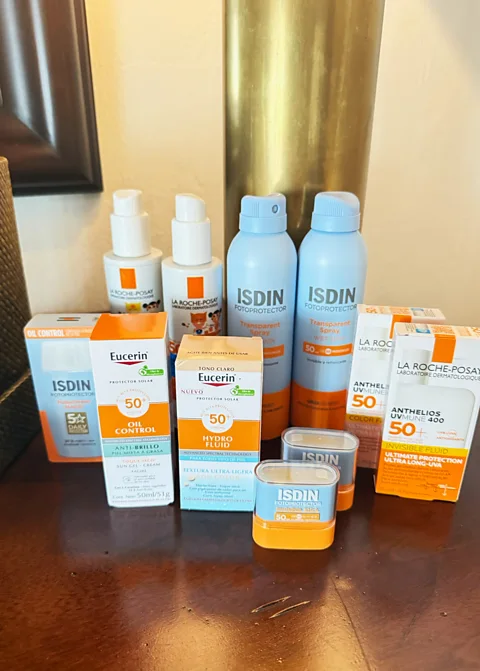
In Lakeland, Florida, Anna Clark is preparing for her family's summer trip to Cartagena. She sends me a Google Maps screenshot, where she's highlighted the route to Colombian pharmacy chain Farmatodo. "An eight-minute walk from our hotel. I will be stopping by," she writes. She will buy viral EU sun cream formulas available abroad but not in the US.
Gone are the days of bringing home destination-themed fridge magnets. For a growing number of beauty enthusiasts, sun cream has become the must-have holiday souvenir.
Why, of all things, sun cream?
According to behavioural psychologist Carolyn Mair, attitudes towards sunbathing have shifted drastically since the 2010s. While tanning was once associated with vitality and leisure, "today, sunscreen is increasingly viewed as part of everyday self-care and healthy ageing". Skincare culture on social media, she adds, has helped reinforce this mindset – and introduce conscious consumers to innovative sun cream formulas from around the world.
The most coveted options come from the Asia-Pacific region and the Mediterranean, where summer temperatures can be intense. Rena Kim, Olive Young's global communications lead, told the BBC that foreign visitors from over 190 countries accounted for more than 25% of the company's offline revenue in 2025, with sun care emerging as a standout K-beauty staple, particularly among US and Brazilian shoppers. Olive Young's new Central Myeongdong Town location is reportedly flooded with tourists who arrive with suitcases and large shopping bags.
American consumers, in particular, are drawn to other countries' sun creams because FDA regulations mean their advanced filters aren't available in the US. "Sunscreen is one of the easiest things we can do every day to prevent [cancer and premature ageing]," says Patrick Coleman, a dermatologist based in New Orleans. "[Overseas sun creams] are decades ahead."
But sun cream fever spans nations and ages. Zoe Karlis of Melbourne, Australia, visited Greece last year and delighted in buying sun cream at Greek pharmacies. "Overall, I have a lot of confidence in Australian sunscreens because our regulations are so strict," she says. "[But] I love browsing the pharmacy aisles for brands we can't get at home. It's less about one being 'better' and more about the joy of discovering what's out there. Losing an hour in a Greek pharmacy is half the fun of the holiday."
 Anna Clark
Meanwhile, social media buzzes with hauls and recommendations. "It's a rabbit hole," says Francis-Agnew. "What's available in Canada is very limited. Our regulations around UV filters are really restrictive, so we're stuck with options that leave a white cast or feel greasy."
The timeless allure of global beauty
Coveting other cultures' beauty secrets is nothing new, says Mair. "French beauty has long been associated with effortless elegance, while Korean skincare has become linked to flawless skin and innovation. Admiration in one area spills over into perceptions of products and lifestyles."
EU sun creams are renowned for using newer generation UVA filters not approved in the US, like Mexoryl 400 and Tinosorb M. Korean sun creams have a reputation for superior cosmetic elegance. "Korean SPF is coveted largely because the user experience is exceptional," says Chriselle Lim, founder and creative director of PHLUR. "They blend seamlessly into the skin without leaving the heavy or chalky finish that people historically associate with sunscreen."
American dermatologist Ellen Gendler, a longtime proponent of international sun creams, educates her patients and Instagram followers on which sun creams to try and which UV filters are most effective. Because some international skincare companies have expanded to the US but altered their sun cream formulas to comply with FDA regulations, both Gendler and Patrick also tell their American patients where to buy the original overseas products. Popular online purveyors include Care to Beauty, Stylevana and Cult Beauty, but there's often a high markup, and "the last few months with the tariffs, it's pretty much impossible", says Gendler. "[So] I tell them they should take a trip to Canada, Mexico, Europe, Asia and buy them."
Markups and tariffs equal far less than flights and hotels. But Patrick's wife, skincare educator Melissa Coleman, believes that adventure trumps surcharges.
"You get a vacation out of the deal!" she says. It's traveller maths.
The thrill of the hunt
Like international supermarkets and convenience stores, pharmacies and beauty retailers are havens of the everyday, yet thrilling in their novelty. Shelves of gleaming bottles bear unfamiliar brand names and indecipherable writing, but the promise of beauty needs no translation.
In the EU, La Roche-Posay and Spain's ISDIN produce some of the most Insta-popular sun creams. Tourists in Korea look for Beauty of Joseon and RoundLab, to name a scant few. Japanese sun creams are renowned for their watery feel.
An avid tennis player, Clark is constantly under the searing Florida sun. High factor sun cream, she says, is non-negotiable. "There's a joke in my family that no matter where we are, I can spot a pharmacy from a mile away," she says. "The green cross that represents European pharmacies might be my favourite sight while travelling."
 Alamy
AlamyShe sends a photo from Cartagena: I count 11 bottles from La Roche-Posay, Eucerin and ISDIN. "Round one," she reports. "I tried the ISDIN Fusion Water [MAGIC SPF40] today. I like the consistency and smell. We're having a boat day, so I'll see how well it holds up."
Clark's family doesn't share her sun cream proclivities. "My daughters laugh at me," she says. "If I see a pharmacy sign, I'll say, 'I'm just going to stop in real quick.' Because if they come in with me, I will be rushed. I cannot be rushed when sunscreen shopping."
She'd planned to buy a particular spray formula, but Farmatodo didn't stock it. She'll wander Cartagena's candy-coloured colonial streets in search of more pharmacies: "I'll keep popping in until I find what I want."
Thrills aside, buying in situ is practical. Seeing products in person allows shoppers to feel the textures before they buy, and assures a fresh product. Buying in the brand's country of origin also gives travellers access to the original formulations and entire product line.
And strategy is key. "I always research weeks before," says Francis-Agnew. "I'll go through Reddit posts, check what's new on beauty blogs and build a list in my Notes app." She avoids shopping on her last day so she doesn't feel rushed, and targets Seoul's Myeongdong Olive Young flagship for their frequent sales. Go on weekday mornings, she suggests. "Evenings and weekends are absolute chaos."
In Paris, queues at Citypharma – a discount pharmacy renowned for its massive selection – are often around the block. "I never go because it's a madhouse," says Melissa, who travels overseas three or four times a year. "It's cheaper, but not that much cheaper." In Paris, she prefers Pharmacie de la Mairie and Pharmacie Des Archives. "No matter how many times I see those walls of pretty European products I think, 'This whole wall is going to make me a better person.'"
 Chriselle Lim
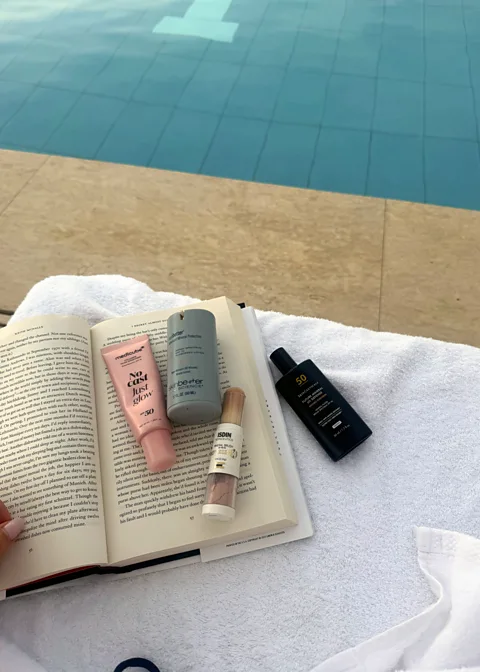
Lim builds her holiday around skincare shopping: "A perfect travel day for me might look like coffee in the morning, a museum or gallery, lunch, then a pharmacy or beauty stop in the afternoon before dinner."
She considers skincare shopping in vibrant cities like Seoul, Tokyo, Paris or Sydney a "reset" that helps her connect to the culture. "Beauty reflects how a place thinks about wellness, aesthetics and self-care. I always come home with products, but also with inspiration."
Memories that run skin deep
Melissa has already been to Rome this season and is now in Greece. Each trip, between glamorous selfies on cobblestoned streets she photographs her sun cream hauls. She brings home as much as 60 bottles. "I don't keep most of them," she assures me. "I wouldn't have the cabinet space!" Instead, she gifts much of it to loved ones and holds giveaways for her followers.
On her most recent trip overseas, Francis-Agnew brought home 15 SPF products – some for herself, some for friends. "Customs haven't flagged me yet!" she says.
More like this:
Though Gendler has spent two decades championing the superiority of overseas UV filters, she believes that the recent appeal is partly due to the chase and exclusivity. "It gives [travellers] something to do. It's like waiting online for a movie that just came out. You feel like you're part of something." Nonetheless, when she travels, she, too, brings back various formulations to test for patients and followers. "I usually go with a carry-on and come home with a checked bag," she admits.
But whether the goal is to protect your skin or be part of a cultural zeitgeist, overseas sun cream is both a practical and indulgent travel souvenir, says Lim – one that reminds you of where you discovered it each time you use it. "Emotionally, it becomes tied to the trip itself. It's the same reason people bring home a fragrance or a box of chocolates," she says. "It becomes part souvenir, part ritual, part memory."
--
If you liked this story, sign up for The Essential List newsletter – a handpicked selection of features, videos and can't-miss news, delivered to your inbox twice a week.