A trattoria with a hidden, ancient underworld

 Davide Faggiano
Quo Vadis, a restaurant in Puglia, is finally able to open after a 19-year delay caused when its owner serendipitously discovered an ancient world hidden underneath it.
“Finally. I’m happy!” proclaimed Luciano Faggiano, his son Andrea translating the Italian words into English for me. It was two days before the 8 June 2019 opening of Quo Vadis, the trattoria he’s been dreaming about in his hometown of Lecce, in Italy’s south-eastern Puglia region, for nearly two decades.
Born into a family of farmers and helping out in his uncle’s restaurant when he was a boy, Luciano has always had an affinity to food. At 17 years old, he worked in the historical London restaurant Quo Vadis, and eventually opened his own place called Moby Dick in the town of Torre dell’Orso, about 30km south-east of Lecce. When the seaside pizzeria closed in 1987, he decided to leave the culinary world and focus on investing in real estate and being a landlord.
However, fate intervened in 2000 when tenants on the ground floor of his building continually complained of dampness. At that point, Luciano’s original plan was to fix the water issue and then open a trattoria once the tenants moved out, as tourism was starting to boom in the area. So, he broke ground to change the sewer pipes, and the rest, as they say, is history – literally.
 Davide Faggiano
Eight years of digging later, he and his adult sons, Andrea, Marco and Davide, had uncovered a hidden world dating to the 5th Century BC.
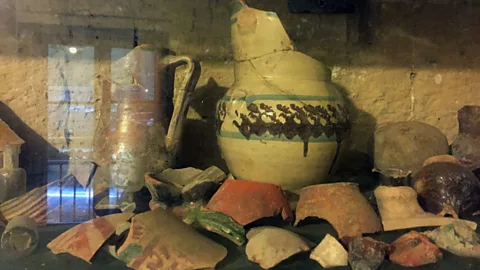
“We found lots of things – 5,000 pieces – coins, a gold bishop’s ring with 33 emerald stones, pottery, ceramic plates, children’s toys made of terracotta, statues, an underground tunnel leading to the amphitheatre,” Andrea said.
You may also be interested in:
The discovery shines a light on the region’s former inhabitants through many different eras, including the Roman Empire, the Middle Ages and the Renaissance. Some of the oldest artefacts were left by the Messapi tribe, which lived in Salento during ancient times.
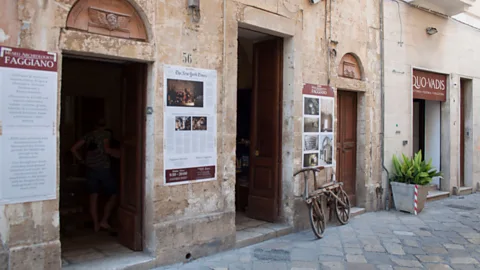
While the Faggianos did all the digging, Dr Tanzalla, a government-appointed archaeologist, supervised the excavation. In Italy, anything found underneath the ground belongs to the government, no matter who owns the property, and so, according to Andrea, thousands of ancient artefacts went into storage in the city’s Museo Sigismondo Castromediano and Castello di Lecce (also known as The Castle of Charles V). However, the Faggianos were able to retrieve some items on loan, and while the original plan was to open a trattoria in the building at 56 Via Ascanio Grandi once the tenants moved out, in 2008 they opened an independent, four-storey museum on top of the excavation site instead.
“I went to London to study languages, now I run a museum with my brother,” Andrea said with a smile when I recently visited Lecce.
 Vicki Salemi
I was enamoured by the enchanting old town – an absolute treasure in Salento, the southern part of the Puglia region on the heel of Italy’s boot – as well as the fascinating museum, which sits on top of the archaeological site. Without realising it, I handed my €5 admission fee to one of the excavators.
Immediately, I became awestruck by what I saw, including a bell-shaped water tank that was carved into the rock and later used as an escape tunnel, as well as a tomb that was used for common burial, where artefacts like a ring belonging to a Jesuit bishop, were found. Strolling through the museum, it’s hard not to be mesmerised when peeking through the clear plexiglass covering the mouth of an 8m-deep well. A description reads: “There is the constant presence of the water coming from the underground river Idume that flows under Lecce and then flows into the sea locality of Torre Chianca, placed at 12km from Lecce.”
One room of the museum is part of an old chapel that was used when the building served as a convent from 1200 until 1609. Its stone altar displays carvings of foliage that represent the cycle of life. The first floor’s 16th-Century ceiling was made of tuff stones formed into a cross and approximately 600 cylindrical earthenware jars that, according to a written description, were used as thermal insulation and to make the ceiling a lighter weight.
 Davide Faggiano
Meeting the family behind the museum was an unexpected treat, and there was a twinkle in both Luciano and Andrea’s eyes when talking about the trattoria, which Luciano was eventually able realise by acquiring the building next door at 58 Via Ascanio Grandi.
“My father would prefer once people come visit the museum, then they visit the trattoria. If both, it’s better,” said Andrea. “It’s like a service you give to the people – both things are important.”
However, Luciano resisted the temptation to dig underneath the trattoria. “For sure, there are ruins underneath because it's next door,” Andrea said.
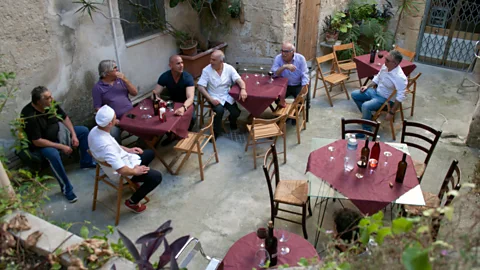
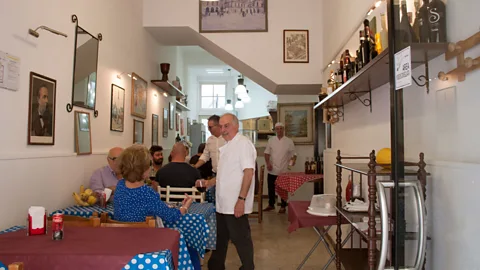
Luciano named Quo Vadis after the famed London restaurant where he once worked, as well as after a 1951 American film based on the reign of Emperor Nero. In Latin, quo vadis means ‘where are you going?’, which is fitting for Luciano, who has grand plans for both his properties: he hopes that his restaurant – with seating looking into the excavation site – creates a similar ‘ancient’ feel to the museum by serving food that traces Lecce’s roots.
“It’s all connected. The food as a culture,” Luciano said. “In every museum there’s history, but the food also has its own history... I want people to understand the local cuisine.”
 Vicki Salemi
The menu showcases quality ingredients typical of the Salento region, along with weekly specials of seasonal dishes. For instance, there’s ciceri e tria, a local pasta dish made with chickpeas and fried pasta, and frisa ncapunata, an oven-baked wholemeal bread, dressed with fresh tomatoes, capers, oregano, rocket and olive oil. And it wouldn’t be a Puglian restaurant without orecchiette (pasta shaped like ears).
Dessert comes in forms like cotognata (quince and sugar) and pasticciotto, a shortcrust pastry filled with custard cream. Local wine, craft beers, cappuccino, soft drinks and juices will also be served among staples like pizza, calzones and parmigiana (fried aubergine with meat sauce and mozzarella).
There’s even a section called ‘Salento street food’, which includes rustico Leccese, a pastry stuffed with mozzarella, tomato sauce, béchamel and black pepper; fried calzone; and pittule, small dough fritters filled with black olives and tomatoes.
“We need to go back and eat the food our land gave us,” Luciano said. “Eat without any chemicals, pesticides or poison – just natural. Just eat simple food.”
Davide FaggianoRestaurant-goers can enjoy all this delicious simplicity by eating inside the trattoria or alfresco in the courtyard; the Faggianos intend to treat them like ‘guests in their home’ – and the running of the restaurant-museum is indeed a true family affair.
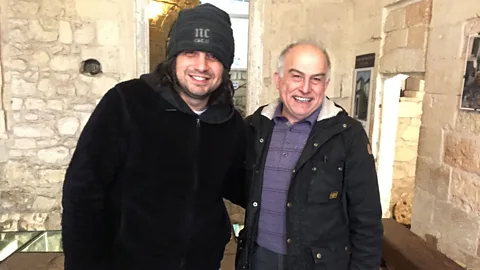
Andrea and Marco work at the museum, as does their mother and Luciano’s wife, Anna Maria, who also makes orecchiette from scratch. Their cousin Antonio is Quo Vadis’ head waiter. Davide, the youngest brother, works at Astoria, a cafe located a two-minute walk away that Luciano purchased in 2009 and used as to finance the museum until it became self-sustaining.
Despite celebrating the highly anticipated trattoria opening with family and friends, Luciano isn’t yet done. He wants to start yet another venture that connects people to the land and even harkens back to Luciano’s farming childhood.
“The next project is to do a park,” Andrea said. “My father owns land 12km from Lecce with wild plants from a long time ago and wants to keep old plants. People don’t even know about them anymore. It’s all connected – plants, vegetables – comes from the ground so there’s no difference.”
 Vicki Salemi
By forming a strong connection to this ancient land – whether through the museum, restaurant or park – the Faggianos hope to share their endeavours among generations of locals and tourists alike, an ethos in line with a particular relic they discovered.
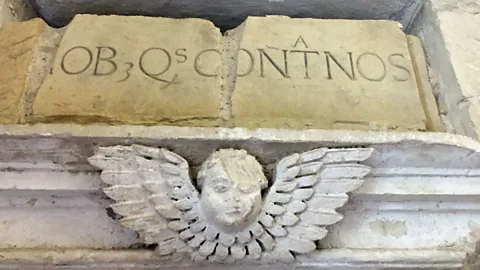
“We found a stone with Latin writing which said, ‘Si deus pro nobis quis contra nos’,” Andrea said. “We found only half in the excavation, but it means ‘if God is with us, who can be against us?’, so [our efforts are] like the stone we found – if you do good things in life, nothing bad can happen… eventually you will do the things you want to do.”
So, how does the restaurant owner feel about Quo Vadis opening, at long last?
“Relieved,” Luciano said. “As the Greeks say, there is an alpha and omega, there is a beginning and end in everything. When you have the will and the energy to do something, eventually it will come.”
Unearthed is a BBC Travel series that searches the world for newly discovered archaeological wonders that few people have ever seen.
If you liked this story, sign up for the weekly bbc.com features newsletter called "The Essential List". A handpicked selection of stories from BBC Future, Culture, Worklife and Travel, delivered to your inbox every Friday.
{"image":{"pid":""}}