No crude proposals on disability benefits, minister leading review says

 BBC
BBCA review of a disability benefit is not expected to make "crude proposals" on changes to claimants' payments, the minister leading the report has said.
Sir Stephen Timms told the BBC his interim review of personal independence payments (Pip) found the benefit was not "fit for purpose" and promised "fundamental change" in recommendations due in the autumn.
The disability minister said the "sustainability" of spending on the benefit, which is forecast to rise to more than £41bn by 2030, was "going to be a concern as we reach these decisions".
Last year, the UK government asked Sir Stephen to review whether Pip was "fair and fit for the future". His initial report will be published on Thursday.
The interim report concludes Pip is not working for millions of disabled people or the government, and suggests a sweeping overhaul of the assessment system is needed.
In evidence submitted to the review, Pip claimants described the assessment process as "dehumanising" for disabled people and a barrier to work.
The report also highlights the steep increase in the number of Pip recipients in recent years and the forecasted rise in spending on the benefit.
Pip is a benefit people with long-term illnesses and disabilities can claim if they need help with extra costs associated with living, work and care.
Eligibility for Pip is determined through an assessment.
Under the current assessment system, claimants are scored on a zero to 12 scale by a health professional on everyday tasks such as washing, getting dressed and preparing food.
Speaking to the BBC, Sir Stephen said Pip "does a very important job in helping people meet the additional costs of disability".
But the minister said disabled people had told the review the assessment can be "demeaning" and "deter you from participating in society".
"We've also found that it hasn't kept pace with changing understanding of health and disability over the last 13 years since the benefit was introduced, so we do think quite fundamental change is needed," Sir Stephen.
As of April this year, there were about four million claimants entitled to Pip in England and Wales.
The number of Pip recipients has risen considerably since the benefit was introduced in 2013, with the increase fuelled by claimants citing mental health conditions in recent years.
Sir Stephens's review of Pip was commissioned by Prime Minister Sir Keir Starmer following his government's abortive attempt to reform welfare last year.
Dozens of Labour MPs expressed concerns about the plans to cut disability and sickness-related benefits payments to save £5bn a year by 2030.
Fearing MPs would vote down the welfare reforms, the government U-turned, saying it would not change Pip rules until it had time to consider the review's conclusions.
Sir Stephen's review is expected to make recommendations to reform Pip in the autumn.
By that time, Sir Keir's successor will be in office, with Makerfield MP Andy Burnham widely expected to be the next prime minister.
In an interview with LBC last week, Burnham said he would not make "crude cuts to benefit levels that just put people who are struggling in even worse poverty".
Sir Stephen said although he had not spoken to Burnham about his review yet, he expected the former Greater Manchester mayor to "see this process through" if he becomes PM.
"The final report will be delivered in the autumn, and I'm not expecting it to contain crude proposals," Sir Stephen said.
"They're going to be very well thought through proposals, thanks to this lengthy and very carefully considered exercise that we've gone through."
But Sir Stephen said he did recognise the projected rise in Pip payments were "government liabilities".
"We're certainly going to be looking fairly at how these decisions are being made, and the question of fiscal sustainability for the benefit is going to be a concern as we reach these decisions," Sir Stephen said.
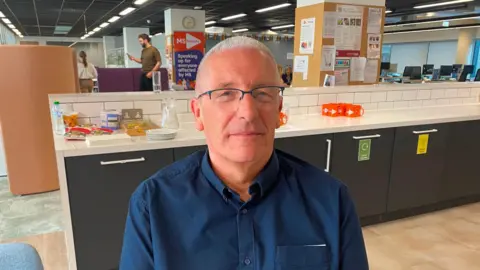
Sir Stephen met a group of disabled people at an event to discuss the findings of his review at the MS Society, a charity that supports people affected by multiple sclerosis.
Steve Thomas was diagnosed with MS 12 years ago and went through the assessment process to gain a Pip award.
He said access to the benefit allowed him to work for another seven years.
But he said in the assessment there appeared to be "a lack of knowledge about the condition".
"They ask questions that are irrelevant and it comes across as they're accusing you of trying to cheat the system," he said.
He said training more assessors and scrapping the appeals system could make it easier for disabled people to get the support they need and "in effect be a cost-cutting exercise".