Do visitors feel city parks are safe?

 Sofía Luis-Hobbs
Concerns around safety after dark and fear of crime are among the top barriers preventing people from visiting parks in Leeds and Bradford more often, according to a new study.
Researchers at the University of Leeds found around half of those they surveyed avoided their local park at certain times of the day or week.
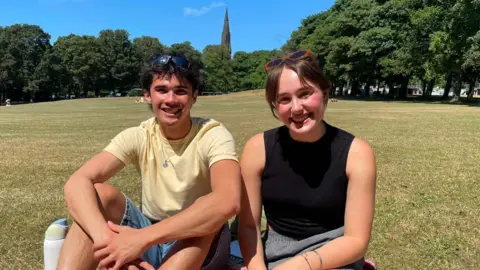
Ella, who was enjoying a picnic with a friend on Woodhouse Moor, told the BBC: "I don't really go to parks at night mainly because I feel like there's not lots of lighting in them."
Leeds and Bradford councils said they remained committed to improving green spaces for everyone.
Despite concerns around safety, 90% of those surveyed in Leeds said their most-visited park was in "good" or "very good" condition.
In Bradford, the figure was 85%.
Rylan, who joined fellow Canadian student Ella for a picnic, said Woodhouse Moor was "really well-maintained".
"I feel really safe in it. It's really clean, there's not anything I've wanted to avoid."
Roundhay Park, Woodhouse Moor and the Temple Newsam Estate were the most-visited council-managed green spaces in Leeds, according to the study.
In Bradford, the most popular spots were Peel Park, Roberts Park and Lister Park, all of which have been awarded Green Flag status.
The survey found that women tended to visit parks more often than men but were more likely to avoid them at certain times.
An international student, who wanted to remain anonymous, told the BBC she avoided walking through parks at night because she "[doesn't] want any unwanted consequences".
As a new parent, she visits Woodhouse Moor with her four-month-old son.
She added that during the daytime she feels "quite safe, I don't really see people making trouble".
 Sofía Luis-Hobbs/BBC
The research also found that disabled people were two to four times less likely to visit parks than those without a disability.
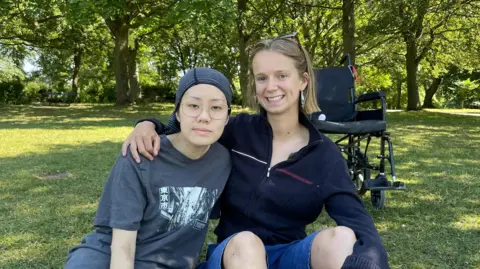
Crystal, who is a wheelchair user, told the BBC she enjoys spending time in parks like Woodhouse Moor.
But she added having "someone who you know will help you" in parks could make people feel safer.
The survey also found people wanted better accessibility, with factors like public toilets among barriers preventing them from visiting more often.
"You could add more lighting," Ella added.
Lead researcher Dr Vikki Houlden, from the University of Leeds, said the survey "offers valuable insight into the diverse and nuanced experiences of different communities".
She added: "Most importantly, it highlights that improving access and inclusion is not solely about park facilities; it is equally about recognising and responding to individual needs and lived experiences."
Councillor Ian Walker, Bradford Council's executive member for neighbourhoods and communities, said: "These findings allow us to listen to what the people have said and make sure we continue to make our parks and green spaces better places to visit."
Listen to highlights from West Yorkshire on BBC Sounds, catch up with the latest episode of Look North.