Groups highlight need for urban green spaces

 BBC
BBCWildlife groups have urged politicians to put nature at the heart of a town's regeneration projects.
The government has a commitment to make sure everyone lives within a 15-minute walk of a green or blue space, such as a park, lake or nature reserve, with the aim to improve people's physical and mental health.
But figures analysed by the BBC Data Unit show nearly one in 10 areas of Middlesbrough do not meet that ambition.
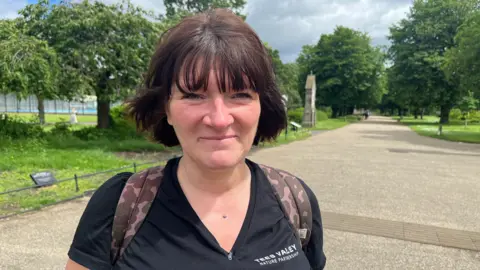
Elizabeth MacIver, from Tees Valley Nature Partnership, said imaginative solutions and collaboration with planners and builders are needed to introduce greenery and wildlife into built-up areas.
"We have to think creatively, we have to work with housing developers, planning and local authorities to see how we do that and how we implement it," she said.
"Some of our most successful towns and cities, particularly in the North, have nature front and central.
"It makes organisations want to invest and it makes it a nicer place to live in."
The health benefits of being in nature are a focus of the government's 15-minute commitment.
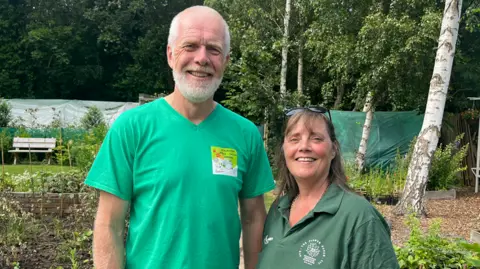
Nicky Morgan, founder of Community Interest Company All Year Round: The Flower Patch which provides gardening therapy and wellness walks in Middlesbrough, said being in nature is a great way to deal with stress.
"Just being in a green space helps to lower your heart rate," she said.
"It helps to slow your breathing down, so if you are having an anxious time it's a perfect setting to be in,.
"You've got the scent of flowers, the insects visiting them, the sound of birds - it's really good for clearing your mind."
'Barriers to nature'
Research published in 2022 by the University of Sheffield and Flinders University ranked town and city centres for greenness by analysing open spaces and tree cover.
York was just outside the top ten in 13th place, but Newcastle (44th) and Sunderland (50th) were in the lower half of the table.
Middlesbrough had one of the least green town centres in the country, rated 64th out of 68.
But even in areas where green and blue spaces are easy to get to, people may not use them because of access issues or concerns about safety and anti-social behaviour.
Labour's Baroness Hayman, the Minister for Biosecurity, Borders and Animals, said: "One of the things we can do with local communities is to understand what the barriers to access to nature are.
"Sometimes it's distance, sometimes it is other things, like culture.
"We did a heat map of one urban area where it showed that even people living close to a park didn't use it."
The Department for Environment, Food and Rural Affairs is expected to release a Green Paper detailing ideas to meet the 15-minute commitment in the coming months.