'They wanted me to repent': Inside the push to ban conversion practices

 BBC
BBCA ban on sexuality and gender conversion practices could be on the way for Northern Ireland - but there is limited time left before the next Stormont election and opposition is expected.
Introduced to the assembly on Tuesday, it contains provisions that could see a two-year jail sentence imposed on people who conduct conversion practices.
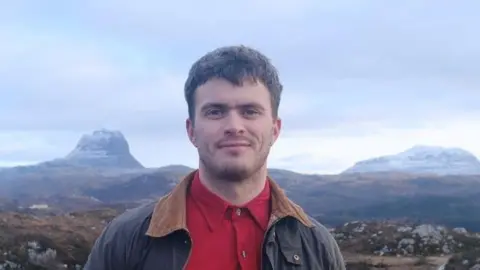
For Matthew Hyndman, the proposed legislation is long overdue.
The Traitors star was 23 years old and travelling the world onboard a Christian evangelical missionary ship when he came out to his fellow church members. Instead of acceptance, he said he was met with "judgement and resistance".
"They wanted me to repent in front of the entire church community, about 400 people. After that I'd have begun what they called 'counselling'," he said.
Hyndman refused and within two days was on a plane back to the UK, effectively ex-communicated, he said, by people he considered "sort of like family".
He said he "firmly supports" criminalising conversion practices because he has "met people who bear the deep scars of trauma of conversion therapy - depression, anxiety, really serious mental health damage."
But opponents of the bill argue it is unnecessary and risks going too far.
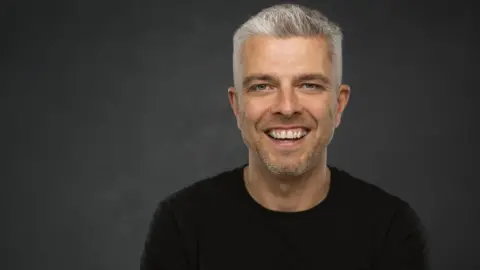
Peter Lynas of the Evangelical Alliance said nobody has presented proof there is a need for the legislation.
"We believe that coercive and abusive practices should be illegal and already are, so our first question is: What is the problem this bill is trying to fix? And I'm not clear what the gaps are in the law, that require a new bill."
 Evangelical Alliance
Lynas said he believes the bill risks criminalising "teachers, parents, therapists, pastors and many others".
He said it was not clear what would count as coercive behaviour or conversion practices.
"And it actually fundamentally discriminates against those who are trans or same sex attracted, because [from the wording of the bill] they actually can't consent to the support that they choose," he added.
Advocates say the bill is about protecting LGBT people from harmful attempts to change or suppress who they are.
Critics contend it is a legislative overreach which limits freedom of choice for gay and trans people and risks criminalising important conversations around sexual orientation and gender.
Will it make it to law?
The timeframe for scrutinising the bill is relatively tight, with the assembly now on its summer break until September and an election in May 2027.
The bill will need to complete all of its legislative stages by March in order to become law.
There is also the prospect of opposition from some unionist parties who may seek to slow down or block its passage.
About 5% of the 108,000 people who responded to the government's UK-wide LGBT Survey in 2018 said they had been offered some form of conversion practice, while 2% had undergone it.
 Getty Images
Hyndman said such practices are "really prevalent" in religious circles.
"When I came back to the UK, I visited my old churches in Northern Ireland and Edinburgh, and both tried to send me for conversion therapy.
"That means three unconnected churches all put pressure on me to change my sexual orientation."
He said conversion practices could be "particularly pernicious" in a church setting.
"For a lot of people who belong to a church, their whole life is bound up in it: their family, friends, vocation, job, everything. The room for manipulation is massive.
"All of a sudden it can feel like your de facto options are: Agree to conversion therapy or lose everything you love."
Much of the opposition to the bill is expected to come from religious groups.
Lynas acknowledged that "historically churches" did put "undue pressure" on gay people but said he is "waiting to hear evidence of that being done on any kind of scale in the last ten years".
The bill says an offence would be committed if a victim suffered "psychological harm" as a result of conversion practices.
It defines this harm as fear, alarm or distress.
Lynas said this definition was too broad.
The Ban Conversion Practices Coalition - which includes groups such as The Rainbow Project, Here NI, Cara-Friend, Northern Ireland Humanists, Christians at Pride NI - have said they are satisfied the bill includes protections for freedom of speech, belief, and the delivery of legitimate healthcare and therapy.
What are conversion practices?
Conversion practices - sometimes called "reparative therapy" or "gay cure therapy" - try to change someone's sexual orientation or gender identity, according to the British Psychological Society (BPS).
In practice, it means trying to stop or suppress someone from being gay or from identifying as a different gender to their sex recorded at birth.
It often includes talking therapies and prayer but more extreme forms can exist.
The BPS and other professional bodies, including NHS England and the Royal College of Psychiatrists, said all types of conversion practices are "unethical and potentially harmful".
The bill would make it a criminal offence to provide conversion therapy, or to engage in coercive conversion behaviour with the goal of changing a person's sexual orientation or gender identity.
It would also make it an offence to remove a person from Northern Ireland for the purposes of subjecting them to conversion practices.
The definition for coercive behaviour is borrowed from the Domestic Abuse and Civil Proceedings Act (Northern Ireland) 2021.
It includes violent or threatening behaviour, humiliating the victim, or controlling their to day activities.
How did we get here?
The bill was brought to the assembly floor by Alliance Party MLA Éoin Tennyson, but Stormont politicians have debated the issue of gay conversion practices before.
In 2021, MLAs passed an Ulster Unionist Party (UUP) motion calling for it to be banned in all forms, however it was not binding.
Asked if this remains the party's position under new leader Jon Burrows, a spokesperson said: "The UUP will scrutinise Eoin's Tennyson's private members bill carefully to fully understand its scope, and to ensure that it is proportionate and does not give rise to unintended consequences."
When Sinn Féin held the communities brief in the executive, several of its ministers advocated banning the practice - with Deirdre Hargey at the time saying her officials were drafting a bill, but a subsequent collapse of power-sharing meant this got no further.
The Democratic Unionist Party (DUP assembly member Gordon Lyons became communities minister in 2024 when devolution was restored.
His party has previously said it is "firmly opposed" to conversion practices , but argued that "legitimate religious activities" such as preaching, prayer and pastoral support do not fall under that definition and should be protected.
In England, the government has just published its plans to legislate to ban the practice there, which could carry jail time and fines for those found to have carried out "abusive acts" aiming to change someone's sexual orientation or transgender identity.