'We are using football as excuse for abuse'

 Claire Starr/BBC
A domestic abuse survivor says she fears people are "using football as an excuse" for the crime ahead of the World Cup.
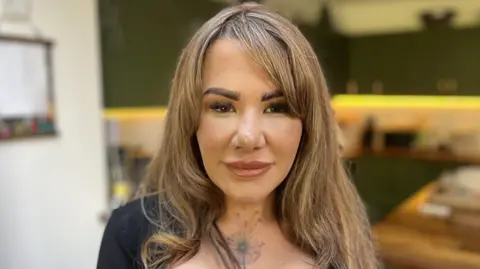
Katy Longhurst, from near Maidstone in Kent, who created a software called Ask Joan to help victims covertly call for help, said: "We are not addressing the core root of the problem, which is the perpetrator's behaviour.
"They choose control and they choose violence, it's just football heightens that."
Minister for safeguarding and violence against women and girls, Natalie Fleet, said: "Nobody should live in fear of sporting events."
A study by Lancaster University, published in 2014, found incidents of domestic abuse recorded by Lancashire Constabulary rose by 38% when England lost and 26% when they won or drew.
Another study, from the University of Warwick, found an England victory in an international tournament was followed by a 47% increase in the reported number of alcohol-related domestic abuse cases.
Sussex Police saw the number of 999 calls linked to domestic violence double during the last World Cup in 2022.
During each World Cup, Sussex Police runs Operation Hope, which sees officers proactively checking on vulnerable people most at risk of domestic abuse to offer support, safeguarding advice and to make sure they are being protected.
The force says it runs Operation Hope primarily during major football tournaments and during the festive period as historically there has been increased reports of domestic abuse at these times.
Longhurst said she thought it was "fantastic" that football was being used to raise awareness, but wanted to see more year-round help.
"The person that's at risk now during the World Cup was the same person that was high risk back in January," she said.
 George Carden/BBC
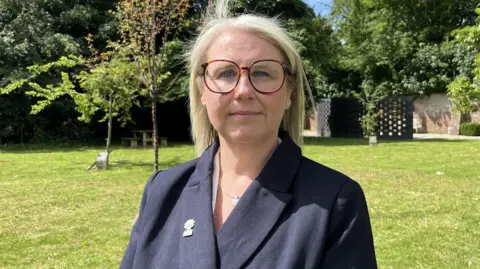
Det Ch Insp Kelly Lewis said: "Football is not the reason for domestic abuse, there's no excuse for domestic abuse."
The inspector said some of the theories about the national increase looked at increased tension and emotions during tournaments as well as higher alcohol consumption.
Speaking about her own experiences, Longhurst said: "I want to be really clear that football was not the issue, alcohol wasn't the issue, he was always held accountable for his own behaviour.
"He chose violence and control. It hadn't mattered if the football [team] won or lost."
Longhurst explained that a change of routine sometimes meant victims could not use their usual "escape mechanism", which could have included asking a neighbour to visit.
"They're trapped in that environment, so for them they need to work out what their safety plan is," she said.
"You are not the problem. So it's not what you wore, it's not what you said, it's not because England have won or England have lost, he is ultimately the problem."
Minister for safeguarding and violence against women and girls, Natalie Fleet, said: "Cutting domestic abuse is central to our violence against women and girls' strategy.
"This includes placing the first domestic abuse specialists in 999 control rooms, as part of Raneem's Law, rolling out pioneering Domestic Abuse Protection Orders to protect victims, and, through the Enough campaign, working with some of the biggest names in sport to challenge harmful behaviours.
"We will always use the full power of the state to make this country safe for women and girls"
Where to find help
Lewis said: "If you are concerned about somebody at risk of domestic abuse, if you're concerned in a social setting, if you're concerned for a neighbour, or for a friend, or a family member, we're asking you to be an upstander, not a bystander, to that abuse."
Anyone who is in immediate danger is urged to always call 999.
Resources are also available on police and council websites for anyone looking for help.
If you have been affected by any of the issues in this story visit BBC Action Line.