What we learned from the Nottingham attacks public inquiry

 Supplied
Hearings as part of the long-awaited public inquiry into the Nottingham attacks finally came to an end on Friday.
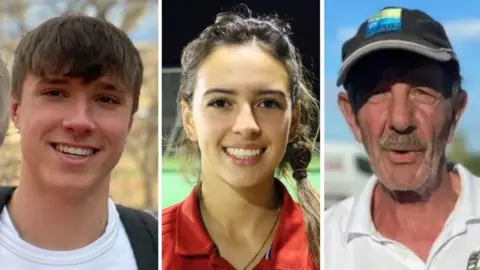
The spate of attacks on 13 June 2023 by Valdo Calocane, who had been diagnosed with paranoid schizophrenia three years earlier, resulted in the deaths of Barnaby Webber, Grace O'Malley-Kumar and Ian Coates.
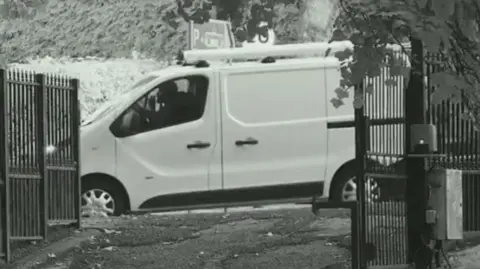
Calocane then stole Ian's van and used it to hit pedestrians Wayne Birkett, Sharon Miller and Marcin Gawronski - leaving them with life-changing injuries.
Calocane later pleaded guilty to three counts of manslaughter, on the grounds of diminished responsibility, and three counts of attempted murder. He was sentenced to a hospital order in January 2024.
But this was far from the end of the story, as serious and widespread failings by agencies highlighted failures to adequately treat Calocane's illness, a lack of information around the killer's history of violence, and illustrated what many dubbed a "broken" system.
The statutory and judge-led Nottingham Inquiry was eventually commissioned by Prime Minister Sir Keir Starmer, and hearings began at Mary Ward House in London on 23 February.
Over the course of 14 weeks, 164 witnesses gave evidence as the lead-up to the attacks and the aftermath were scrutinised.
So what did we learn?
Killer should have been arrested before attacks
 Nottinghamshire Police
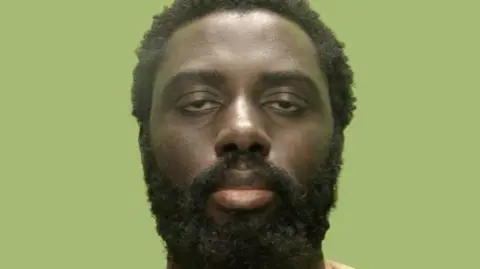
The former chief constable of Nottinghamshire Police, Kate Meynell, admitted in her evidence that Calocane should have been arrested before he carried out the attacks.
A warrant for his arrest was issued in September 2022 after he failed to appear in court for assaulting PC Barnaby Pritchard. Calocane had attacked him a year earlier while he was being detained under the Mental Health Act.
Calocane was in hospital when he was due to appear in court after being sectioned on another occasion. However, police had nine months to execute the warrant.
A number of police personnel have been challenged over the suggestion that executing the warrant would not have made a difference.
Police bosses admitted not arresting Calocane had been a "serious and systemic and operational failure".
Dr Sanjoy Kumar, Grace's father, said it was "perhaps the biggest missed opportunity".
In her evidence, Meynell said the force had "completely changed" the way warrants were managed after the attacks and added they were reviewed on a daily basis.
Calocane's violent history was known to police
At Calocane's sentencing hearing, the court was told he had no previous convictions.
However, the inquiry heard he had a history of police interactions linked to violent incidents, including the assault on Pritchard, dating back to 2020.
In May 2020, Calocane was experiencing a psychotic episode when he kicked in the door of a woman's flat at Brook Court in Radford.
The woman fell from a window as she attempted to flee and was left needing metalwork and screws surgically fitted to her spine.
In July 2021, while he was a student at the University of Nottingham, Calocane suddenly grabbed his housemate, Sebastian, by the shirt and held him up against a wall. Sebastian also reported being followed home by Calocane in 2022.
In January 2022, while living at different accommodation, Calocane put his flatmate, Christopher, into a headlock following a confrontation about cleaning.
Weeks before the attacks, in May 2023, Calocane violently assaulted two colleagues at a warehouse in Leicestershire.
Victims' families waited hours for information
 PA Media
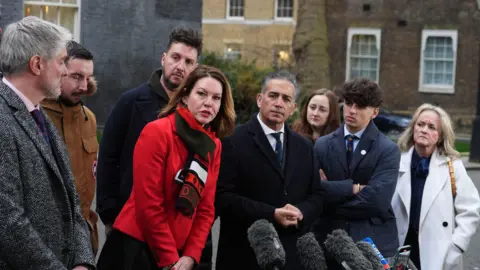
Barnaby and Grace were fatally attacked by Calocane at about 04:00 and, by 05:30, police had established their identities.
But Barnaby's parents were not told their son had died until after 10:00, despite contacting the police for information themselves.
After seeing news of the attacks and attempting to call Barnaby, his father David Webber used the Find My phone app to check his location and later tracked it being taken to Radford Road Police Station.
Grace's parents also saw news of the attacks and became increasingly worried as the morning progressed and they had not heard from her.
Her mother, Dr Sinead O'Malley-Kumar, called a helpline shown on TV and the Queen's Medical Centre, but was told Grace had not been admitted.
At midday, the family said they were called by police, who told them they were sending officers - to which Sanjoy said: "No, you're not, we're driving up."
Two of Ian's three sons - James and Lee - told the inquiry they waited longer.
James said he found out his dad had died through social media at about 15:00.
After piecing together what had happened, Lee said the family called 101, the attacks helpline and 999 in an attempt to get information.
It was not until about 17:00 that James said he received a call from the police about his dad's death - 10 minutes before Meynell gave a televised statement to the media.
Victim's partner told he died in traffic accident
 Supplied
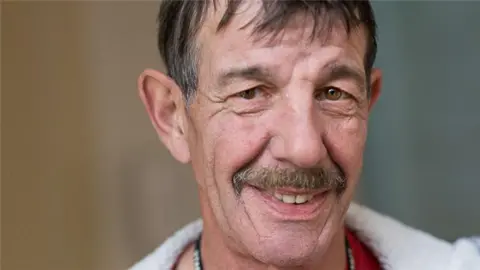
Ian's partner, Elaine Newton, told the inquiry she was informed of his death on the morning of the attacks, but that she was told by police officers he had died in a road traffic accident.
She was taken home from work by the officers but said she received no further details for about five hours.
It was not until later in the day Elaine was told Ian had in fact been stabbed to death.
She said: "It felt like he'd been killed twice."
The inquiry also heard Ian's body was left at the scene for 15 hours.
Victims tested for drugs - but Calocane was not
 Supplied
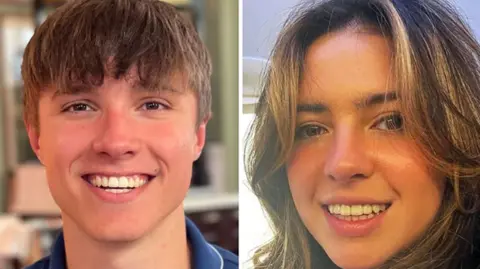
Grace and Barnaby were both tested for drugs and alcohol after the fatal attacks - but Calocane was not.
The inquiry heard the killer had refused to consent to urine and blood samples while in custody.
Barnaby and Grace's parents asked whether a hair sample could be taken, but that was not carried out either.
However, their children's bodies were tested following their deaths.
Grace and Barnaby's parents were asked to sign "human tissue forms" so their children's bodies could be released following the attacks.
It was not highlighted to them that the form also gave consent for samples to be taken.
Sanjoy told the inquiry: "I was really struck by that being really quite disgusting."
Triple killer's brother 'felt powerless'
In evidence, Elias Calocane, told the inquiry he felt "powerless" when it came to his brother's mental health.
Valdo, the inquiry heard, was a student when he started to become unwell and lived away from his family in Wales.
The inquiry heard as Valdo's mental health deteriorated, he had sent a series of text messages to his younger brother, expressing thoughts of violence and murder.
Valdo told Elias he had the "darkest thoughts", "wanted to hurt... permanently" and described changes to his mood.
The pair also discussed their faith in those messages and later, Calocane said he had previously been thinking about "red rum" - murder spelled backwards.
Elias began taking notes of his interactions with his brother, and said he "didn't know what else to do".
He said he feared Valdo would end up taking his own life and believed his expressions of harm were about himself.
He held back tears during his evidence as he explained the expectation of bad news every time he received a call from his mother, Celeste.
"I couldn't see another way out," he said. "I just didn't know what to do about it. I felt powerless."
Killer's mother struggled to navigate 'broken' system
Celeste Calocane told the inquiry she spent two years attempting to navigate services she did not understand.
She became aware something was wrong with her eldest son in 2020, when she said he began to call the family "agitated and crying".
As Valdo was due to be discharged from his first hospital admission, Celeste said she felt it was "too early" but had "no power".
Notes from Nottinghamshire Healthcare NHS Foundation Trust - which was responsible for Valdo's care - showed Celeste had raised concerns that her son was a risk to the public three years before his attacks.
Despite Celeste alerting Valdo's care team when she saw red flags that indicated he was becoming unwell again, she said little was done in response.
Valdo eventually withdrew consent for details of his care to be shared with Celeste, and contact between the mother and son became less frequent.
She told the inquiry: "He wasn't the Valdo that I knew, that I raised in my house.
"He wasn't that Valdo when I look at him. He was empty. There was nothing there."
Addressing the chair of the inquiry, Celeste said she wanted to help bring about change.
"The system is so broken. No-one should have to go to bed thinking, 'I'm going to have a phone call tomorrow that something happened to my loved one'.
"When it gets to crisis, it's too late," she added.
Killer discharged after mental health services 'could not find him'
 Nottinghamshire Police
The decision to discharge Calocane nine months before his fatal attacks has been heavily criticised at the inquiry.
The inquiry heard he had a known history of non-compliance with taking his medication and violence when unwell.
As Calocane began to disengage from mental health services, he missed a number of calls and appointments between June and August 2022.
Staff were unable to locate him, but the inquiry heard little effort was made to find his correct address at the time.
He was discharged back to his GP in Nottingham with a letter that had no details of his care or history.
Calocane was effectively "lost" and released from services unmedicated and unmanaged.
One of his care co-ordinators, Gary Carter - who left the NHS trust before disciplinary action against him concluded - told the inquiry the team did "everything they could to try and deal with this man... and failed".
Police, healthcare workers and court staff data breaches
 The Nottingham Inquiry
Following the attacks, it emerged a number of professionals had accessed digital evidence and the victims' medical records. The inquiry laid bare the extent of those data breaches.
Nottinghamshire Police became aware of inappropriate access the day after the attacks, the inquiry was told.
A number of staff members self-reported, including a special constable, who was placed on the police barred list, and a front counter worker who was dismissed.
But the inquiry heard police were reluctant to investigate how many times staff accessed images and footage, over concerns it could be "countless officers".
The force told the inquiry an audit would be carried out following a complaint by Barnaby's mother, Emma Webber.
Nottingham University Hospitals NHS Trust revealed it had sacked 11 staff members for accessing the medical records of the deceased victims, while 12 had received final written warnings and two had first written warnings.
The trust's investigations are still ongoing.
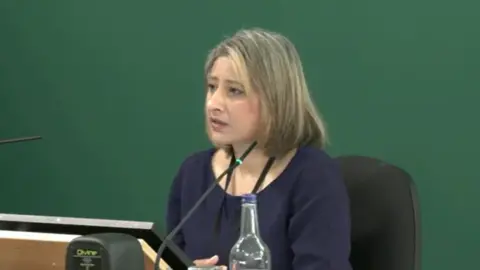
In her evidence, medical director Manjeet Shehmar apologised for the "additional distress" caused to the families affected.
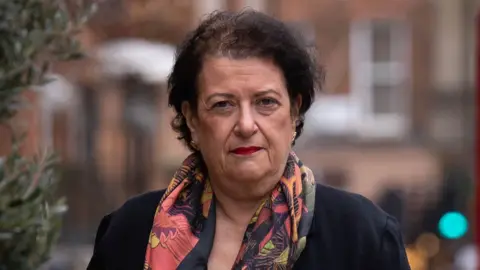
Court staff were also among those who viewed information inappropriately, while an investigation into allegations that Ministry of Justice staff illegally accessed computer files is ongoing.
 PA Media
Chaired by retired senior judge Deborah Taylor KC, the inquiry officially started when the terms of reference were laid out in May 2025.
With the evidence now heard, core participants are expected to make closing submissions later this year.
Taylor will have until May 2027 to publish a report of her findings and any recommendations.
Listen to BBC Radio Nottingham on Sounds and follow BBC Nottingham on Facebook, on X, or on Instagram. Send your story ideas to eastmidsnews@bbc.co.uk or via WhatsApp on 0808 100 2210.