Has anyone changed their mind on Brexit 10 years on?

 Gemma Dillon/BBC
It was a vote which split the country, towns and even families more or less down the middle.
Ten years ago I spent months talking to people about the EU Referendum, billed by then Prime Minister David Cameron as a "once-in-a-generation opportunity" to have a say on the UK's relationship with our nearest neighbours.
On 24 June 2016, people in the UK woke up to learn the nation had voted to leave the EU by 51.9% to 48.1%.
In our region, the results were broadly similar but some areas showed a stronger desire to stay or go than others.
In Doncaster, voters said they wanted to leave the European Union, with 69% backing Brexit. In York 58% of voters backed the Remain campaign.
A decade on, I've been out in those areas asking people how they feel now.
Doncaster's high street is buzzing with shoppers, market stall holders and people enjoying the sunshine.
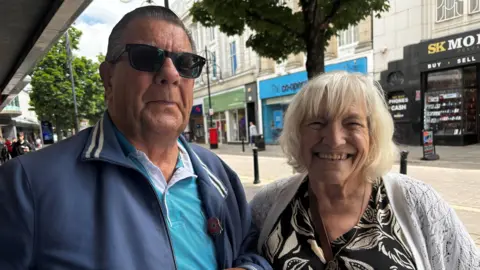
I meet retired couple Ann and Ian Fraser - during our conversation it turns out the pair voted in opposite ways.
Ann voted Remain and believes the country is "worse off" as a result of the Leave vote.
She said "I don't think we've gained a great deal, apart from if you're travelling abroad a lot."
Husband Ian backed Leave because he "didn't like the way the country was being run".
"We weren't run by England at all. We were run by whatever was happening in Germany, France or anywhere else," he explained.
"I still think that we're better off out of it than we were in it, because I think we can talk for ourselves instead of somebody else doing it for us.
"I don't think we've realised our potential, it's done us no harm to leave."
Ann is not sure how she would vote today and says she can see "pros and cons" to both sides.
 Gemma Dillon/BBC
Both local Labour MPs for Doncaster at the time, Ed Miliband and Caroline Flint, backed staying in the EU which pitted them against the wishes of most voters in their constituencies.
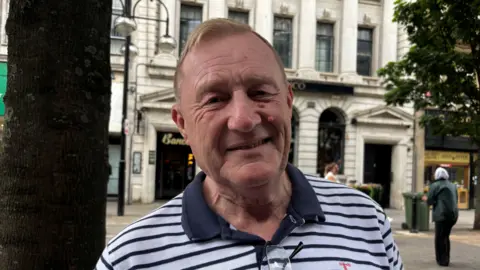
Jonathan Alice was one of those who voted Leave and, despite the passage of time, still believes he made the right decision.
He said: "I didn't want unelected Euro bureaucrats dictating to the British public how they should and shouldn't live their lives.
"I was annoyed by the way they dealt with legislation such as health and safety.
"Health and safety are absolutely brilliant, but we were the only people that were playing the game.
"A lot of the Mediterranean countries didn't play the game at all. And we were just getting penalised continually by the bureaucrats in Strasbourg."
'Play by the rules'
He said he felt that successive governments had let the country down when it came to the implementation of the vote - with the issue of immigration being a particular touchpoint.
The 63-year-old has worked with asylum seekers for the last couple of years and said he had no problem with people who had a "genuine reason" for seeking safety in the UK.
However, he said, "the rest of Europe doesn't play by the rules which it set in motion" on the issue.
Immigration was one of the key issues around the EU Referendum and there was a feeling from some that Britain did not control its borders.
Gabriella Alberti, who is a professor in international labour migration at the University of Leeds Business School, said it was "at the very core of the Brexit campaign and one of the main reasons why eventually the majority of the population in the UK voted to leave the European Union".
She added when Boris Johnson implemented Brexit in 2020, the idea was that by "controlling the borders through the end of free movement of labour, then employers, the state would have a better control in the economy and especially local workers would have access to better jobs - but that did not materialise".
 Gemma Dillon/BBC
During the campaign a lot was written about young people and how this "once-in-a generation" vote would affect them.
Some studies suggested more than 70% of 18 to 24-year-olds voted Remain, while just under 30% opted to vote Leave.
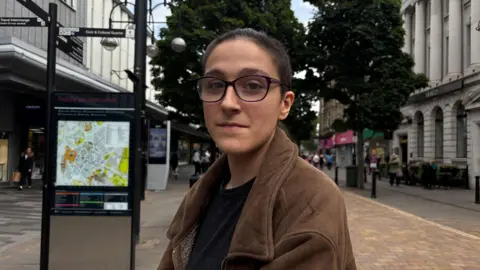
Max Aveson was 16 in 2016 and so unable to vote - I meet them enjoying a break from working as a barista in the city centre.
"All the adults talking and that, it would make everything better, cheaper, more accessible, and it's not," they recall.
Summing up their feelings, Max reflects that it was a "terrible decision - it has made everything worse".
"In all honesty looking on it in the future, if we knew what we did now, probably nobody would have voted for it," they said.
"I don't think we would vote to leave especially with my generation now being able to vote. So a lot a lot of us would probably Remain."
'Utter mess'
In Leeds and Harrogate, voters backed Remain but by narrow margins.
A more decisive victory for the Remain campaign came in York where 58% of voters backed staying in.
The city's MPs campaigned on opposing sides.
York Central Labour MP Rachael Maskell wanted to stay in the EU while York Outer Conservative MP Julian Sturdy backed the country leaving.
Just outside the city walls, Bishopthorpe Road is lined with independent shops and cafes but voters I spoke to here did not want "independence" from Europe.
Most were happy to share their opinion that Brexit had been "a complete and utter mess".
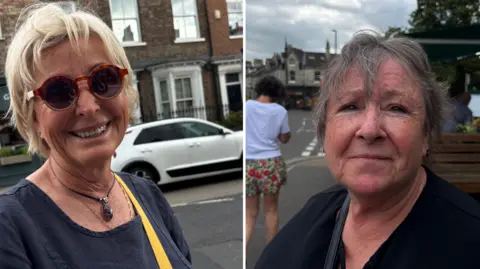
Janice Fisher voted to remain within the EU but had friends who voted Leave, and still cannot understand the choice they made.
She was highly critical of David Cameron, who she believes did not do enough to convince the country to remain within the EU.
The 77-year-old accepted that European institutions may have needed reforming, but added: "You need to be in something to change it and we can't change the EU from the outside."
Janice was keen that, despite the division the vote caused, conversations should continue - especially focused on whether the nation should rejoin the EU.
 Gemma Dillon/BBC
Fellow shopper Barbara Regan, 70, said she remembered feeling "really depressed" when the results came in and it was clear the United Kingdom had voted to leave.
She described it as "a huge mistake".
"Nothing good has come from it at all.
"Every time you go on holiday you have this huge palaver of queuing up at airports worse off, nothing better about it at all, not one thing."
While feelings among voters are clearly still as strong and polarising as they were a decade ago, it doesn't appear the UK government has any appetite for another referendum.
Listen to highlights from West Yorkshire on BBC Sounds, catch up with the latest episode of Look North.