How to tell if your kids' squishy toys are fake

 BBC
BBCRemember that toy or trend that was a must have growing up? Furby, Tamagotchi, fidget spinners, to name a few. Well one of the latest among kids is squishy toys.
But local authorities are now warning consumers and businesses to look out for unregulated counterfeits after some were found to contain toxic chemicals.
It comes after the Office for Product Safety and Standards (OPSS) issued a national recall for a brand of toy known as Squeezy Dumpling'.
There are many others and plenty of counterfeits too, which Trading Standards say can bypass routine safety checks and contain unknown ingredients. The BBC has been to take a look at some seized products to help you learn how to spot a fake.
In recent weeks, Oxfordshire and Berkshire Trading Standards have seized a large number of squishy toys including fake replicas of the popular brand Nee-Doh - with the company also issuing a warning over counterfeit versions of their products.
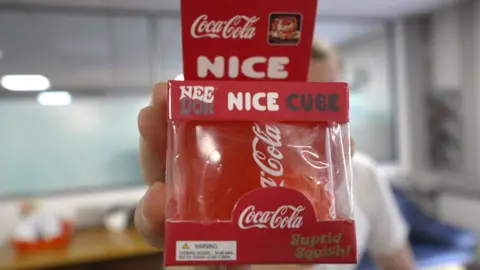
During a seizure in Oxford, one shop was found with more than 80 fake squishy toys - including 71 NeeDoh 'Nice Cubes'.
"They should have the name and address of the UK importer on there."
Mark, who is a trading standards officer, said this is one of the first things to look out for.
"It's Bigjigs Toys who are the importers of the genuine NeeDoh products and these ones haven't got their details on there."
The growing concern is that because these products don't have a UK address they are therefore unregulated and may not have been tested for harmful substances.
"We don't know what they're made of, we don't know what testing has been done, if any, and if there is a problem with the toys there's no-one in the UK to go back to."
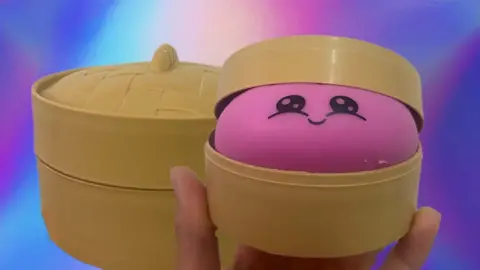
Mark said that although they hadn't yet tested the toys seized in Oxford, they have found products "that hadn't been tested in the past... to contain chemicals like benzene".
"And some of the squishy toys have been found to contain phthalates in the past as well."
Phthalates are a group of chemicals used to make plastics and are often called plasticisers. The UK government regulates phthalates as hazardous chemical substances but are still used in cosmetics, fragrances, and food packaging.
Consumers in Berkshire are also being advised to stop using any squishy toy that leaks, splits or becomes damaged, and never to heat, microwave or tamper with them - following a TikTok trend that has left people with burns.
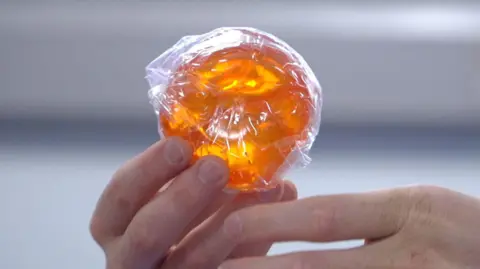
There have also been concerns raised from campaigners for children with special educational needs and disabilities (SEND) - who are often recommended to use fidget type squishy toys to help them feel calm and regulated.
Claire Brenner, who is a SEND campaigner from Oxfordshire, said she was concerned these toys could be harmful because "neurodivergent children can be really attracted to sensory inputs", like squishy toys.
"It will be neurodivergent children I think who are disproportionately going to be using them, really wanting to engage with them and potentially mouthing them.
"I'm very grateful the council are taking a rightly precautionary approach and making sure they're taken off the market."
Despite some obvious spelling mistakes on some of the products, including the word 'stupid', spelt, 'suptid', there are other signs to look out for.
Mark says retailers and consumers should look to see if the product has the UKCA or CE mark on it - a product certification requirement for Great Britain.
But lot's of counterfeit toys also have these marks on them, which is when you need to look again for a UK address.
"If you can't see anything ask the retailer who the manufacturer or importer is because they should be able to tell you and if they can't, avoid buying them."
Mark couldn't comment as to whether they were seeing a rise in counterfeit toys but said that they often enter the high street "when a new craze starts".
"Where unscrupulous traders can see an angle to get into the market they're going to look to copy products that are selling well."