'This island is not a museum, it is a working village'

 BBC
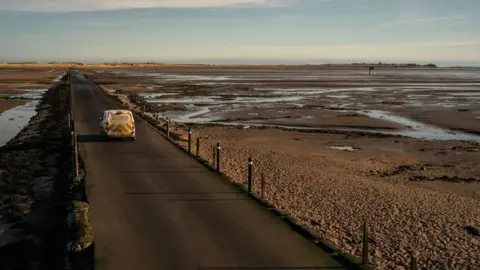
BBCHoly Island, a tiny settlement connected to the mainland by a majestic tidal causeway which disappears under the North Sea twice a day, welcomes up to 700,000 visitors a year. They sustain many businesses and livelihoods, but some islanders say it can feel like living in a museum.
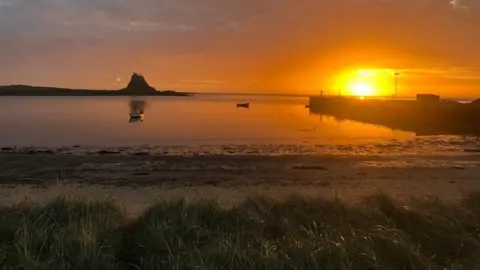
Dr Richard Hills's home sits above the sea, its long verdant garden opening on to the beach and overlooking the island where legend suggests St Cuthbert embraced a life of solitude away from the other monks in the 7th Century.
"We have had people coming into our garden and just wandering around," he says.
"Which can be a little odd."
 Getty Images
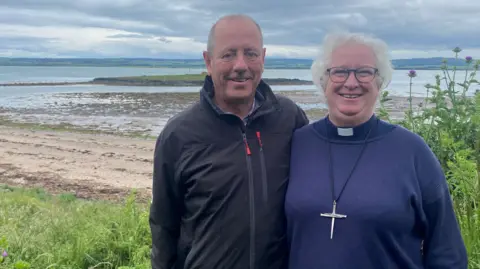
A newly retired GP, he has lived on the island for seven years with his wife and local vicar the Reverend Canon Dr Sarah Hills and co-chairs Holy Island 2050, an organisation set up to find a sustainable future for the island.
"It's not just the volume of visitors we get, it's the fact they are concentrated in such a short period of time because of the tides," he says.
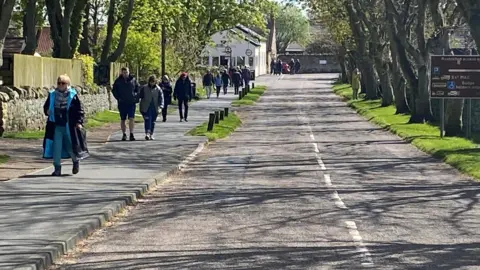
"It can be so busy you can't drive down the street and many of our elderly residents simply don't come out."
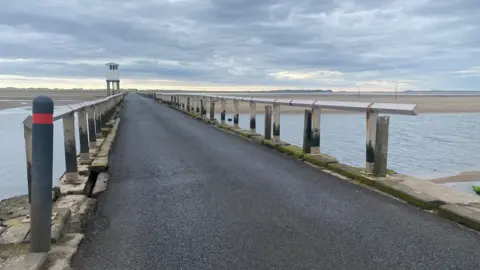
The island's tidal causeway includes a narrow bridge which can only take one car at a time.
"If you're trying to get back on the island as everybody is leaving ahead of the safe crossing times ending, you can sit there for hours," Richard Hills says.
"I've actually had to get out of my car and walk on to the bridge to stop the traffic so I can get home after a surgery."
The island's church welcomes more visitors than many cathedrals, which Sarah Hills says is "absolutely wonderful of course".
But that too, brings its challenges.
"You can be holding a service and visitors will still be wandering around, chatting and taking photographs."
"Do you stop the service and ask them to stop or do you just try and carry on?"
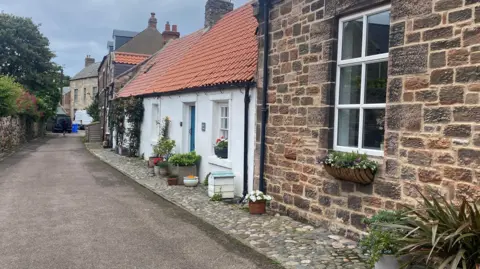
Farmer Alison Brigham, who has lived on the island all her life and has a stall selling local produce, accepts the need for visitors.
"But since lockdown it's just gone mad," she says. "That's the only way to describe it."
Natural England asked her to give up one of her fields for a dog walking area because Holy Island is part of an internationally important nature reserve, home to up to 60,000 migratory ducks, geese and wading birds, so people are asked to keep their dogs on leads.
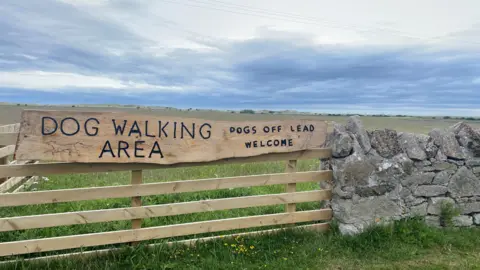
"It hasn't made a jot of difference," Brigham says.
"People tramp through my fields all the time, their dogs chase my sheep.
"I have to cable tie the gates to stop them leaving them open and the sheep getting on to the road."
Her favourite story involves her Gran, who lived in a cottage in the village, returning home to find a visitor coming down the stairs of her home.
"He was out of there pretty quickly I can tell you," she laughs.
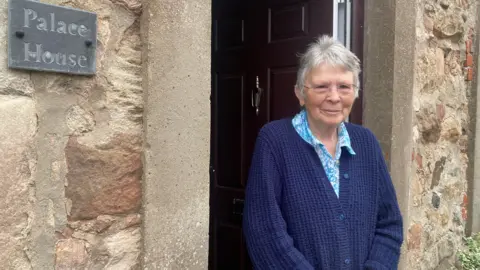
Sue Massey, 80, often has visitors looking through the windows of her home.
She arrived in 1972, has run both a hotel and a cafe and lives in a house which dates to the 15th Century.
"People cup their hands around their faces to peer in," she says.
"I just pull the blinds so they can't see.
"When you're driving through the village to get to your house the visitors fill the road and scowl at you when they have to move.
"I had one man shake his fist at me."
 Sarah Hills
While the challenges from tourism are easy to identify, the solutions are not.
"We absolutely want to share this beautiful place with visitors but we have to find a way of spreading the numbers," Richard Hills says.
"Some days we can three or four thousand people arriving and the car park can't take anything like that".
It is hoped the narrow bridge on the causeway, which is "nearing the end of its life", will be replaced to help traffic flow and a social media campaign is encouraging people to come on less busy days.
"Most of all the message we want to get out to visitors is 'plan ahead, think about a good time to come and what you'd like to do when you're here'," Hills says.
"And remember, this is not a museum like Beamish.
"This is a working village."