Million London homes at high risk of extreme heat

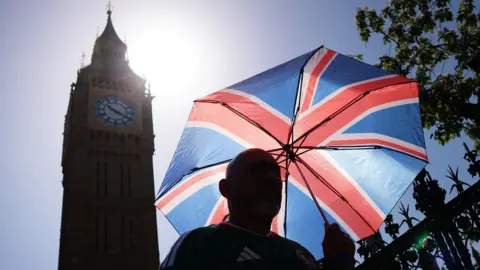 EPA
EPAAt least a million homes, more than 1,300 schools, 60 hospitals and 350 care homes in London may be at high risk of overheating, according to a new report.
The capital could face between two and three times as many heatwaves as it currently experiences within the next 20 years, City Hall's Heat Ready London plan warns, adding that the 2022 heatwaves cost the city an estimated £1.5bn.
On Wednesday, a provisional UK temperature record for June was broken following last month's smashing of an all-time May record temperature in London two days running.
Mayor of London Sir Sadiq Khan said: "Rising temperatures are no longer a future threat - they are becoming a growing reality for Londoners."
'Huge obstacles'
The report calls for the protection of those at highest risk of extreme heat, retrofitting of buildings, expanded access to cooling spaces and improved infrastructure resilience.
Last year, the London Fire Brigade (LFB) had its busiest summer since the extreme heat of 2022, with 83 wildfires in the capital between June and August.
A Met Office red warning for extreme heat in London and other parts of England is in place until 23:59 BST on Thursday, with temperatures forecast to hit up to 37C.
London is frequently the hottest place in the UK in part due to the urban heat island effect caused by high levels of dark surfaces, which absorb more solar radiation during the day and release this heat into the city air.
The mayor is overseeing what he calls the creation of London's first heat plan, citing nearly 4,000 additional hospital attendances during hot weather in London during the summer.
Sir Sadiq hopes Heat Ready London will help shape how cities across the UK respond to rising temperatures and adapt to a warming climate by identifying where action is most urgently needed.
He said: "This is a new vision that will help tackle the huge obstacles we face with rising temperatures.
"No single organisation can address the scale of the challenge alone so this is a call to action to our partners to use this framework to drive collective delivery so we can protect lives and strengthen the resilience of our city."
Listen to the best of BBC Radio London on Sounds and follow BBC London on Facebook, X and Instagram. Send your story ideas to hello.bbclondon@bbc.co.uk