Parents 'not listened to' before baby's death

 BBC
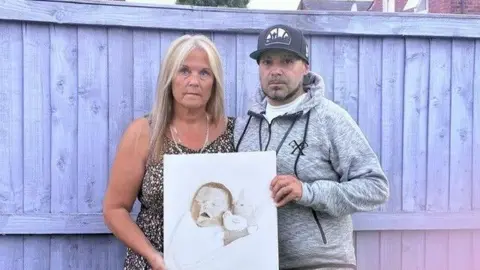
BBCA couple whose baby died shortly before birth said their concerns were ignored - echoing issues raised in a major review of maternity services.
Sarah Locke, 54, and Matthew Boulton, 43, from Gloucester, lost their daughter Bonnie in 2012 after repeatedly raising fears about her size and requesting an earlier delivery.
Ms Locke said her anxiety grew during the pregnancy, especially after previous complications with her second child, as she noticed that Bonnie was getting big.
Matt Holdaway, chief nurse and director of quality at Gloucestershire NHS Foundation Trust, apologised for the death of Bonnie and said the trust had undertaken work to ensure women were listened to more.
'He knew best'
Ms Locke said she asked to be induced earlier than planned but the consultant refused.
"My worry was my second child had shoulder dystocia... so when I was carrying Bonnie I realised she was getting big," Ms Locke said.
"He said no, he wasn't having any of it.
"He said my daughter would be wired up to breathing apparatus... he was very obnoxious really."
The couple said they felt under pressure to accept the consultant's decision.
"He knew best and almost scared you to believe you had to go along with him rather than your own motherly instinct because we would be going against his medical advice," Ms Locke said.
'No movement'
The day before that planned induction, Ms Locke said she realised something was wrong.
"I had not felt any movement for a day," she said.
"They put the doppler machine on me and I knew straight away because it was just that deathly silence... I knew she had passed."
She described the moment as "just absolute devastation" for herself and her partner.
"I felt I couldn't breathe," she said.
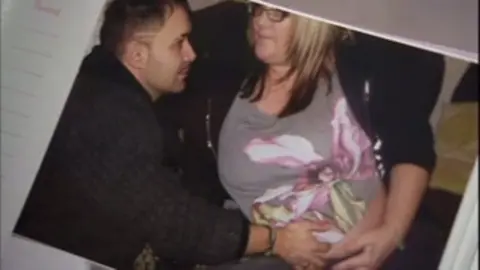
After Bonnie's death, Ms Locke said doctors had to break the baby's arm during delivery because she was stuck - something that has left her with lasting trauma and PTSD.
"We were pressing to have a caesarean so we could spend more time with her and they refused.
[It was] just devastating," Ms Locke said.
The couple said a consultant later acknowledged the outcome.
"He said to me the day after I had my daughter - 'I hold my hands up, you were right and I was wrong'," she said.
The couple tried to pursue legal action but they were unable to continue because of the cost.
'Missed opportunities'
Their experience comes amid wider scrutiny of maternity care across the country, including at Yeovil District Hospital where Heidi Rose Curtis lost her baby son during labour.
A review into Gloucestershire services previously said the deaths of nine babies could possibly have been prevented were it not for "missed opportunities".
In addition to 44 neonatal deaths between 2020 and 2023 at Gloucestershire hospitals, there were seven maternal deaths between 2017 and 2023, according to an external review.
The report also highlighted issues including gaps in documentation and failures to follow national guidance.
The trust outlined improvements in October 2025 after a councillor said pregnant women must be "petrified" to give birth in Gloucestershire hospitals.
Privacy concerns
The National Maternity and Neonatal Investigation review into Gloucestershire Hospitals NHS Foundation Trust found women and families repeatedly reported not being listened to when raising concerns, particularly around symptoms, foetal movements and deteriorating conditions.
Staffing pressures and increasing complexity of pregnancies were found to be creating strain on services and affecting continuity of care and families described overcrowded postnatal areas, privacy concerns and poor bereavement facilities - including inadequate soundproofing.
Holdaway said the trust had undertaken work in the past four years to improve the care received by women and their families.
The work has centred on staffing issues, bettering outcomes for black and brown women and making sure women were listened to, he said.
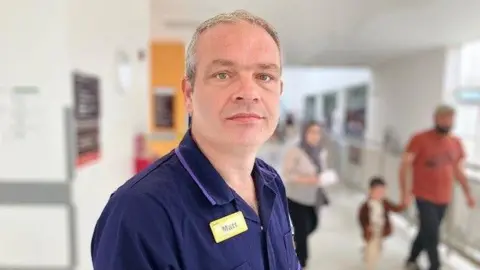
Holdaway said the death of Bonnie was a "really sad case" and he apologised to her family on behalf of the trust.
"We should and are involving women more in their care," he said.
"Donna Ockenden has recently, in her findings, said that we should be rolling out Martha's Rule to maternity services.
"We have done this already."
Martha's Rule came into force within Gloucestershire's maternity services on 1 April 2025.
It is an NHS patient safety initiative that gives patients, families and carers the legal right to request an urgent, independent clinical review if a hospital inpatient's condition is deteriorating and they feel their concerns are not being addressed.
Reacting to the report, Mr Boulton said: "We agree 100 percent women are not listened to and that is what cost us our baby's life.
"We welcome Martha's Rule, which allows a second opinion, but even in our case we asked for one and that obstetrician did not want to tread on the main consultant's shoes.
"There will always be that kind of worry that a more junior colleague will just obey orders."
'Avoidable harm'
An independent investigation into maternity and neonatal services in England, led by Baroness Valerie Amos, has just published its findings.
The final report found that the maternity and neonatal system in England is no longer fit to consistently deliver high-quality, compassionate care to every woman and family.
Lady Amos's team found women "were not being listened to, heard or believed" with "serious consequences for the safety and quality of care they receive, resulting in avoidable harm, trauma and loss of confidence in themselves and in the system".
The report also found services were not designed to ensure consistent safety, resulting in "avoidable harm and lifelong trauma" and a "lack of accountability from trusts when things had gone wrong".
Follow BBC Gloucestershire on Facebook, X and Instagram. Send your story ideas to us on email or via WhatsApp on 0800 313 4630.