Landlords lose long legal battle over HMOs

 Luton Borough Council
A long legal battle between a group of landlords and a council over rented homes is finally over.
The Supreme Court has ruled in favour of Luton Borough Council, which wanted to introduce a new licensing system for Houses in Multiple Occupation (HMOs).
It means smaller HMOs across the borough will now need to be licensed.
A representative for the landlords said the move will reduce the number of rented homes and increase rents.
In England and Wales, the owner of any house with five or more unrelated tenants must get a licence from their local council.
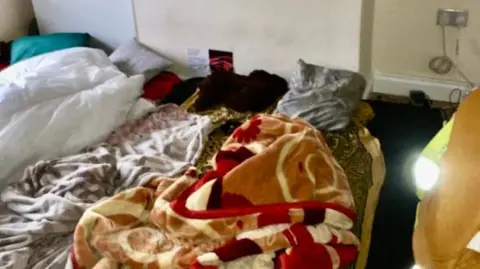
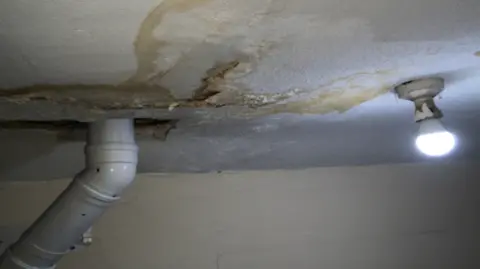
Worried by the poor quality of some accommodation and the way some landlords managed their properties, Luton Borough Council announced plans to introduce licences for smaller HMOs in 2017.
A landlords' group challenged the move and a lengthy legal battle followed. It ended with the Supreme Court ruling the landlords' case did not "raise an arguable point of law".
 Luton Borough Council
The council has now introduced two new licences.
There is an additional scheme which means houses with three or four unrelated tenants anywhere in the borough need to be licensed.
There is also a selective scheme, which means houses with one family or no more than two unrelated tenants in the town centre and the Park Town area need a licence.
Both come with conditions relating to the management and maintenance of the property.
 Martin Heath/BBC
Alia Khan, the Labour council's portfolio holder for housing, said: "The reason behind it ultimately is to protect tenants and to protect everyone's right to have a safe and secure home.
"We know that good landlords have nothing to worry about, but the main thing is that this gives us power to enact enforcement when landlords aren't complying."
 Martin Heath/BBC
Raj Bains, from the Luton Landlords and Letting Agents group, which led the legal challenge, said: "It's like they (the council) will be looking at ways to penalise landlords, looking for flaws in their properties to be able to fine them.
"Everything is loaded against the landlord."
He also believes the fines system, which has a basic penalty of £500 but increases if there is more than one breach or a landlord owns other properties, will deter owners from renting out homes.
"Already we've noticed there are a number of landlords who are now looking to sell their properties," he said.
"The number of properties in the rental market will then decrease and this is going to have the adverse effect of increasing rents."
Are the new licences likely to work?
Of the more than 4,500 HMOs thought to exist in the borough, only about 20% meet the criteria for mandatory licensing.
The new schemes could bring hundreds of extra properties into the licensing regime, which would force landlords to adhere to conditions or risk enforcement action.
But it will still be possible for landlords to hide the existence of smaller HMOs, particularly if tenants fear losing their accommodation if they inform the authorities.
Effective enforcement requires staff to be dedicated to the role of investigating and inspecting HMOs, an expensive service for councils that are struggling to balance their budgets.
If the landlords' predictions of the rental market shrinking comes true, tenants may end up worse off as rents increase, and some may be forced into the sort of under-the-radar accommodation that the council wants to dismantle.
Do you have a story suggestion for Beds, Herts or Bucks? Contact us below.
Follow Beds, Herts and Bucks news on BBC Sounds, Facebook, Instagram and X.