Teacher child abuse survivor praises Donaldson victims as 'warriors'

 BBC
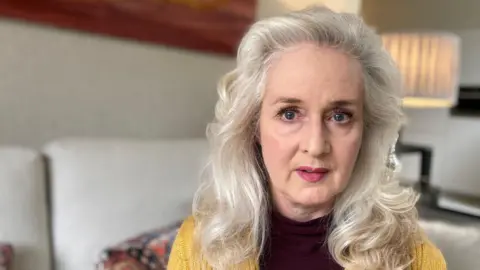
BBCA survivor of historical sexual assault has described the victims of Jeffrey Donaldson's abuse as "total warriors".
Nicola Bannon and other women took a case against former teacher William Lloyd-Lavery. He was found guilty in January of indecent assault against four girls and sentenced to two years in prison.
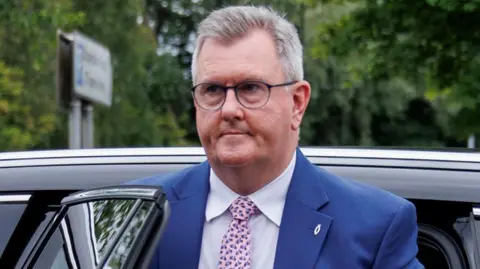
Her comments come after the former Democratic Unionist Party leader was convicted of 18 counts of sex abuse, including one count of rape, against two women when they were children.
Nicola, who waived her right to anonymity, said she was "lucky" that new special measures were in place to deal with serious sexual offence cases when hers was being heard.
 PA Media
She said she had been well supported.
Sir John Gillen conducted a major review into how the justice system in Northern Ireland handled sexual offence cases in 2019.
One of his recommendations was for cross-examination of complainants to be pre-recorded and away from court.
Video-recorded interviews with the police can be used to capture the testimony of complainants.
Reflecting on Donaldson's conviction she told BBC Radio Ulster's Good Morning Ulster programme that her own situation, giving her evidence in a "remote room" helped her and her evidence was then played out in court.
"You don't have to go into the witness box and relive everything that you've been through."
Nicola said she went to a special suite within the child abuse unit with her case manager "who's already established a very close relationship with you" and specially-trained officers who are "absolutely wonderful".
"We had several [officers] throughout the six years that we were in the system because of the pandemic, but every one of them were just wonderful," she said.
She said they did not have to "face our abuser and go into the dock" but in a separate room where they were cross-examined.
"The whole procedure couldn't have had more care," she told Good Morning Ulster.
She added: "I'm not promising that it's going to be easy, but you have so much support from the PSNI and your case managers along the way, you have special measures, the courts are set up to make things as easy as possible for you."
 PA Media
Despite convictions in these two cases, a charity that supports people impacted by sexual abuse, has described such court successes as "statistically very unlikely".
The CEO of Nexus, Joanne Barnes, said: "In the UK more broadly, 3% of rape cases [reported to police] get a guilty outcome. In Northern Ireland in 2024/25, of rape cases that made it to court, which was only 75 cases, only 26% of those got a guilty outcome.
"So these are extremely difficult crimes to try... particularly when there has been a period of time has gone by since the offence, because there's a lack of forensics, et cetera," she told BBC NI's The State of Us podcast.
This, she said, is one of the key factors that make it "extremely difficult" for victims of sexual abuse to come forward.
"So the immense courage to come forward and see the justice process through... any victim who does that should be commended," she added.
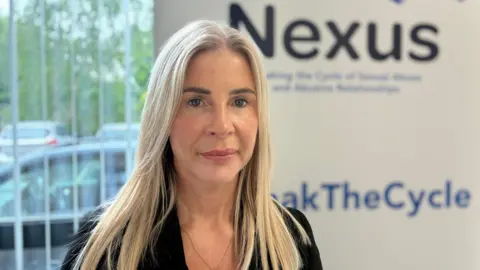
While Barnes said the Gillen Review had resulted in positive changes, including "closed courts and remote evidence centres", she questioned whether "we are seeing proper safeguarding of victims".
She said this was why managing the expectations of victims was so important, including advising them on potential of retraumatisation and the likelihood of getting a guilty verdict.
'Trauma'
The interim Victims of Crime Commissioner, Geraldine Hanna, said the journey between reporting a crime to police and going to court can cause "victims to question whether or not they are able to stick with the process".
"What we know about delays is that it does prolong the trauma and victims are living with that uncertainty hanging over them," she told BBC Radio Ulster's Talkback programme.
She said in cases of historical sexual abuse there would already have been a passage of time before that person was able to come forward to report it.
"What message is being sent out to other victims and survivors who either haven't come forward yet or who maybe have and have had a different experience of the system?" she added.
If any of the issues raised in this article have affected you, details of help and support are available on the BBC Action Line.