County faces major shortfall in care home beds

 Getty Images
A county faces a shortfall of more than 800 care home places over the next six years.
Hertfordshire County Council said the cost of buying placements could reach £18m per year.
Councillors have agreed to invite developers to build new care homes, which they would lease to the authority.
The Liberal Democrat-run council said the system would help keep people closer to home.
Councils are responsible for arranging care for people who cannot afford to pay for it themselves.
A Hertfordshire County Council report said demand for nursing care was rising as people were living longer and their needs were becoming more complex.
It forecasts a shortfall of 839 beds in council-funded care homes, leading to greater reliance on placements outside the county, costing up to £18m a year by 2032.
A cabinet panel has recommended the council encourages the building of more homes using a so-called social investment model (SIM).
Under the model:
- Developers or investors would fund and build new homes
- The council would take long leases on the homes
- The council would sub-let the homes to care providers
- Income from the providers would cover the council's costs.
The council plans to create between six and eight new homes, with about 600 beds in total.
Between 150 and 200 of those beds would be available for residents supported by the council.
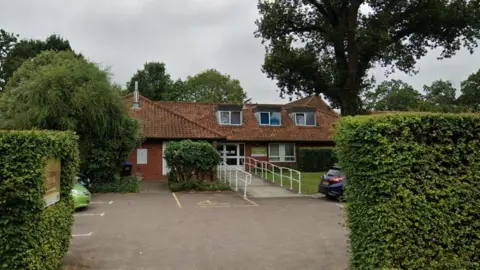 Google
At a meeting of the adult care cabinet panel on Wednesday, officials were keen to stress that the SIM system was not the same as the Private Finance Initiative (PFI), launched in 1992 by then-Prime Minister John Major.
PFIs were often criticised as being too inflexible and becoming more expensive than expected because of compound interest and annual fees.
'Lessons learned'
Josh Dunn, a consultant who helped develop the SIM proposal, told the panel: "We have built in lessons learned from PFIs and wider public-private partnerships, and this model is distinctly different.
"The contracts will be straightforward lease agreements.
"The council will be paying a fixed amount to the investor every year, [which] can only go up by inflation and we'll be receiving a fixed amount from the providers which can only go up by inflation."
The panel agreed to recommend that the cabinet starts the SIM ball rolling.
Do you have a story suggestion for Beds, Herts or Bucks? Contact us below.
Follow Beds, Herts and Bucks news on BBC Sounds, Facebook, Instagram and X.